
Table of Content
- i. Introduction
- ii. Body
- iii. Conclusion
- iv. Reference
At the time of writing, another tragedy has shaken Malaysia. A 16-year-old student was fatally stabbed multiple times by a schoolmate in a secondary school in Bandar Utama, Kuala Lumpur, on October 16. The incident reportedly took place in the girl’s restroom in the school (Lim, 2025). A stark reminder that school violence remains a pressing and deeply troubling issue among Malaysian youths.
Introduction
Bullying in Malaysia has evolved beyond isolated incidents. It is deeply rooted in a culture of hierarchy and fear that begins in schools and extends into professional life. The National Health and Morbidity Survey (NHMS, 2017) reported that one in six Malaysian adolescents has experienced bullying. The cases often involve physical or verbal aggression that damages victims’ mental health and affects academic performance. Similarly, UNICEF Malaysia (2025) urged urgent national action, emphasising that no child should fear going to school and calling for stronger empathy-based education.
This culture of power imbalance is often normalised under the guise of “seniority.” It teaches young people that dominance equates to respect, a mindset that persists into adulthood. A study on workplace bullying among junior doctors in Malaysia revealed that senior medical officers were the most common perpetrators, demonstrating how early exposure to power-based bullying fosters toxic hierarchies later in life.
The Malaysian TV series Project High Council, directed by Zulaikha Zakaria and Anwari Ashraf, captures this uncomfortable truth. Its depiction of students fighting for authority within a “High Council” mirrors real-world dynamics in which humiliation and violence are disguised as rites of passage. These patterns reveal that bullying in Malaysia is not merely a disciplinary issue. It is a learned behaviour, sustained by generational acceptance of seniority as power.
The case of Justice for Zara Qairina, much like these examples, exposes a deeper social crisis. Awareness alone is not enough; Malaysia must confront the structural and cultural roots that enable bullying.
The tragic death of 13-year-old Zara is not an isolated tragedy but part of a disturbing pattern of institutionalised bullying rooted in Malaysia’s seniority culture. The culture of respecting elderlies has long engrained into the Malaysian society. However, the culture could be misused to justify domination under the guise of enforcing discipline, tradition or leadership training which too often leads to violence. For weeks, the viral hashtag #JusticeForZara demanding accountability from the boarding school she was bullied showed society has had enough of younger generations being targeted for evitable bully. However, what will actually happen next and are community efforts enough to change laws?
If this case does not catalyse legal reform and cultural transformation, Malaysia risks reducing Zara’s death to another fleeting headline.
What this article is about:
The #JusticeForZara case must drive Malaysia to dismantle harmful seniority hierarchies embedded in schools and institutions, enforce stronger laws against gangsterism, and reshape cultural attitudes from a young age—where respect is mutual, not hierarchical.
Lessons from the Past – When “Discipline” Turns to Violence
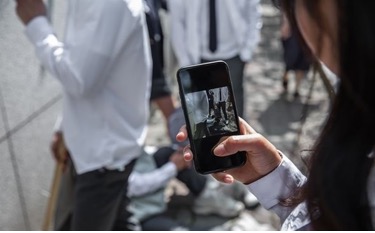
Malaysia’s record of school and institutional bullying is long and painful. Data from Sabramani et al. (2021) revealed that almost half of Malaysian secondary school students have either bullied others or been victims themselves. This staggering number shows that bullying is not confined to rare, extreme incidents—it is a cultural and systemic issue.
Several cases have exposed this reality:
- UPNM cadet Zulfarhan Osman “Training” (2017): Tortured to death by fellow students over accusations of theft. The perpetrators were his peers—students who had been trained under a culture of hierarchy and obedience (Malay Mail, 2017).
- Death of T. Nhaveen (2017): A 17-year-old from Penang who died after being assaulted by former classmates who had bullied him for years (The Straits Times, 2017).
- MRSM bullying case (2025): A group of students were remanded for violently assaulting their peers, allegedly under the “High Council” system—where seniors dictate rules and punishments (BERNAMA, 2025).
- Recent “Commando Rest” case (2025): Viral footage revealed that students were being forced into military-style punishments by older peers, while teachers failed to intervene (Joe, 2025).
Bully exists everywhere are likely embedded within Malaysia’s educational systems with each tragedy revealing the same underlying issue: power abuse, lack of supervision and cultural acceptance of dominance guised as leadership.
If this continues, every new headline will echo the same narrative—only with different names.
Why It Keeps Happening – The Culture of Seniority and Silence

To understand why bullying persists, one must look beyond individuals and into Malaysia’s broader social fabric. Respect for elders is deeply rooted in Malaysian culture—a value that fosters humility and discipline. However, when this principle is applied to peer hierarchies, it can mutate into something toxic: a justification for abuse.
In many boarding schools, student hierarchies that are referred to as “High Council” or names alike basically grants seniors unwarranted power in guise of student disciplinary body. Although not commonly documented, these councils claim to “bring order” but in practice uses abuse of power to intimidate, ridicule or punish students.
As Kwan, Tuckey, and Dollard (2014) noted in their study of workplace bullying, hierarchical cultures in Asia often tolerate such dominance because power distance—the acceptance of unequal authority—is culturally ingrained. This phenomenon applies equally in schools, where students internalise the idea that seniors “deserve” obedience. In their book Psychosocial Factors at Work in the Asia Pacific, Kwan and colleagues highlight how juniors are more likely to face mistreatment in hierarchical structures, and such behaviour is often minimised or normalised by both peers and authority figures.
Sabramani et al. (2021) also concluded that students who do not feel valued or encouraged by the teacher have higher chances of being involved in bullying as either bullies or observers. Lack of proper emotional attachment to their instructors or caregivers is likely to make students seek peer validation, and the participants reinforce the cycle where aggression is one of the ways to prove their belonging and status.
The so-called High Council culture thrives under several enabling factors:
- Victims feel powerless to report abuse for fear of retaliation.
- Teachers and administrators often overlook “senior discipline” as a normal part of school life.
- Parents remain unaware until the situation escalates.
- Communities reinforce the “toughen up” mentality, dismissing victims as weak.
In short, Malaysia’s institutions have normalised domination. Without intervention, the line between respect and repression will remain blurred.
Consequences – The Price Paid by Victims and Society

The cost of this culture extends far beyond school gates. Victims of bullying carry scars—emotional, psychological, and sometimes physical—that affect their academic achievement, self-esteem, and long-term well-being.
A research study by Liew et al. (2023) attributed bullying among Malaysian teenagers to suicidal thoughts. Victims reported feeling alienated, fearful of authority, and distrustful of institutions meant to protect them. Meanwhile, their families face immense grief and helplessness—often blaming themselves for not noticing sooner.
Perpetrators, too, are not immune to harm. Many bullies act out of insecurity, social pressure, or exposure to violence at home. Without proper rehabilitation, these behaviours often continue into adulthood—fueling toxic workplace cultures and even violent crimes.
The tragedy of Zara—and those before her—highlights the need for multilevel intervention:
1. Education and Prevention
Schools must go beyond anti-bullying slogans. Teachers require formal training to recognise the early signs of abuse and establish a trusting relationship with students. Bullying should be treated not as mischief but as a criminal act with moral and legal implications. Educational campaign can shift from “hierarchical power” to “respect goes both ways and grow from empathy and cooperation”
2. Support Systems
Both victims and perpetrators should require psychological support where counselling and emotional guidance should be mandatory practice. Bullies should be taught toward building positive leadership, regulating emotions and psychological therapy towards aggression tendencies as well as learning about accountability, respect, empathy and responsibility,
3. Community and Parental Involvement
Parents should also involve actively in bully prevention as anchors to youths. They are the guidance and support of children so open communication should be done between teachers, counsellors and even other parents preventing early warning signs like isolation and anxiety to school. Parents should also regularly check up on their children as well as social media monitoring to present bullying incidents occurring online.
4. Legal Enforcement
Malaysia’s legal system must treat school bullying as a matter of criminal accountability. Stronger anti-hazing laws, routine inspections in residential schools, and clear disciplinary consequences are essential. Reporting mechanisms with anonymity, safety, and accessibility must be institutionalised. An example of governmental efforts to stop bullying would be banning social media for youths.
As Kwan et al. (2014) emphasised, power hierarchies without accountability breed silence; true justice requires both structural reform and cultural awakening.
Empowering victims to claim their rights to be safe
Another crucial step in addressing bullying is educating students about their rights — their right to safety, dignity, and respect in school. When young people understand that they have the right to learn in a secure environment, they are more likely to speak up and demand change. This may include requesting disciplinary action against perpetrators, transferring to a safer environment, or seeking intervention from teachers and parents.
While many victims fear that reporting bullying could worsen their situation, a supportive school culture and society can change this. When society collectively condemn bullying and largely advocate to report and punish bullies, victims are empowered to reclaim their rights. We should normalise standing up against unwanted harm and seek help, not only to protect victims but to reshape safety and justice among youths from their young age.
Conclusion
#JusticeForZara should not end as a moment. it should mark a movement. Each time Malaysia mourns a young victim, the country is reminded of the same lesson: silence kills.
Justice does not simply mean punishing criminals, but preventing more tragedies in the future. It implies redefining the concept of respect in Malaysia, where the hierarchical approach is replaced with the human-oriented one. When schools stop glorifying domination and start nurturing compassion, Zara’s story will no longer be just another hashtag—it will be a turning point.
For now, Malaysia stands at a crossroads: either confront the roots of its seniority culture or risk letting history repeat itself.
Reference
BERNAMA. (2025). MRSM Bullying Case: Five Students On Remand. BERNAMA. https://bernama.com/en/news.php?id=2438905
Chan, J. (2025, September 13). Zara Qairina inquest: What we know so far. Malay Mail ; Malay Mail. https://www.malaymail.com/news/malaysia/2025/09/13/zara-qairina-inquest-what-we-know-so-far/190957
Chew, K. S., Ramli, R., Fernandez, A., Mohamad, N., & Ismail, A. K. (2021). Workplace bullying among junior doctors in Malaysia: A multicentre cross-sectional study. PLOS ONE, 16(4), e0250175. https://doi.org/10.1371/journal.pone.0250175
Human Rights Commission of Malaysia (SUHAKAM). (2025, July 25). “No child should be afraid to go to school”: SUHAKAM calls for urgent anti-bullying action (Media Statement No. 29-2025). https://suhakam.org.my/2025/07/media-statement-no-28-2025-occ_no-child-should-be-afraid-to-go-to-school-suhakam-calls-for-urgent-anti-bullying-action/
Institute for Public Health, Ministry of Health Malaysia. (2017). National Health and Morbidity Survey (NHMS) 2017: Adolescent Health Survey 2017. https://iku.moh.gov.my/images/IKU/Document/REPORT/NHMS2017/AHSReportNHMS2017.pdf
Joe, P. E. (2025). Education ministry probing “commando rest” bullying. Free Malaysia Today | FMT; Free Malaysia Today. https://www.freemalaysiatoday.com/category/nation/2025/01/02/education-ministry-probing-commando-rest-bullying
Kwan, S. S. M., Tuckey, M. R., & Dollard, M. F. (2014). Dominant culture and bullying: Personal accounts of workers in Malaysia. Psychosocial factors at work in the Asia Pacific (pp. 177–200). Springer. https://doi.org/10.1007/978-94-017-8975-2_9
Liew, S. H., Razak, M. A. A., Kassim, M. S. A., Ahmad, N. A., & Tan, L. (2023). Suicide attempt among Malaysian school-going adolescents: relationship with bullying. BMC Public Health, 23(1), NA–NA. https://doi.org/10.1186/s12889-023-17019-2
Lim, I. (2025, October 17). Bandar Utama tragedy: Police await autopsy to verify family’s claim of 200 stab wounds. Malay Mail ; Malay Mail. https://www.malaymail.com/news/malaysia/2025/10/17/bandar-utama-tragedy-police-await-autopsy-to-verify-familys-claim-of-200-stab-wounds/194945
MalayMail. (2017). Hishammuddin promises action against those responsible for the death of navy cadet. Malay Mail ; Malay Mail. https://www.malaymail.com/news/malaysia/2017/06/02/hishammuddin-promises-action-against-those-responsible-for-death-of-navy-ca/1390979
New Straits Times. (2025). Bullying exposed: students reveal face submerged in water, kicked in ribs. NST Online; New Straits Times. https://www.nst.com.my/news/nation/2025/01/1155555/bullying-exposed-students-reveal-face-submerged-water-kicked-ribs
Sabramani, V., Idris, I. B., Ismail, H., Nadarajaw, T., Zakaria, E., & Kamaluddin, M. R. (2021). Bullying and Its Associated Individual, Peer, Family and School Factors: Evidence from Malaysian National Secondary School Students. International Journal of Environmental Research and Public Health, 18(13), 7208. https://doi.org/10.3390/ijerph18137208
The Straits Times. (2017). Malaysia teen Nhaveen dies after brutal assault by bullies. The Straits Times. https://www.straitstimes.com/asia/se-asia/malaysia-teen-nhaveen-dies-after-brutal-assault-by-bullies
UNICEF Malaysia. (2025, August 27). UNICEF statement on bullying. https://www.unicef.org/malaysia/press-releases/unicef-statement-bullying
 TianYuran
  Lu Yunyan
  Pauleen