
Introduction
Games. Everyone loves video games.
They come in a variety of styles, tones and genres, with differing senses of appeal for every type of player. Whether it be a beat ‘em up or hack and slash that focuses on thrilling, engaging combat, or games like The Last of Us which focuses on atmospheric environment and compelling story telling, there is always going to be a certain emphasis that differentiates each title.
Despite these differences, they all aim to captivate the audience, immersing them in the environment both cognitively and emotionally. There is one quality that every game shares which covers a multilayered and independent list of factors yet is a powerful that transforms video games from a simulative procedure into a lived experience, captivating players on perceptual, emotional and cognitive levels – immersion.
This deceptively simple term has been a staple within modern games, immersion is not a single, basic component, but rather a multi-layered branch of differing elements that are interdependent on system and player relationships. So how can one possibly discern exactly what immersion is, and why it is so important and appealing to video games? This article aims to explore how immersion appeals to players by turning games into a lived-in experience that can be emotionally, perceptually and cognitively engaged in, transforming procedural simulation of objective completion into something that is compelling, meaningful and captivating.

A key component to understanding immersion in video games is Ermi and Mäyrä’s model of challenge-based, sensory and imaginative Immersion. They discuss that it is an element of gaming that is multi-layered with differing qualities that help players emotionally and cognitively invest themselves within a game’s narrative, characters, gameplay and virtual world. As such, it captivates them with challenge, through sensory elements like graphics and sound design, and imaginative affordances that let them assume roles that influence the digital environment around them. Furthermore, multiple authors can attest to these components and help support their claims and ideas. Therefore, this will allow me to analyze three different games that utilize differing types of immersion, such as Sifu, Metal Gear and Cyberpunk 2077.
Sifu – Challenge-Based Immersion
Sifu is an example of a game that appeals to players through challenge-based immersion, which employ rewarding progression based on mastery of mechanics and overcoming challenge through design, mastery of core mechanics and persistent understanding of the gameplay.
Challenge-based immersion comes from gameplay that is engaging and difficult, testing player skill and ability, as well as their willingness to persist in the outcome of failure and be willing to learn from it; mastering the mechanics until they reach progress that feels meaningful due to the sense of accomplishment it brings from overcoming difficulty.
Supporting this immersion type is Jesper Juul’s concept of the “heart of gameness,” something that is only accomplished through player-driven effort to master and understand the rules and varying outcomes that the game provides in order to overcome the challenges and problems which they face playing, turning completion and success into a meaningful, rewarding accomplishment.
They highlight that the “heart of gameness” is within the general structure, the rules, the objective and the effort that players are willing to invest into. Success and failure should feel dependent on player’s decisions when given opportunity to understand the mechanics and design to overcome the goal, making progression and overcoming the meaningful and rewarding through diligence of learning.

Sifu is a rogue-like beat em’ up in which the player takes on the role of a vengeful martial artist who has the ability to resurrect after dying, albeit at the cost of a year off their life. In the game, they endure progressively harder levels with stronger enemies ending with a boss, forcing the player to continuously learn their own attacks and defenses to counter unforgiving enemies whose aggressiveness and coordination make progressing through the game difficult, unless the player takes the time to practice and analyze their mistakes so that they overcome them.

Sifu is not an easy game. Mindlessly inputting attacks will often punish the player for not paying attention to enemy response or other enemies that are planning to attack you from the sides or behind, emphasizing the need for timing parries or evades against them and making players hyperaware of the enemies around, rather than the one they are focusing attacks on.

Furthermore, each time the player dies, the main character ages according to their current age and how many times they have already died – dying at 27 when you have died 4 times, multiples how many years you age up by 4, making you 31 once you resurrect. While you deal more damage and have free access to skills that usually require points to acquire, you also lose more health and die easier, showing the consequence of continuously dying.
Players become deeply engaged when they most overcoming obstacles and challenges not just through proceeding through a direct path, but one that requires persistence where they take on multiple failures to develop both their skill and understanding of the game, while also developing strategies which are flexible and adaptable to the difficulty and balancing of every situation that the game forces the player to encounter.
Therefore, overcoming difficulty becomes much more meaningful and earned when players invest themselves by mastering the game, earning them a sense of accomplishment and competence for persistence and understanding.
Metal Gear – Sensory Immersion
The Metal Gear series incorporates the use of sensory based immersion to captivate players into the environment, allowing them to be invested perceptually and emotionally towards the gameplay rather than viewing it as an objective and procedural process. The Metal Gear franchise is widely known for its emphasis on stealth-based combat, integrating sensory cues which engage visual and audio recognition that intertwines with both the environment and the gameplay itself. As such, it draws players deeper into the game’s virtual world through a concept known as sensory-based immersion – using perceptual engagement that invests players deeply into the gameplay and environment.

Sensory-based immersion relies on audiovisual aspects, such as graphics style and quality, sound cues and ambient noises, and atmosphere that captivates players into a virtual environment that turns the game into an experience, rather than a procedure. This is framed by Henry Jenkins as narrative architecture, where a game’s structural design of environment is a mode of storytelling beyond the established narrative, allowing players to have a sense of tangibility and relationship between the two, therefore shaping their experience within the virtual world.
In order to progress through the game, the protagonist Snake must infiltrate a base without being seen, with players taking into account not only enemy patrol patterns and line of sight, but also the level of sound that they make – an element that is utilized either by avoiding making noise or using it to your advantage by manipulating enemy reaction to it.
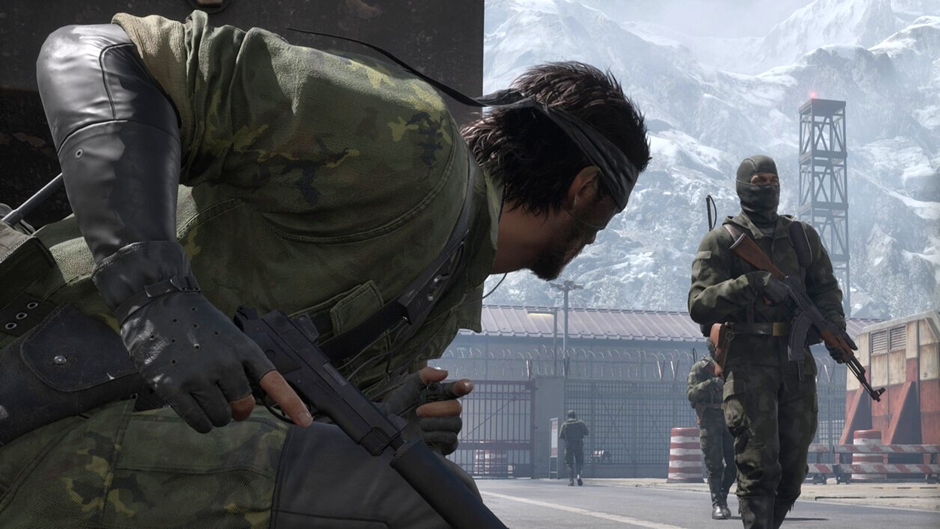
Furthermore, players need to be aware of enemy audio cues, such as footsteps or chatter, which helps gauge how to navigate the space while avoiding detection. When spotted, the game plays an alert noise which has become synonymous with gaming culture for danger and trouble. The sound is intense and tension-spiking, which warns the player that they are close to or have been detected by an enemy, and could risk mission failure.
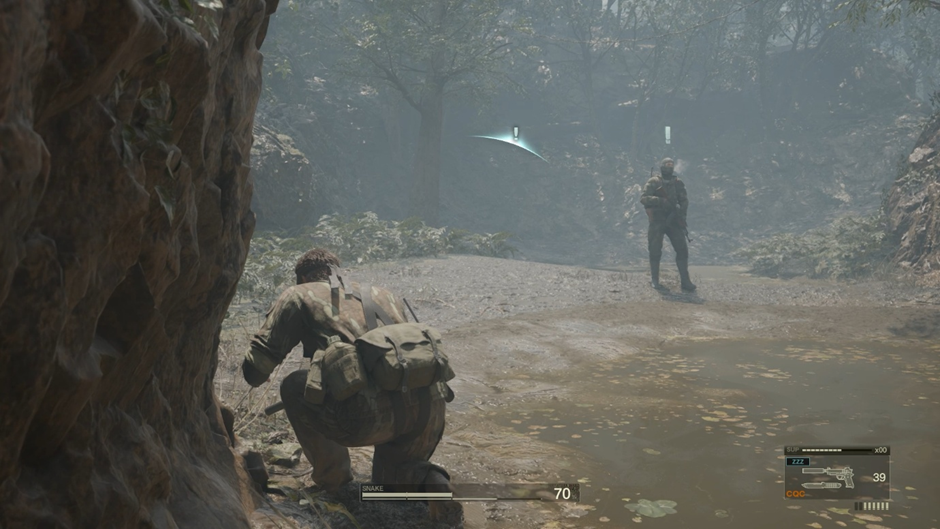
Therefore, player behavior is recognized and reacted accordingly, and depending on the actions you take interacting with the environment, determines the outcome of how well the mission goes through a ranking system at the end of the level. Interactivity and consequence are heavily intertwined and aligned with each other, with the game’s responsive systems determining progression and investment rather than just through narrative storytelling, tying in with Frasca’s concept of simulation vs. narrative.
The Metal Gear franchise incorporates these concepts of sensory based immersion to engage their players in an interactive environment that responds and reacts to player action, determining outcomes and progression that encourages them to be hyperaware of their surroundings and environment, captivating them in an experience that intertwines sensory cues and gameplay.
Cyberpunk 2077 – Imaginative Immersion
Cyberpunk 2077 employs imaginative immersion, where players embody and identify as a role that the game provides, allowing them to emotionally project and invest themselves as the protagonist in the game through their choices within the narrative, gameplay and overall behavior within the virtual world. Furthermore, their presence has the potential to consequentially shape their surroundings, showing that their actions both gameplaywise and story-wise have an impact on the environment around them, allowing for a possibility of outcomes and paths that they can follow.

Imaginative immersion stems from emotional investment towards the story, gameplay and characters through the games affordances to allow players to inhibit a role that can be shaped by the player, and act as an extension to make consequential decisions with quantifiable outcomes that can influence and impact on the virtual environment within the game.
This correlates back to Jenkins’ concept of narrative architecture, where a virtual world is not just a space to traverse but also an opportunity for players to co-create meaning and attachment by engaging with an environment that can be interacted with, and can respond to the user. Supporting this, Celia Pearce’s study on virtual worlds discusses how immersion connects the concepts of personal and social, where imaginative engagement extends beyond individual/player agency. They also extend to the play ecosystems and emergent cultures that are formed around virtual worlds.
Cyberpunk 2077 allows you to assume the role of V, an ambitious, upcoming merc whose main drive is to become a legend in the famed Night City, a dystopian metropolis where death is common, and legendary deaths are famed and sought out for. Nearly everything about V, from their appearance, equipment, stats and approaches to gameplay and narrative, is within the player’s control; despite taking on a hybridized protagonist role where they are an established character within the story.
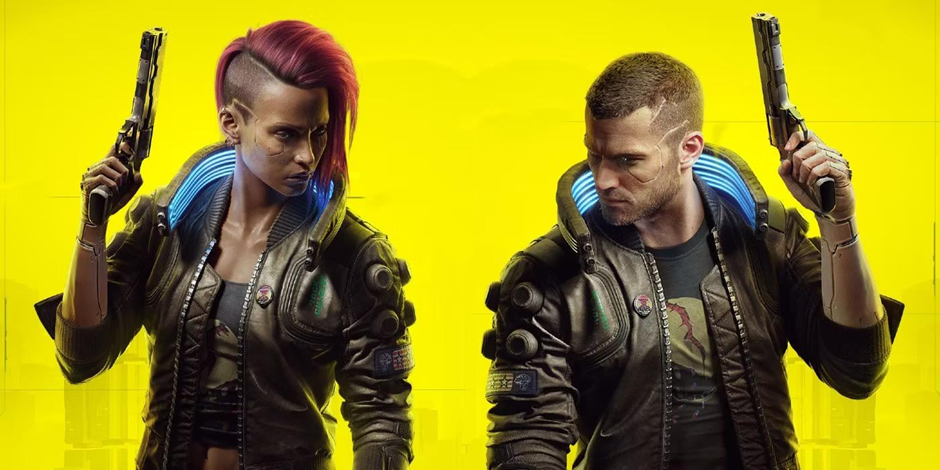
Players also have the agency to choose their approaches to missions, objectives, dialogue and critical choices that can alter their path and influence the concluding outcome. Every decision branches out into a non-linear path that differs depending on the player’s own moral compass and values. This ranges from impactful, difficult choices regarding jobs, their life or the people around them, to miniscule details such as refraining from smoking or drinking during certain dialogue events. Each of these decisions have a consequence which can even influence events and details beyond the moment that they were chosen, shaping how V interacts with Night City and its denizens.
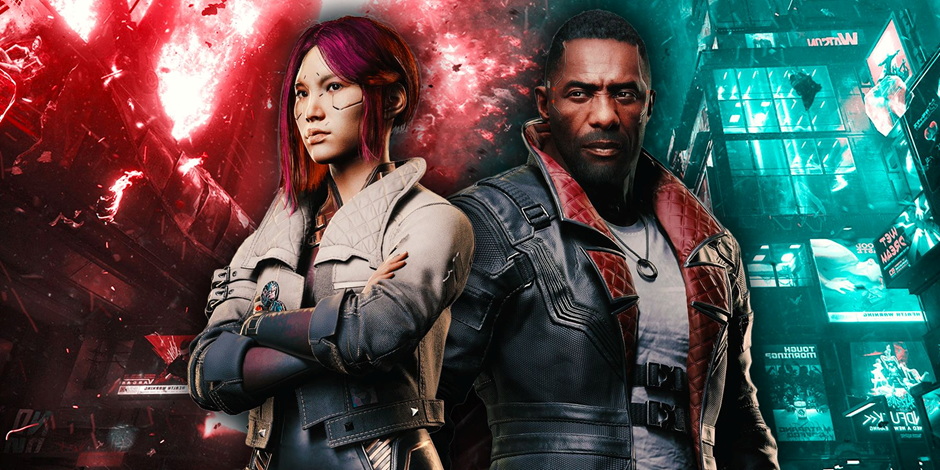
In short, the game fully immerses the player into embodying the role of V and shaping their identity through player-driven agency. Players inhabit the role both emotionally and cognitively, utilizing the affordances of the game to truly shape V’s identity into their own, essentially creating an in-game representation of themselves that can interact and influence the virtual environment.
As of such, the game becomes less of a procedural experience of problem-solving and objective completion, but something more lived, expressive, narrative-driven experience determined by player agency and values, which meaningfully influence V, the world and its outcomes. By fostering imaginative immersion, Cyberpunk 2077 appeals to players by allowing them to emotionally and cognitively connect to the world by inhabiting a customisable, expressive and established role with the ability make meaningful, consequential actions which influence their experience playing.
Conclusion
Despite the multitude of genres and styles that video games come in, one thing they all have in common. Video games want to captivate; for people to find themselves invested enough emotionally and cognitively to play through the content. Doing so turns it less into a simulative and procedural process, but more of a lived-in experience. But there is no singular solution, hence the differing styles that immersion comes in. Through the analysis of multiple literature and examples within gaming media, immersion is appealing to video games due to the how it engages the player in overcoming challenges through effort and dedication, captivating players by appealing to sensory cues and through an interactive, consequential environment, and allowing players to assume a role and identity that is intertwined with the game, which emotionally invests them in the game’s environment, narrative and characters.
 Guan QiuYu
  REN Ren
  Tan Kane