
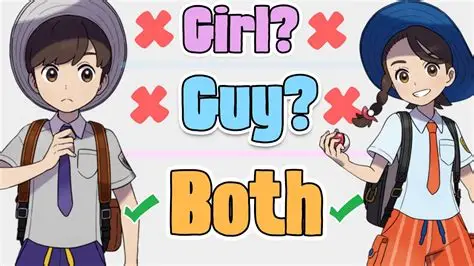
It is often said that playing games allows people to “switch identities” and experience the world in a different way. This results in differences between biological sex and identified gender. Over the past few decades, video games have undergone tremendous changes. From the earliest simple arcade games to today’s complex role-playing games (RPGS), games are no longer merely entertainment tools; they have gradually become a cultural phenomenon and a way to express oneself and explore one’s identity. In role-playing games where players can create personal avatars, they are not only participants in the game world but also the story’s protagonists. Players can gain a strong sense of immersion by customising elements such as the appearance, gender, and background of their game characters, which can even influence the progress and outcome of the game. This strong sense of immersion and participation gives players a freer space for self-expression.
The most significant features that role-playing games (RPGs) bring are that they offer players much freedom to shape characters and choose paths. Players do not merely accept the storylines set by game designers; they can express themselves, challenge themselves, or explore other identities by customising various aspects of their characters. The functions of gender selection and character customisation especially enable players to break through traditional gender boundaries, try different gender expressions, and even challenge their gender identity in real life. Nowadays, using characters of the opposite gender in online games has become the norm. Gender is no longer bound to a specific individual. In this environment, how the gender customization in role-playing games affects players’ gender identity has become a novel topic.
This article will explore how character customisation in role-playing games, especially gender selection, affects players’ identity and self-expression. The research will examine the profound impact of gender customisation in games on players’ psychology and behaviour from multiple perspectives, such as gender identity, gender breakthrough, and gender mobility. It will also analyse its potential influence on gender identity in real life. This topic is significant to game design and player behaviour research and provides a new perspective for understanding gender identity and personalised expression.
The manifestation of gender identity and self-expression in games
Gender identity is a complex and multi-dimensional concept. Many people’s physiological gender is different from the gender they identify with. The emergence of role-playing games has met modern people’s pursuit of gender identity well. The gender selection of customizable characters in the game enables players to re-examine their gender identity in real life in the virtual world. Take the famous game Final Fantasy XIV as an example, users could choose the gender and race they like. This highly customizable feature provides players a vast space to explore different gender identities, especially regarding expression. In many games, gender selection is not merely about determining appearance or specific functions; it profoundly influences the way characters interact with each other, their social status, and even the players’ own emotional resonance and sense of immersion. The fluidity of gender identity reflects this. Players can adjust or choose different gender characters according to the situation in the game. This flexibility makes gender identity no longer fixed and unchangeable.
An interesting point suggests that many players believe, “Since it’s male/female in reality, why do I have to use the same gender in the game?” Role-playing games break this traditional gender binary opposition by offering highly customizable features. Players can not only choose male or female characters, but also further adjust the characters’ appearance, clothing, behaviour, etc., thereby creating various forms of gender representation. Many games have thus lifted the restrictions on clothing and gender, allowing both male and female characters to use clothing, including but not limited to suits and wedding dresses, as decorations.
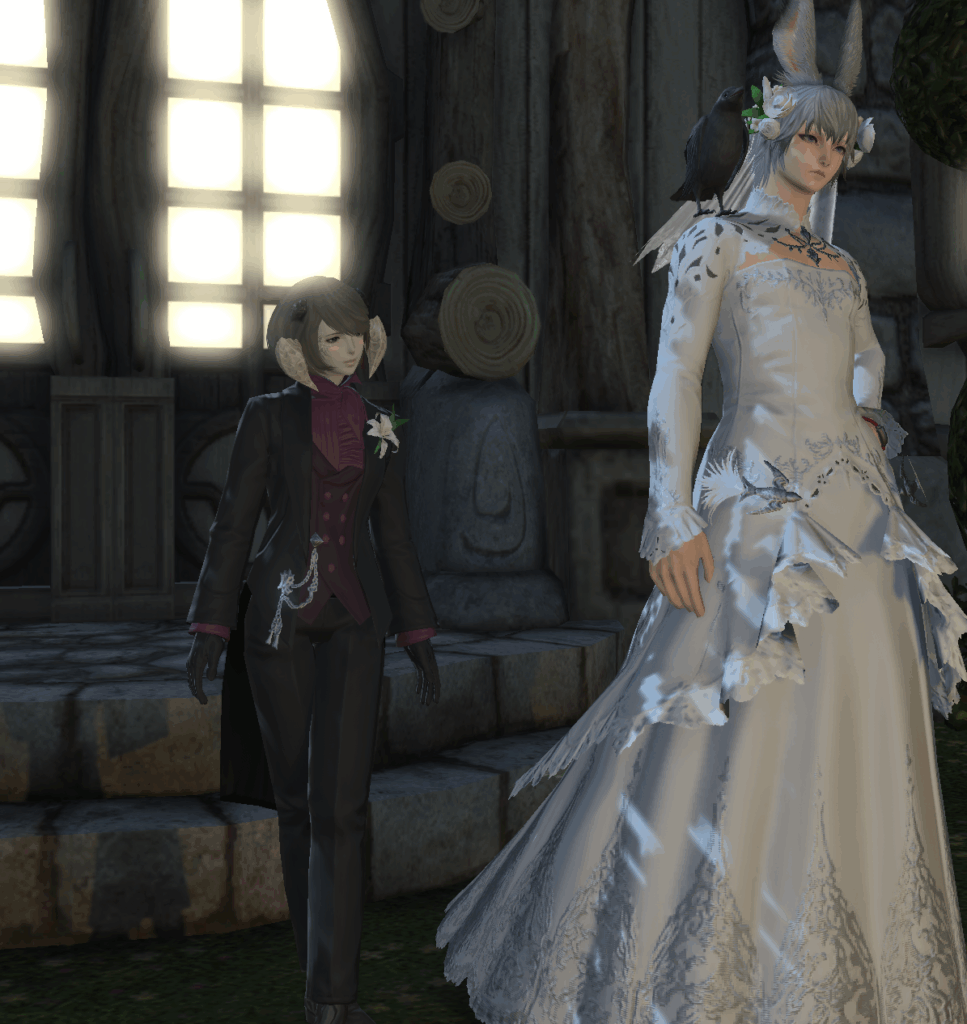
A male race with a wedding dress and a female race with a suit
In some role-playing games, female players choose male characters. One reason is to experience the social privileges, power, and opportunities male characters represent. Through the investigation of the characters and their authenticity of multiple players, it was found that many female players prefer to choose male characters with a feminine appearance, such as the male characters of the rabbit race. This race challenges traditional gender identities while retaining the aesthetic features women prefer. This choice is not merely for victory or mission goals in the game, but also a challenge and exploration of gender roles.
I surveyed ten players around me who were experiencing Final Fantasy XIV and was glad to join the analysis on this topic. Five female players played the game with male characters, and four of them had light hair color. Only one male player played the game with a male character, and the male player with a female character also preferred light hair color.
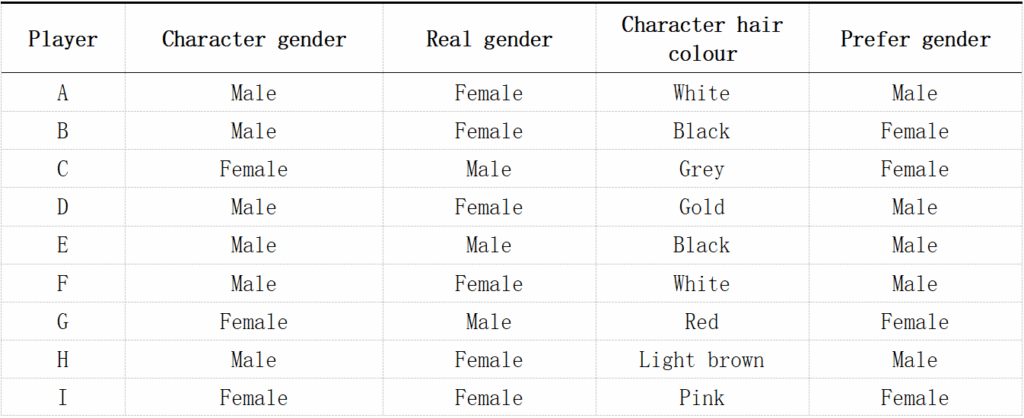
The digital diagram about player and their gender relationship
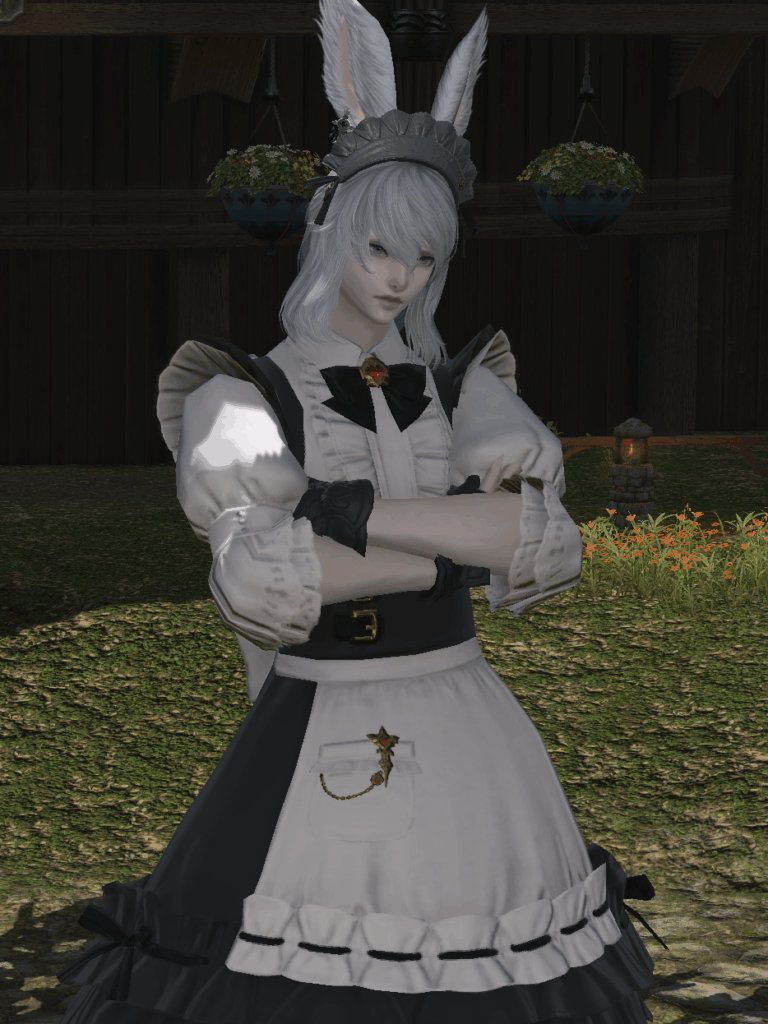
Player A’s biological gender is female. In the game, they use a male character and wear gender-blended attire, and they identify their gender as male.
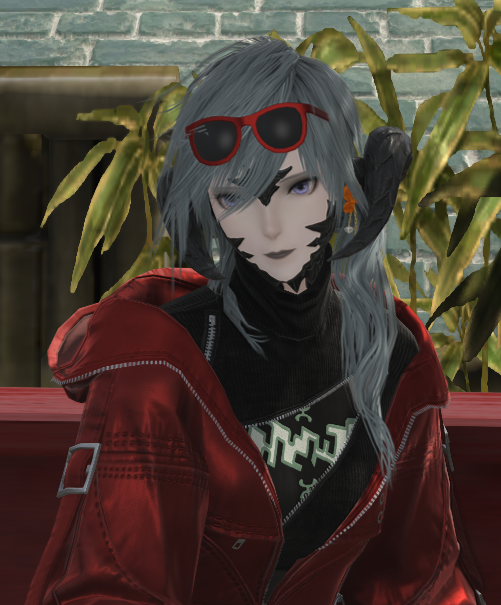
Player C played the game with a female character and had gray hair. He believed that he was a female character in the game.

Player F plays the game using a male character, with a female biological gender, and identifies as male.
Through investigation and inquiry, these respondents believed that female players could experience different social interactions and gaming treatments by choosing male roles. This change would prompt them to re-examine their gender identities in real life. This kind of change is often not merely an alteration in appearance, but may also manifest in speech and behaviour characteristics that match the male role. From the details of character customisation, it can be seen that its players have many customizable features, such as the colour of their hair from head to toe. For example, many female Chinese players prefer to create male characters with light hair colour and imitate male characters in European traditional culture in terms of character personality to challenge their traditional identity as Asian women (Han & Ho, 2024). This cultural challenge also applies to men.
I believe that these role-playing games allow female players to temporarily break away from society’s expectations of women and experience more freedom and power. This kind of “virtual experience” may influence their gender perception in real life and help them better understand the status and challenges of male roles in society. In the community of Final Fantasy XIV, these female players who use male characters stated in the survey that they prefer to develop romantic relationships with female players. They like partners who share the same gender identity as them. That is, the identity of female players who use male characters becomes diverse after long-term gaming, and it also contains the female perspective’s preference for the appearance of the characters. Many people in romantic relationships try to play the role of the “masculine” party, which is different from their actual gender.
When choosing characters that do not match their biological sex, players often reflect on their gender identity. Male players also have the same feeling when choosing female characters. Using another Large online social game as an example, like VRChat, is a games that use VR to talk with others, creating a highly immersive experience and serving as a second online community. Players must create personal virtual avatars—some players use cute female avatars whose real gender is male. Many also imitate the traditional impression of female expressions, such as cute sitting postures or expressions, or even voice changers to improve their role-playing experience. This also leads to thoughts on the male player group. Many men who use female images identify themselves as femboys, that is, feminised men. Whether male or female gender switching, it provides opportunities to practice different gender behaviours, promoting learning and self-reflection. The similarity is that the characters it creates usually tend towards idealised masculine or feminine traits. When male players play female roles, other male players have a more positive attitude towards them. Gender switching allows players to safely experiment and understand their gender identities, avoiding real risks (Zomerplaag et al., 2024). While enjoying the freedom of gender customisation in the virtual world, players may encounter new identity challenges and even experience a sense of ambiguity regarding gender identity in real life. This phenomenon is precisely part of the fluidity of gender identity, reflecting that in the process of continuous change and development of gender identity, players may transition from “traditional gender identity” to “non-binary gender identity”.
Gender breakthrough in games explores gender identity and sexual orientation.
Games and reality themselves have a two-way influence. Controlling virtual characters can trigger changes in behaviours and attitudes in the real world. (Szolin et al., 2023) Players experience adventures in the virtual world, and their gaming behaviours and character choices can also affect how they understand their gender identity in reality. As mentioned earlier, by experiencing characters of different genders, players can experience different identity experiences.
By breaking through the limitations of gender roles in the game, players may gain a new understanding of gender norms in the real world. Gender breakthrough in games is not merely a challenge to the rules of the virtual world; it also holds social significance. In traditional gender norms, people are often bound by fixed labels such as “male characters” and “female characters”. Choosing characters not matching their gender in games may challenge themselves and others’ traditional views on gender identity. As this behaviour deepens, some people are more affected during the process of gender switching, which may have an impact on their future lives.
The behaviour of some male players choosing to be a femboy is particularly prominent in the exploration of gender identity. Compared with the “pseudo-girls” and “transvestite” groups who simply play the role of women to enjoy clothing and design, some people believe that this kind of role selection and playing is not only for enjoying the gaming experience in the virtual world, but it is also more about self-expression in terms of gender identity. Male groups with such gender identities exhibit feminine characteristics both on social media and in real life, and enjoy high popularity on various video platforms. The strict gender classification in reality contrasts with social expectations (Crow, 2024). This choice challenges traditional gender norms, no longer confining features such as cuteness to female characters. Men can also enjoy this, providing a space for free exploration.
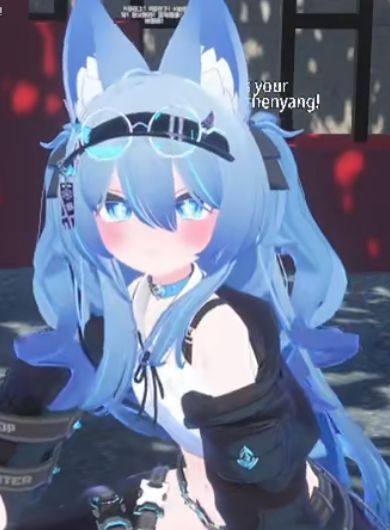
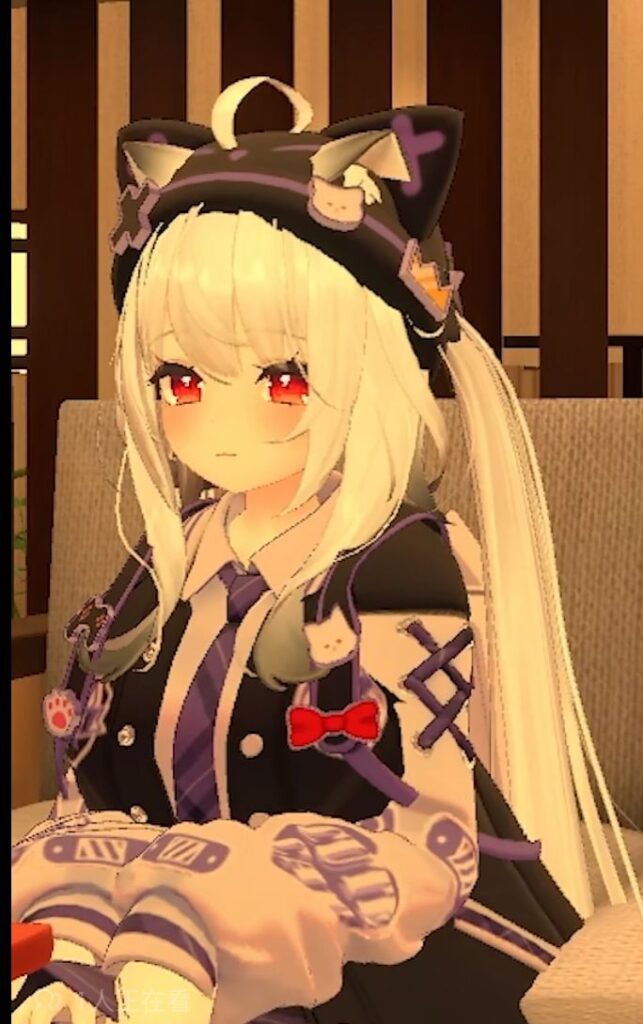
Some Femboy ‘s character in Vrchat
Some of them will have romantic relationships with men, not only the femboy group with the same gender identity as themselves, but also those with a traditional male gender identity as their partners. This diverse way of transgender identity is a significant challenge to traditional identities in the gaming environment. In addition, some male players may choose female characters in the game and establish emotional connections or interactions with the male characters in the game. This choice does not entirely represent a change in the player’s sexual orientation in real life. However, it offers an opportunity to explore and understand the complex relationship between gender and sexual orientation. In this environment, players need not worry about social labels and biases in real life and can freely explore their feelings and perceptions regarding gender and sexual orientation.
The existence of this gender fluidity is rather challenging to create in the real world. Gender identity experiments in games can not only help players better understand their gender identities, but also enable them to gain greater confidence and a sense of identity in real life. The gender breakthrough in the virtual world makes players realise that gender is not merely a biological difference but also a manifestation of social and psychological identity. This shift in cognition may prompt players to reflect on traditional gender concepts in real life and accept more fluid and diverse gender identities.
Conclusion
Through the investigation of various actual gender cases and combined with multiple academic case studies, it can be concluded that video games impact players’ identity. Gender identity is no longer simply male or female. The image of players in the virtual world itself is a manifestation of gender identity. Choosing the opposite gender and playing the characteristics of that gender. This process of identity switching can help players better understand the differences between genders. In the virtual world, players can challenge and reshape traditional gender roles, influencing their gender identity in real life. Nowadays, most player groups have gender mobility, and this behaviour is influencing more players to start exploring their gender identity in society, positively promoting society’s acceptance of people with different gender identities. Video games can positively impact society, promote mutual understanding, and represent a positive future development.
 TianYuran
  Lu Yunyan
  Pauleen