

Students are constantly told that AI writing tools save time, reduce stress, and make academic work more efficient. On the surface, that sounds like a progress. Tools like ChatGPT and grok can generate introductions, rewrite weird sentences, and turn a few rough notes into something beautiful. But that efficiency comes with a cost. The real problem with AI writing tools is not simply that students might cheat, it is that they encourage students to use their own brain and effort as little as they can, they are expressing something does not even belong to themselves.
Writing is not just a way of presenting ideas that already exist. For many students, writing is the process through which ideas become clear in the first place. As Janet Emig argues in her essay on writing as a mode of learning, writing is one of the ways learning itself happens. A weak paragraph exposes weak reasoning; difficult transition reveals that two ideas do not actually connect. A simple sentence forces the writer to decide what they really mean. That struggle is frustrating and annoying, but it is also important and valuable.
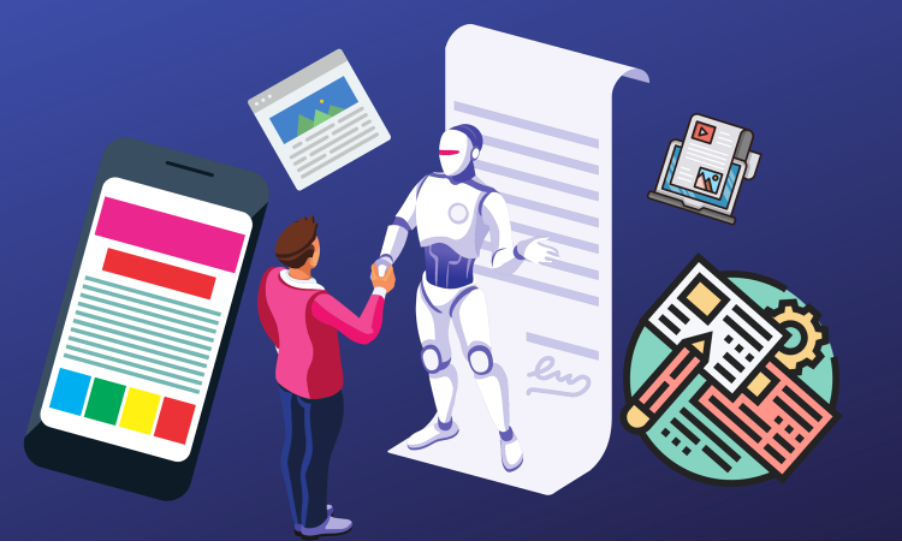
This is also why AI writing tools are so attractive. They remove the hardest parts of writing: hesitation, confusion, revision, and doubt. But those are not useless elements,they are exactly the moments when students test their understanding and shape their own arguments. When AI summarizes an article or generates topic sentences, the student may submit a readable piece of work. Yet readable is not the same as thoughtful. This concern is also reflected in CBS Sunday Morning’s segment on ChatGPT, which shows how easily AI can produce fluent writing while raising questions about what students may be giving up in the process.
“Readable is not the same as thoughtful.”
That matters because AI writing has already become normalized in student life. A 2024 HEPI survey on students’ use of generative AI suggests that these tools are already becoming part of ordinary academic habits. Universities therefore should not simply ask whether students are using AI, instead, ask students to use it in a correct way, like use AI for better understanding and checking, but still use their own thoughts to write at first. But If students rely on AI to organize every arguments, and produce whole concept for them, they are not just outsourcing writing, They are outsourcing judgment.
To be clear, AI is not useless. It can help students brainstorm, check grammar, or explain difficult concepts. Used carefully, it can support learning. As UNESCO’s guidance on generative AI in education suggests, these tools should support human learning rather than replace human judgment. But support is not the same as replacement. If they are avoiding the struggle that real writing requires, however, they are not becoming better writers. More importantly, they are not becoming better thinkers.
 Debbie Choo
  Bethany Miguel
  Tarkyn Sharples