
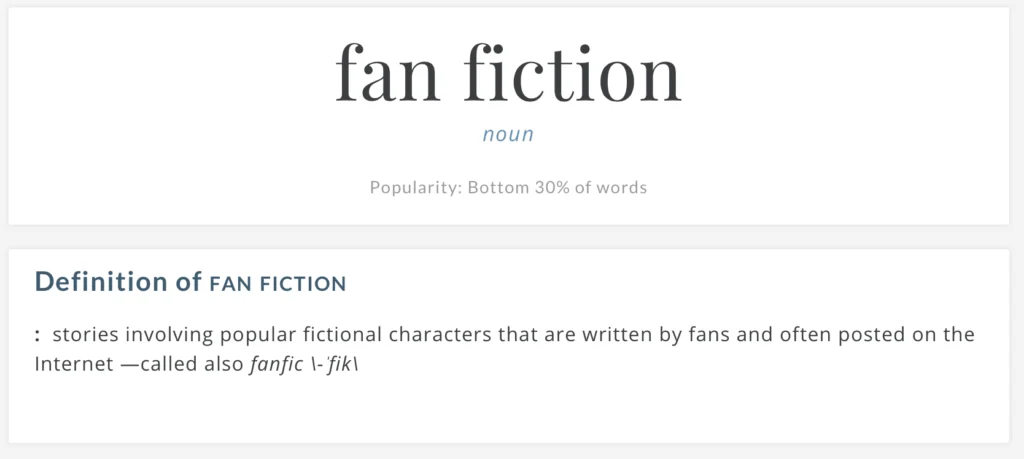
The fan culture is popular because it connects many people to stories they likes and they are, people attracted to such communities to exchange their ideas and creations, including fan fiction. Fan fiction is not a mere fantasy, it is something that allows the fan to explore and feel connection with texts, characters, or idols they admire and is a place of ideas, creativity, and emotion. Many platform are being used by fans to read and publish fan fiction such as Wattpad, AO3, and even X. Fan fiction based on popular media, or real individuals, including idols or celebrities. Popular media later developed by fans themselves or read the writings of fellow fans to have a more personalized character to their own interests. The act of reading fanfiction instead other original fiction books poses questions and assumptions that it is either the actual process of relishing the work of a person or merely an extension of imagination. By doing so, it is a way for fans to express themselves and connect with the media they love.
Fan fiction allows fans to apply their creativity to interpret a story in a variety of ways. Fan fiction encourages the fans to indulge their interests and meanings in ways that are not necessarily displayed in texts or in the popular media. Fan fiction can function as a vehicle to convey some group’s voices without affecting the original text. It also encourages fans to remediate the text into a more reflective form that matches their preferences. In this way, fan fiction provides a platform to voice and the fan fiction, as well, stimulates them to make remedies to the source text that are more suited to their interests.
Fan fiction starts with a preexisting popular media, character, or individual and fans bring their own imagination to the story. Although fan fiction is often seen as lacking originality, it can be seen as one example of how limitations can spark creativity and give fans freedom to play with and transform. Despite the fact that fan writers all start from the same source text, characters, and situations, they can explore them in their own stories or interpretations. This reveals that they are motivated and interested by various aspects of the media and have their methods of reinterpreting conclusions and deriving meaning out of various features of the popular media.
The creativity in fan fiction also deepens the meaning-making process. Meaning making is the process of interpreting something, which refers to how we give meaning to situations, events, or objects based on our personal experiences and understanding. Every fan is able to make hir or her own interpretation basing from their imagination for a character, a scene, and even a simple dialogue. This sparks the relationship between the fan and the media as they forms their own meaning which might be different to others. Fans can develop their own beliefs about what they see in the popular media, and it may lead to unique ideas which are unique and add depth to their experience.
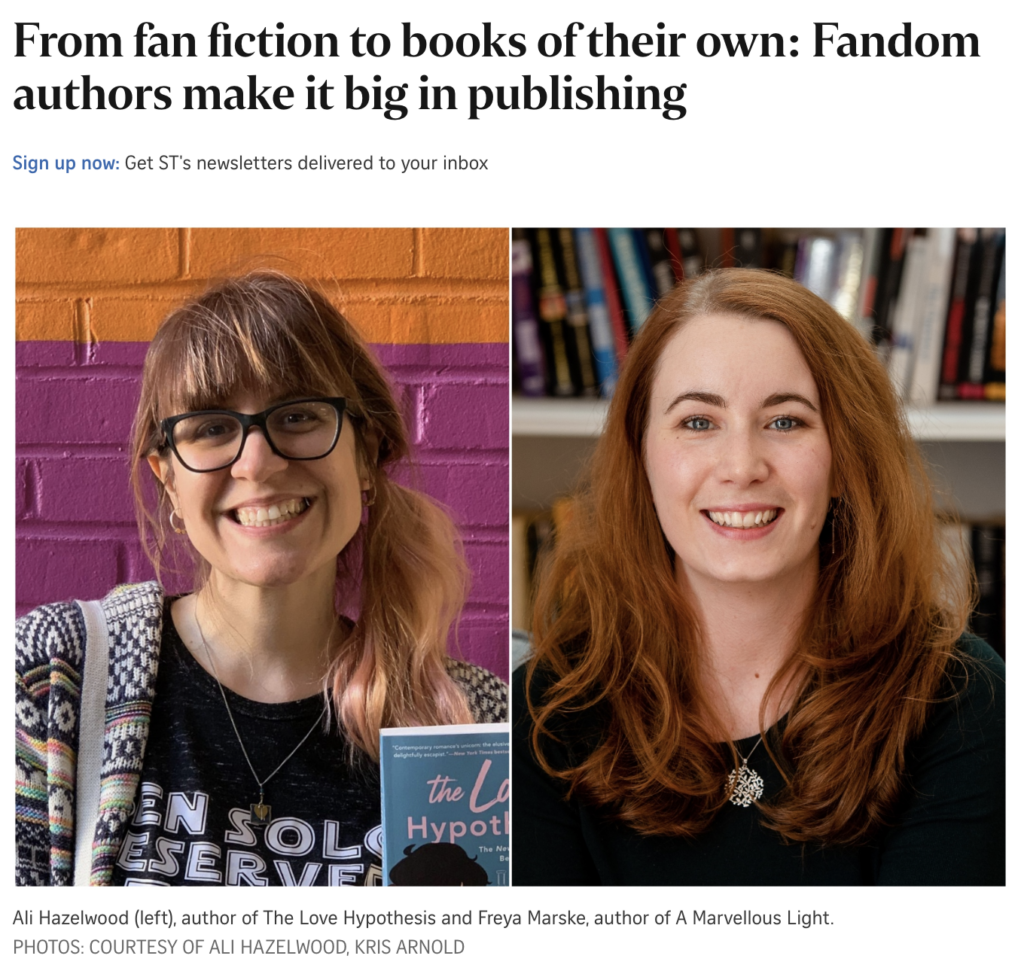
The creativity in fan fiction can be used in any form, and it can incorporate any field or topic of interest to the writer. As an example, a Star Wars fan fiction author uses her background as a woman in STEM and creates fan fiction to deal with stress in her PhD. Also on the path of writing, she intertwines personal interest like dating. This work later developed the same experience into her best selling romance book The Love Hypothesis. Fan fiction is no longer considered a secret and is popular among many successful writers, including awards and even movie-makers such as Hugo Award-winner Hugo Chloe Zhao. Some Authors attribute part of their education to fan fiction, which assists them in learning to write, and demonstrates how fan fiction can evolve into an effective and productive creative writing.
Fan fiction should be seen as a serious form of writing, not merely as fantasy or something embarrassing. It allows fans to explore ideas, share different perspectives, and discuss current social issues while learning new skills to support their writing. Scholars recognize that fan fiction can be a space for fans to be active and involved, where reading and writing are closely connected, and it encourages readers to turn reading into writing. This indicates that reading fan fiction later motivates fans to write and create their own work. Additionally, fan fiction can function as a learning platform for beginner writers, as fandom members can provide feedback, support, and discussion.
Fan fiction writers often take this writing very seriously and conduct deep research for their work. It’s not only about a brief knowledge about what they write, but dive deeper into it to craft a strong storyline. Authors with a deeper understanding often receive praise and recognition from readers. This process also indirectly helps readers learn and gain new information, showing that fan fiction can be informative rather than merely fantasy. For example, in a video, a fan fiction author conducts research for his or her writing and later receives support and compliments from readers for their efforts.
In addition, a tweet that resonated with many authors and readers noted that fan fiction is much better when the author really reads books as references. This discourse indicates that people who are serious about fan fiction writing are encouraged to dive deeper and gain more insight. Reading other fan fiction alone may not be a solid foundation for writing, so learning more is also a process that strengthens a writer’s foundation and goes beyond just imagination.
Moreover, from the reader’s side, fan fiction not only provides entertainment but also offers something beyond that. Many readers learn new knowledge or new languages through reading fan fiction online, and reading stories in different languages can improve understanding. Additionally, from real-life encounters, some fans have shared that they learned a new language to read fan fiction and better understand and enjoy fan fiction written in that language. A fan shared her eagerness to learn a new language to be able to follow good fan fiction, even though it’s in a language they don’t understand.
In fandom contexts, it is not surprising to encounter parasocial terms, since most of them have personal attachments and meanings within fandom activity. Parasocial relationships often refer to fictional relationships in which media consumers believe they form an intrapersonal bond with characters. Parasocial relationships usually create strong emotional attachments, and fan fiction can deepen these feelings by turning the meaning and connection with idols or fictional characters into stories. Researchers found that writers often have especially strong parasocial relationships with the characters they write about, and this aligns with how parasocial relationships are supported by the existence of Real Person Fiction (RPF), such as people writing fan fiction about real-life celebrities as well. To illustrate, a Reddit discourse brings up how fan fiction also helps build narratives about real people, such as idols. The persona writers have in their minds can be expressed through their writing and may also affect other’s opinions.
However, these relationships can affect people in ways similar to real relationships, as fans may feel emotionally close to characters or idols they do not actually know. They tend to be more attached to the media personality, and later studies suggest this may affect their ability to interact with people around them. In some cases, viewers become so attached to a character or idol that this fictional bond influences how they interact with people in real life. Research shows that anxiety can increase because of the development of parasocial relationships and even lead to excessive use of online media, as individuals may rely on these connections for comfort.
These relationships can also develop unrealistic expectations among fans for real-life events. For example, many fan fiction are produced in the romcom genre, and people with strong beliefs may be affected by the promising, cute storyline. This romcom thing is actually unrealistic that is is a fruit of writers imagination. According to previous analysis, people have a desire for intense experiences from popular media, especially romantic comedies. However, these media can also be harmful, as they create unrealistic expectations about real-world relationships.
This can be seen in cases where fan fiction is often justified as creative writing but is closely tied to parasocial relationships, as fans consume and emotionally invest in content produced by idols or creators. A tweet criticizes how intense “shipping” practices could cross personal boundaries and constitute a breach of privacy. This example illustrates how parasocial attachment can shift from imaginative engagement, such as writing fan fiction, to intrusive behavior in real life.
While fan fiction can function as a creative outlet that allows fans to explore emotions and narratives safely within fictional spaces, the tweet highlights how excessive parasocial involvement may overshadow creator’s actual work and blur the line between fictional fantasy and real world entitlement.
It can be said that fan fiction allows fans to use an existing text, popular media, or an idol to build their own alternate universe which more reflecting their emotions, ideas, and experiences. This process of rewriting, known as remediation where individuals can transform existing creation into more personal and emotionally accessible form. It also allows fans to join the participatory culture and enjoy media beyond passive consumption. So, instead of labeling fan fiction as obsessive or parasocial behavior, it is better to acknowledge it as a meaningful way for fans to embrace creativity and interpret their ideas. Fan fiction also helps fans create a space where writers can express who they truly are, create narratives, and critique social norms through storytelling.
This can also mean that fan fiction becomes a safe place for fans, whether they write it or read it. Fan fiction tags can be sorted according to preferences, what they want to see, read, and consume. This freewill to choose reflects how they see themselves and their attachment to specific popular media, characters, or idols. Sometimes, fan fiction also becomes a tool for individuals to insert themselves into an alternate universe. However, this should not be seen as a way to escape from the real world. It’s more of a personal box to gain or release thoughts. Individuals can gain knowledge, entertainment, and even self-development from fan fiction. On the other hand, fan fiction is also a place for them to spill their thoughts, ideas, and voices in a more creative and personal way.
Looking from the wider view, fan fiction functions not only as entertainment, but also as a form of resistance and self-expression, particularly for marginalized voices. Fan fiction often reflects dissatisfaction with traditional heterosexual love stories and media restrictions on female, allowing writers to explore personal concerns by reimagining familiar characters and stories in safe and familiar ways. In addition, fan fiction encourages participation and communication, as writers receive feedback from readers, which helps improve their writing and refine their ideas.
Some people often seek more to consume and look for something that can comfort them, and fan fiction is often the answer. Many agree that fan fiction feels like home-cooked meals, where people can create a popular dish but also add spices they like and remove things they don’t feel like eating. Fan fiction often feels genuine, written with love and personal interest, and readers also get warmth from it. Individuals can share it with other fans or consume it by themselves, since there are no rules about it.
In many ways, fanfiction is a thing that come from fans meaning making process and how people can interpret this and rework it to align with their preferences. Meaning making through fan fiction allows articulation of ideas that may not fit within mainstream discourse. Because fan communities are generally more open and writers can explore sensitive topics without fear of being shut down by overt hostility or negative criticism. Fan fiction is open and easy to access, which makes it a place for people to develop their creativity, participate easily, and even become influential, with the internet playing an important role by supporting experimentation and learning together.
However, is it true that some real emotion may be involved in the process of fanfiction writing or reading that may lead to the negative side of parasocial relationship. But individuals also have awareness and many criticisms about this, which helps them understand the negative effects. Many fanfiction writers also include tags or warnings that their writing is fiction, and as readers, it is their duty to understand the boundaries they will encounter.
Overall, fan fiction should not be considered mere fantasy or an unhealthy attachment. Instead, it should be recognized as a transformative practice that helps individuals process emotions, develop creative skills, and engage with media in personal and meaningful way. It should also be seen as a space for individuals to be comfortable with what they like and what they are. It is also a tool to convey messages and dissatisfaction with some events and occurrences. Lastly, fan fiction holds deeper meaning for both writers and readers, going beyond being a story to becoming a way to express, explore, and also connect with the fandom.
 Guan QiuYu
  REN Ren
  Tan Kane