
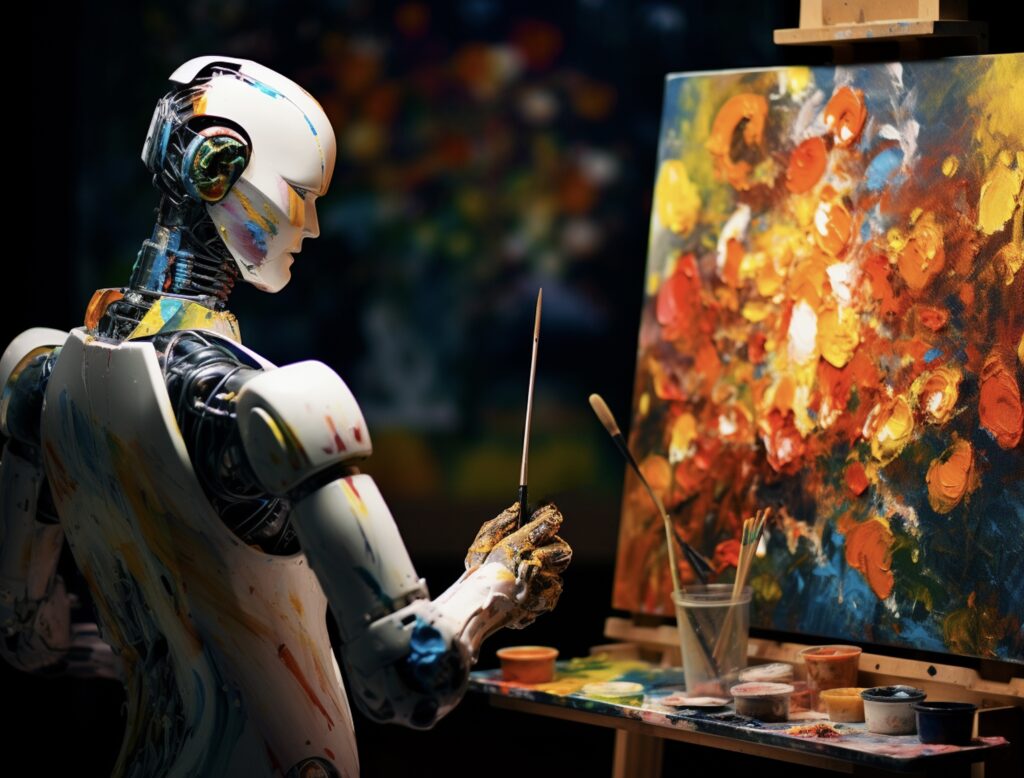
In the words of leading artificial intelligence (AI) scholar, Kate Crawford: “AI is neither artificial nor intelligent. AI systems are not autonomous, rational, or able to discern anything without extensive, computationally intensive training with large datasets or predefined rules and rewards”. Therefore, if AI isn’t real artificial intelligence, this must mean that AI-generated art isn’t real art. As the disruptive medium bursts onto the contemporary visual art scene, one thing is certain. It is here to stay, whether we like it or not. Whether this fast-evolving movement is real art, or a real threat to the future of contemporary art, is what continues to spark debate amongst experts and practitioners alike, with many opinions divided.
Some argue that AI-generated art cannot be considered art as it lacks the essential human attributes that define the very nature of art. Others claim it is undervalued, while human-made art is overrated, with AI set to redefine the role of art. I believe the medium is multifaceted but still no match for the ‘real thing’. As I will reveal in this article, the evidence shows that AI-generated art is just the product of a tool, but one which comes with social and ethical implications that highlight the superiority of human-made contemporary art. What this evidence suggests is that the time-honoured tradition of art remains an exclusively human endeavour that cannot be matched by artificial intelligence. At least not yet anyway.
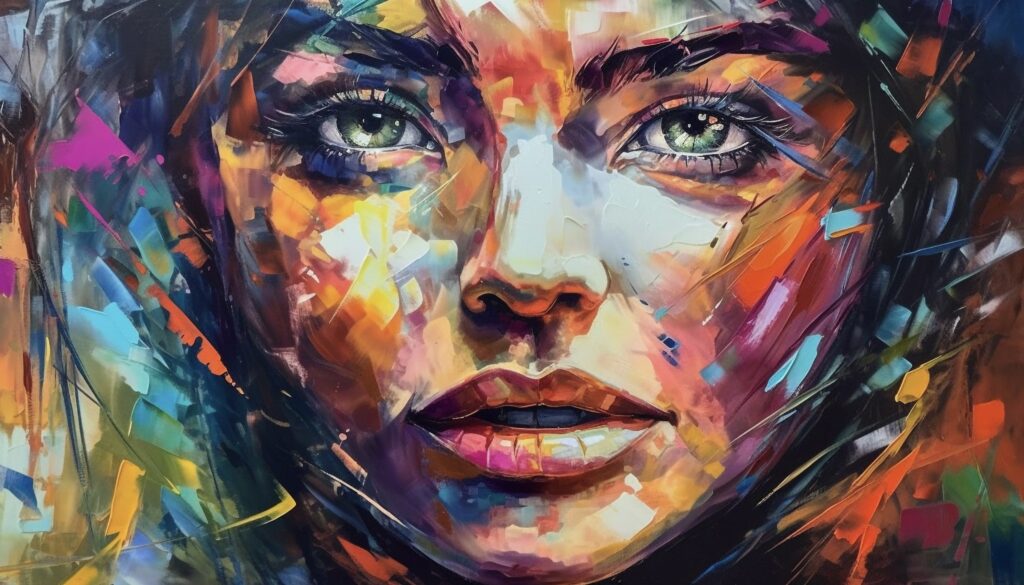
There is no doubt that AI has enabled the democratisation of art through machine learning models, which provide anyone – not just artists – with a simple creative tool. On the one hand, this tool is being used collaboratively as an assistant, automating tasks and suggesting ideas to augment artists’ own creativity1. On the other, it is being used as the artist itself by creating artwork from scratch through prompt-based image generation. These methods, particularly the latter, has led to the rapid rise of AI-generated art, with inclusion of the medium in art competitions now the norm, and dedicated AI art exhibitions, and even museums, also starting to emerge. While there is widespread concern about the threat AI poses to the livelihoods and reputations of artists within the creative arts sector2 3, including the music and video game industries, the contemporary visual art field differs. Traditional artists have been working with artificial intelligence since the 1960s4, with AI-generated art just the next step in the evolution of that relationship. Throughout this evolution, it has always been a tool for artists, not a threat, and this continues today with the latest generation of AI systems.
These systems include large language models and generative adversarial networks (GANs), which are trained to recognise various patterns and styles against a dataset5; and text-to-image platforms – such as DALL-E, Stable Diffusion and Midjourney – that interpret text prompts using complex algorithms6. While they can all produce visual artwork very similar to that made exclusively by humans, what these AI systems are not able to do is replace the role of human actors in the art making process. Nor are they able to authentically replicate the emotions, experience and imperfections of life through art in the same way that humans can. Unless AI becomes self-aware one day, this will not change.
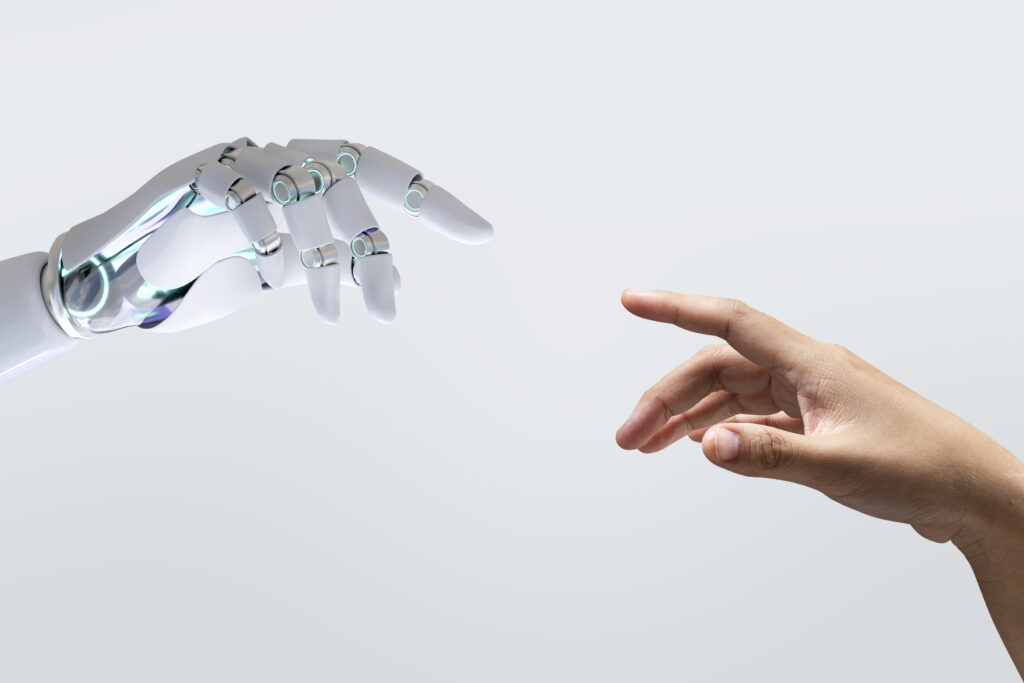
As AI is just a tool for artists, some experts challenge whether AI-generated art should even be defined as art. Philosophy scholars Dr Karl Kraatz and Shi-ting Xie argue this very point in their article, “Why AI Art is Not Art – A Heideggerian Critique”. They claim AI cannot create art because only the skillful and intentional transformation of objects that are shaped by an understanding and appreciation of human mortality can result in the creation of true artwork. In their view, AI will always lack the “socially shaped intentionality of moral artists”. They write: “AI will never be capable of bringing the interplay of ‘earth’ and ‘world’ to a stand within an artwork because of its lack of intentionality that only humans (not even highly intelligent animals) possess.” AI may offer the opportunity for artists to explore new avenues of creativity, but when it then ‘becomes the artist’ in that process, I agree with the authors that there is no intentionality behind the artwork that results. Without human creativity as the driving force, AI can only generate artifacts, not art.
On the other side of the debate, experts believe AI-generated art is not only comparable, but superior to that of humans. Scholar and art critic Łukasz Białkowski is one such proponent. In his article, “Artificial Intelligence and concerns about ‘True’ Art”, he makes the controversial claim that AI-generated art is undervalued, while human art is overrated. By challenging the romantic notion that contemporary art is a niche, exclusively human activity, he argues that AI-generated art shares similar characteristics to human-made art but is unfairly criticised in comparison. According to Białkowski, the line between human and non-human creators of art is blurred and the reasons to protect the superiority of human-made art are weak. “The presence of AI offers a great opportunity to rethink the role of art and its place in a world dominated by new technologies,” he says. While Białkowski’s observation on the criticism of AI-generated art may be valid, his claim that the medium is effectively on-par with human-made art is not. AI only shares the characteristics of human-made art because it mimics these from data created by humans. AI isn’t intelligent, remember?
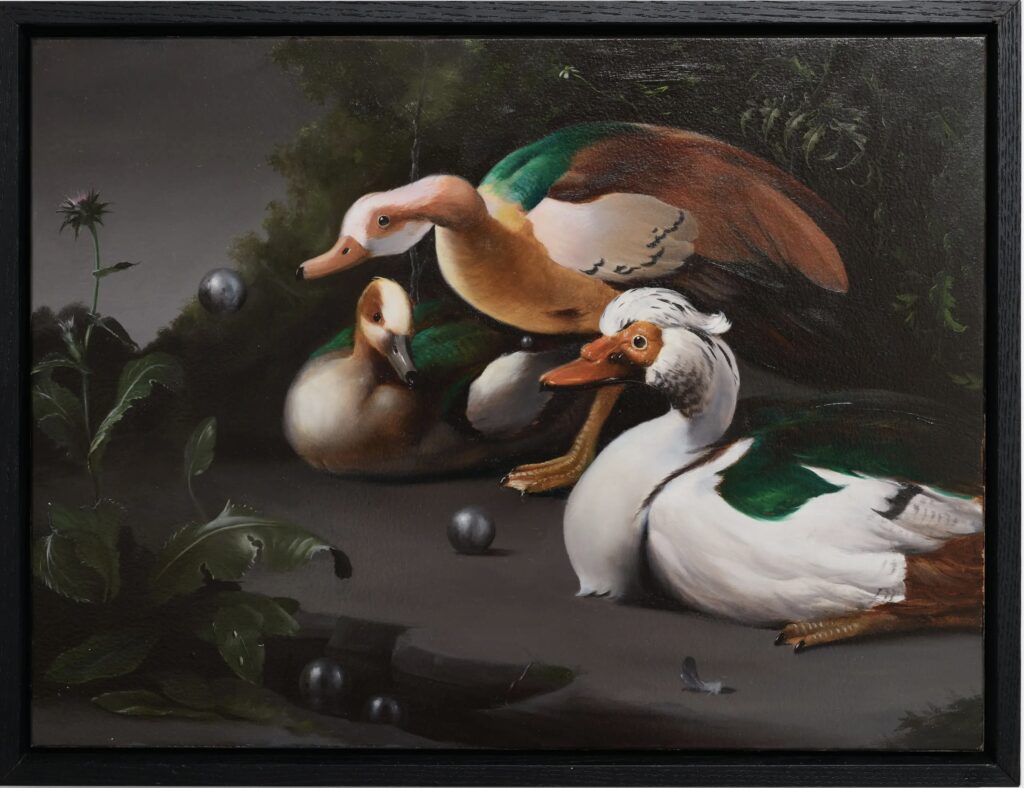
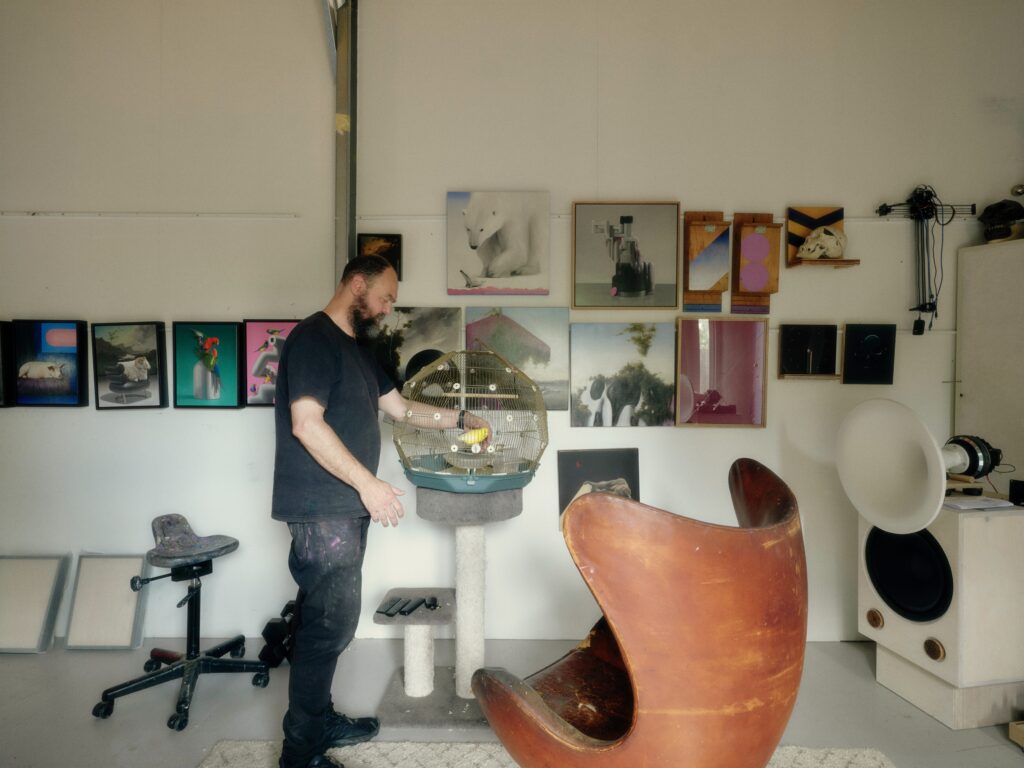
For those artists who use AI as a collaborative tool to enhance their own work, the line between human and AI is not blurred as they are in in full control of the creative process and narrative. This is the case for acclaimed Melbourne-based contemporary artist, Sam Leach, who is renowned for creating traditional oil paintings with futuristic themes by using AI-generated images to enhance the composition of his work7. In his recent exhibitions, The Leisure Herd and Emotion Harvest, Leach used a range of AI tools, including his own algorithms and experiments with machine learning models, to create a collection of paintings and interactive artworks based on his artistic investigation of the relationship between machines, humans and animals. While some may not agree with Leach’s use of AI as inspiration, there is no denying that he is the author of his own work. His creations do not threaten to replace contemporary visual art created exclusively by humans, just compete with it.
It is when the line between human and AI authorship becomes blurred that things get complicated. Under current copyright law, artistic creations are only eligible for protection when authored by humans, so as these laws struggle to keep pace with advances in technology, social and ethical implications emerge. Not only does the question of ownership become complex, depending on the level of contribution of AI in the creative process, but the very nature of creativity becomes debatable. Some argue that AI-generated art should receive the same copyright protections as human-made art, while others advocate for new legal frameworks to acknowledge the collaborative role of AI in the art making process8. This human and AI co-authorship issue just creates confusion and raises further questions around the changing definition of what should be considered art.
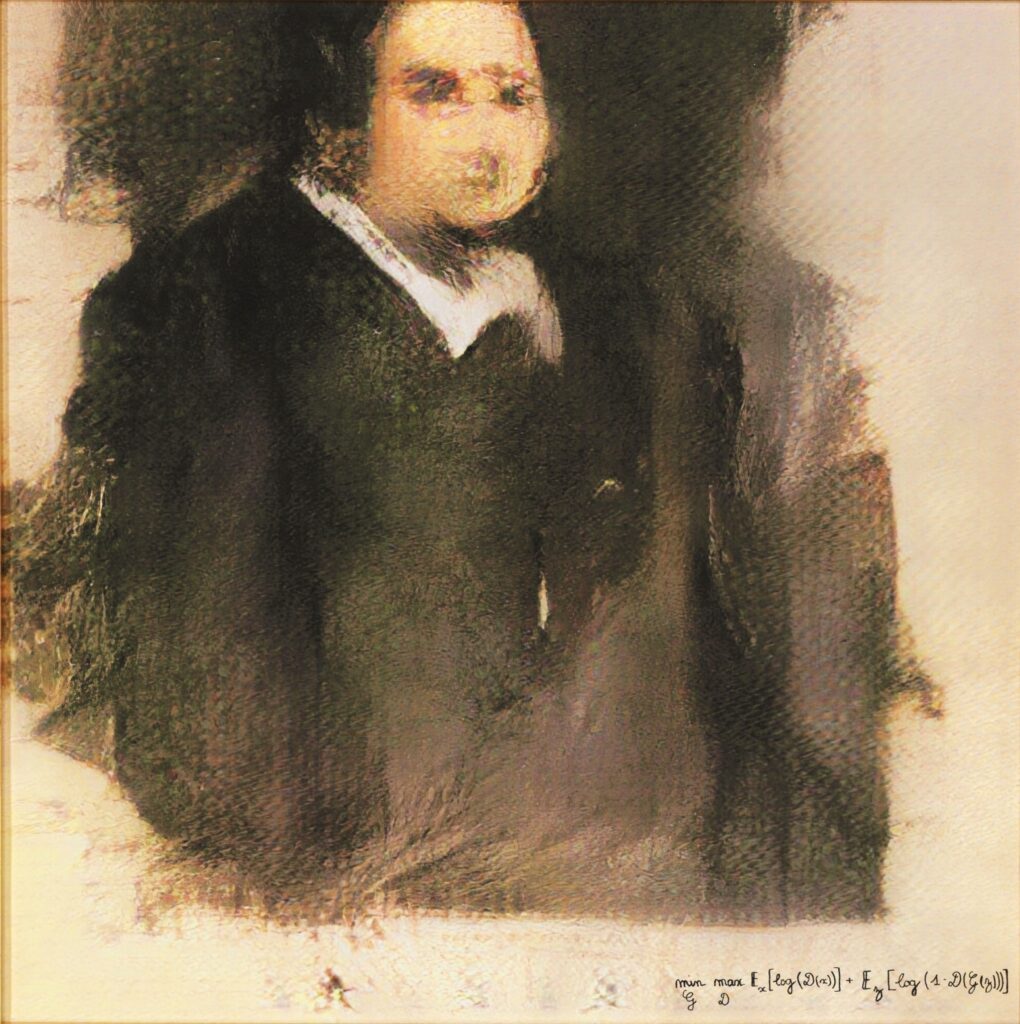
The controversial portrait of Edmond de Belamy, which in 2018 became the first AI-generated artwork to sell at auction for a staggering $432,000 USD, is a case in point. The shock Christie’s auction result marked a turning point in the evolution of the new art movement and sparked major debate on the role of AI as a tool vs an agent, as well as the consequences of this when it comes to ownership of AI-generated art. Christie’s marketed the painting as “not the product of a human mind” due to being produced by a GAN but was still created by people from a French art collective called Obvious. This team from Obvious contributed to the process in various capacities, including writing the algorithmic code to produce the Renaissance-style imagery learned by the GAN – which the painting was then signed with9. What they did not contribute to, however, was the painting’s creative narrative. AI effectively became the artist, so Obvious was therefore not classified as the authors under copyright law. As to why Edmond de Belamy attracted the attention and price it did seems pretty ‘obvious’ to me. It was the first of its kind to go under auction, so was just a novelty. Nothing more.
In addition to Obvious, artist Jason Allen also attracted attention for all the wrong reasons when his digital artwork, Théâtre d’Opéra Spatial, won first prize in an art competition at the 2022 Colorado State Fair. The image was generated by Midjourney, with Allen just investing his time and effort into experimenting with text prompts to achieve a “form of supernatural reality”10. Despite claiming it required more than 600 text prompts and multiple Adobe Photoshop revisions11, Allen was repeatedly denied copyright status for the image. While controversial at the time, it only proved that when AI becomes the artist in the human-AI relationship, AI-generated art is not recognised as real art in the eyes of the law.
Another reason why visual creations like Théâtre d’Opéra Spatial should not be considered real art is the ethical issue of copyright infringement of other artists’ images. Machine learning models are trained using a vast database of visual content sourced from the internet12. This consists of not only public domain images, but copyrighted images scraped from artists’ portfolios on websites like Pintrest, resulting in some artists potentially competing against their own previous work in the marketplace13. This has led to multiple lawsuits being brought against AI platforms by artists for alleged unauthorised use of their work to train AI algorithms without credit, consent or compensation14. Not only is this a serious economic issue for AI platforms and the artists affected, but an ethical dilemma for those creating AI-generated art. It may not be intentional, but they are potentially stealing other artists’ work to create images that are neither original nor authentic. This is just another example of why human-made art should be considered superior.
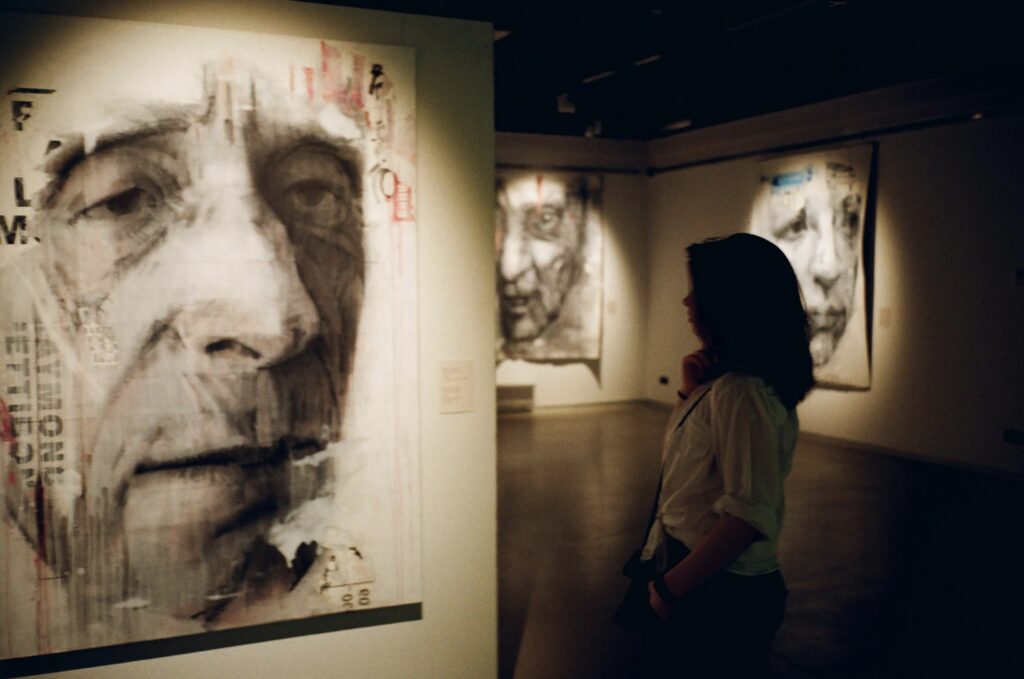
With all the social and ethical challenges associated with AI-generated art, it is no surprise that it also comes with the issue of bias. Multiple academic studies have reported that people predominantly form a negative bias towards AI-generated art, with the level of appreciation and artistic value reduced due to the artworks being viewed as less meaningful or aesthetically pleasing15. The subjects of these studies perceive artwork associated with AI as less authentic as it lacks the human touch or emotional depth unique to life experiences16 17. It just goes to show that people consider art as inherently human and highly value that fact.
Of course, this does not stop some decision makers behind AI-generated art trying to get around the issue of negative bias. They do this by using anthropomorphic language to attribute human qualities to AI systems. The marketing of Edmond de Belamy was a prime example of where anthropomorphic language was used to ‘humanise’ AI, claiming the portrait was entirely “realised by an algorithm”18. This may have contributed to the novelty factor for art collectors, and ultimately the auction price, but it would have also fueled anti-AI bias within the contemporary art community and wider society. Seven years later, the Edmond de Belamy case continues to attract attention today, but it also continues to prove a point – that AI-generated art is still just a novelty, not a genuine threat to human-made art.
In this article, I have explored whether AI-generated art is real art by focusing its role as a tool for artists. By acknowledging both sides of the debate and providing examples of how this tool is being used to either enhance the creativity of artists, or become the artist for them, I have shown that AI-generated art is a hotly contested medium that fosters a hotbed of social and ethical challenges. Not only is society largely rejecting AI-generated art as real art when not clearly authored by a human – including the law, scholars, practitioners, and study subjects – but the issues of copyright infringement and negative bias also highlight the superiority of human-made contemporary art. Because, regardless of the advantages of technology, art will always be an exclusively human form of creative expression that celebrates what makes us human – and that cannot, or should not, be matched by artificial intelligence.
References:
- Basty, R., Said, H., & Halse, S. (2025). The AI Art Paradigm: Disruptions in the Digital Art Ecosystem and Future Trends. ACM Journal on Responsible Computing. https://doi.org/10.1145/3762198 ↩︎
- Erickson, K. (2024). AI and work in the creative industries: digital continuity or discontinuity? Creative Industries Journal, 1–21. https://doi.org/10.1080/17510694.2024.2421135 ↩︎
- Jiang, H. H., Brown, L., Cheng, J., Khan, M., Gupta, A., Workman, D., Hanna, A., Flowers, J., & Gebru, T. (2023). AI Art and its Impact on Artists. In J. Davis, A. John, F. Rossi, K. Firth-Butterfield, & S. Das (Eds.), AIES 2023 – Proceedings of the 2023 AAAI/ACM Conference on AI, Ethics, and Society (pp. 363–374). ACM. https://doi.org/10.1145/3600211.3604681 ↩︎
- Basty, R., Said, H., & Halse, S. (2025). The AI Art Paradigm: Disruptions in the Digital Art Ecosystem and Future Trends. ACM Journal on Responsible Computing. https://doi.org/10.1145/3762198 ↩︎
- Basty, R., Said, H., & Halse, S. (2025). The AI Art Paradigm: Disruptions in the Digital Art Ecosystem and Future Trends. ACM Journal on Responsible Computing. https://doi.org/10.1145/3762198 ↩︎
- Orwig, W., Bellaiche, L., Spooner, S., Vo, A., Baig, Z., Ragnhildstveit, A., Schacter, D. L., Barr, N., & Seli, P. (2024). Using AI to Generate Visual Art: Do Individual Differences in Creativity Predict AI-Assisted Art Quality? Creativity Research Journal, 1–12. https://doi.org/10.1080/10400419.2024.2440691 ↩︎
- Herrington, J. (2023). AI goes to art school. Artlink, 43(2), 94–99. ↩︎
- Watiktinnakorn, C., Seesai, J., & Kerdvibulvech, C. (2023). Blurring the lines: how AI is redefining artistic ownership and copyright. Discover Artificial Intelligence, 3(1), Article 37. https://doi.org/10.1007/s44163-023-00088-y ↩︎
- Epstein, Z., Levine, S., Rand, D. G., & Rahwan, I. (2020). Who Gets Credit for AI-Generated Art? iScience, 23(9), 101515. https://doi.org/10.1016/j.isci.2020.101515 ↩︎
- Piskopani, A. M., Chamberlain, A., & Ten Holter, C. (2023). Responsible AI and the Arts: The Ethical and Legal Implications of AI in the Arts and Creative Industries. Proceedings of the First International Symposium on Trustworthy Autonomous Systems, Article 48. https://doi.org/10.1145/3597512.3597528 ↩︎
- Anscomb, C. (2025). Who authors AI art? (And why does it matter?). AI & Society. https://doi.org/10.1007/s00146-025-02325-7 ↩︎
- Basty, R., Said, H., & Halse, S. (2025). The AI Art Paradigm: Disruptions in the Digital Art Ecosystem and Future Trends. ACM Journal on Responsible Computing. https://doi.org/10.1145/3762198 ↩︎
- Piskopani, A. M., Chamberlain, A., & Ten Holter, C. (2023). Responsible AI and the Arts: The Ethical and Legal Implications of AI in the Arts and Creative Industries. Proceedings of the First International Symposium on Trustworthy Autonomous Systems, Article 48. https://doi.org/10.1145/3597512.3597528 ↩︎
- Hall, J. & Schofield, D. (2025). The Value of Creativity: Human Produced Art vs. AI-Generated Art. Art and Design Review, 13, 65-88. 10.4236/adr.2025.131005 ↩︎
- Messingschlager, T. V., & Appel, M. (2025). Mind ascribed to AI and the appreciation of AI-generated art. New Media & Society, 27(3), 1673–1692. https://doi.org/10.1177/14614448231200248 ↩︎
- Hall, J. & Schofield, D. (2025). The Value of Creativity: Human Produced Art vs. AI-Generated Art. Art and Design Review, 13, 65-88. 10.4236/adr.2025.131005 ↩︎
- Jiang, H. H., Brown, L., Cheng, J., Khan, M., Gupta, A., Workman, D., Hanna, A., Flowers, J., & Gebru, T. (2023). AI Art and its Impact on Artists. In J. Davis, A. John, F. Rossi, K. Firth-Butterfield, & S. Das (Eds.), AIES 2023 – Proceedings of the 2023 AAAI/ACM Conference on AI, Ethics, and Society (pp. 363–374). ACM. https://doi.org/10.1145/3600211.3604681 ↩︎
- Epstein, Z., Levine, S., Rand, D. G., & Rahwan, I. (2020). Who Gets Credit for AI-Generated Art? iScience, 23(9), 101515. https://doi.org/10.1016/j.isci.2020.101515 ↩︎
 Guan QiuYu
  REN Ren
  Tan Kane