
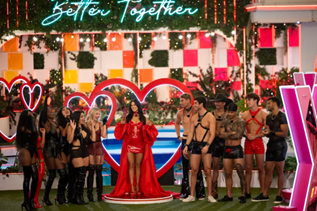
I have been watching Love Island for a few years now, starting with Love Island UK’s seventh season in 2021, and have since watched every UK season and USA season to date. Not only does this prove I have no social life, but I think I’m qualified enough to know what’s gone wrong this time around.
Love Island USA’s seventh season is highlighted by parasocial fans, heavy production influence and influencers looking to expand their brand. The final four – supposedly the best couples of this season – were underwhelming. They consisted of a couple that broke up on their final date, a couple that is only there for a cheque, a couple I forgot even existed, and the winners (carried by Amaya Papaya). Our of those four, only one couple is still together in an obvious attempt of promoting their respective brands.
Before Love Island USA comes back for an eighth season, let’s review the pop culture moment that was.
Love Island USA Season 7: The few highs
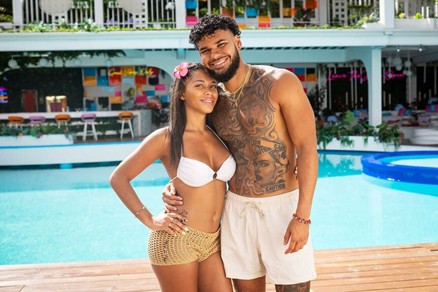
The most memorable part of the season was Amaya Papaya – or Amaya Espinal – and Bryan Arenales becoming the first Latine couple to win Love Island USA. Espinal, who became popular very quickly on social media, was bound to win regardless of who she was with, what with her one-liners and eccentricity – but I’d be lying if I said I wasn’t always rooting for her!
This season also embraced diversity. Out of the ten original islanders, seven were people of colour or ethnic minorities, two contestants were bisexual, and one contestant had a child. It’s safe to say that the representation was refreshing, especially considering Love Island’s tumultuous relationship with racism.
Now we’ve discussed the very short list of the highs in season seven, let’s get into the nitty gritty.
The Lowest of Lows: Racism and parasocialism

The most memorable person of Love Island USA’s seventh season was Huda Mustafa, who went viral after ‘crashing out’ on Jeremiah Brown and Iris Kendall. Fans were split on whether Mustafa was over reacting, and it started the ‘Huda HQ’ – her very controversial fandom.
Everything came to a head with Mustafa and Michelle “Chelley” Bissainthe after a falling out. Both girls were interested in Chris Seely, Seely ‘picked’ Mustafa – drama ensues. Mustafa and Bissainthe seemed to make up relatively quickly, however the same can’t be said for their respective fandoms.
Mustafa spoke in GQ Middle East about the racism she received as a Palestinian woman in the aftermath of LIUSA, exampling her face being put on dead Palestinian bodies and being called a ‘terrorist’, among other racism she faced. In the same stroke, people were putting Olandria Cathen’s face on George Floyd’s body and photoshopping Mustafa’s face as the police officer.
I don’t like to call a person a ‘low’ of a season – especially considering the psychological conditions reality T.V. contestants deal with. It’s more so to do with the stan culture that cultivated this season.
Another downfall of this season was how overly produced it felt. Longtime fans could tell when moments were pushed by production. The oddly timed bombshell entries, forced dates, and even sudden eliminations that felt scripted for drama rather than love. It’s part of the formula, sure, but Season 7 took it a step too far. Conversations that once felt spontaneous now came across as rehearsed, with Islanders seemingly aware of what would “trend” on TikTok.
It didn’t help that many contestants entered the villa already established as influencers. Love Island has always been a career launcher, but this season felt like a brand collaboration more than anything else. The emotional investment that once kept viewers hooked was replaced by Maybelline New York plugs, podcast teasers and media training. The authenticity that made Love Island so addictive is fading — and long time audiences such as myself audiences can tell.
Love Island has always thrived on drama, but Season 7 showed what happens when online fandoms and production agendas overtake the heart of the show. If Season 8 wants to succeed, it’ll need to remember what made Love Island a cultural phenomenon in the first place. We miss the messy, genuine search for love (and a little gossip), not viral moments and stan wars.
 Jessie Goates
  LeighCor