
Introduction
In Kyoto’s historic Gion district, once echoed softly along narrow paths. Today, that gentle sound is drowned out by the clicking of cameras and the loud conversations of tourists looking for the ideal photo. Japan, long admired for its careful balance between history and innovation, is now experiencing an unprecedented tourism growth. Since reopening its borders following COVID-19, the country has quickly become one of Asia’s most popular tourist destinations, with record-breaking inbound tourism in 2024 (Japan National Tourism Organization [JNTO], 2024).
For many locals, this worldwide interest has come with a price. Temples that were previously used for prayer are now filled with selfie sticks, and historic streets are lined with souvenir shops selling mass-produced ‘local’ items. Tourism has unquestionably fuelled Japan’s post-pandemic economic recovery, but it has also sparked cultural, social, and environmental problems. Japan was once long admired for its careful balance between tradition and innovation.
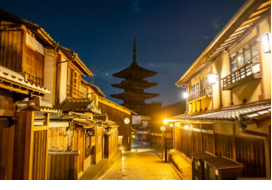
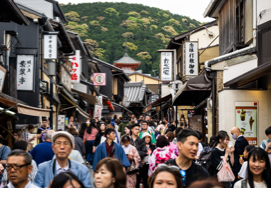
Japan’s growing tourist market, which is sometimes considered an economic success story, is altering the country’s culture and communities. While tourism stimulates economic growth and global recognition, it simultaneously risks undermining the authenticity, respect, and peacefulness that once defined Japan’s identity.
The Economic Revival
Tourism has become a central pillar of Japan’s national recovery plan. The government has positioned it as an essential source of growth, with set goals to achieve “60 million visitors per year by 2030” (JNTO, 2024). Foreign spending in 2024 topped pre-pandemic highs, proving its important role in rebuilding Japan’s economy.
Tourism, according to the Ministry of Land, Buildings, Transport, and Tourism (MLIT, 2023), has been crucial to ‘local development’, especially in areas that are suffering from depopulation. Towns such as Takayama and Hakone have benefited from improved infrastructure, preserved architecture, and employment growth in the hotel and cultural businesses. In many ways, tourism has revived Japan’s dying countryside (MLIT, 2023).
However, this economic revival comes with significant consequences. The heavy reliance on mass international tourism exposes local economies to currency changes and global instability. The cheap yen has made Japan extremely affordable for international visitors, resulting in ‘a record 37 million tourists in 2024’ (Nikkei Asia, 2024). While the increase in tourism increased foreign spending, it also raised local prices and made daily living more expensive in popular tourist areas (Asahi Shimbun, 2024). Many small businesses now cater to visitor expectations rather than local needs, resulting in a subtle type of ‘cultural displacement’.
Many small businesses today prioritize visitor expectations over local needs, resulting in a subtle form of “cultural displacement.” Locals once visited cafés, which now serve Instagram-themed sweets. Local redevelopment funds often go to developing attractions rather than sustaining steady jobs for locals. Although MLIT (2023) officially promotes for “sustainable tourism,” critics claim that these pledges are frequently rhetorical rather than actionable. For example, local redevelopment funding is frequently used to create tourist attractions rather than to protect local employment.
Furthermore, Japan’s economic reliance on tourism may result in a weak dependency. During the pandemic, the tourist freeze showed how much local economies had relied on tourist spending. With the recovery following the pandemic, local governments are under pressure to continue expansion at the price of social and environmental stability. This repetitive reliance raises questions about the long-term viability of Japan’s tourism-led economic plan (JNTO, 2024).
Cultural and Social Tensions

Japan’s tourist growth has changed not just the economy, but also disrupted daily life and social peace within Japan. Nowhere is this more evident than in Kyoto, the country’s cultural core. Kyoto, which was once famous for its peaceful temples and centuries-old tea shops, is now the epicentre of Japan’s overtourism crisis.
In 2023, Kyoto’s Gion district made international headlines in 2023 when it implemented a “street photography ban” to protect residents and geisha from unwanted visitors. The ban, which comes with penalties, was implemented in response to a series of events in which visitors harassed geiko and maiko for photographs. What was once a vibrant cultural heritage has been reduced to performance for the cameras, leaving residents angrier and more isolated (Asahi Shimbun, 2024).
Similar concerns may be heard throughout Japan, not just in Kyoto. Residents in Osaka’s Dotonbori neighbourhood stress about litter and heavy traffic. Tourists in Kamakura and Nara have been caught trespassing or mishandling cultural artifacts. These behaviours represent the moneymaking aspect of Japanese culture, in which tradition becomes a product and authenticity becomes a performance.
According to MLIT (2023), local development projects urge localities to emphasize their “local charm.” However, this often ends up in ‘performative authenticity’, traditions exhibited for visitors rather than enjoyed by residents. Tea ceremonies, kimono rentals, and shrine visits are becoming more popular among international visitors seeking “authentic Japan.” This process changes local practices from personal or religious expressions to transactional experiences.
The emotional toll on residents is growing. Many locals in Kyoto and Nara are found avoiding popular districts entirely during busy tourist seasons. Elderly citizens believe that their neighbourhoods have become “theme parks for foreigners” rather than real communities (Asahi Shimbun, 2024). This sense of loss signals a deeper issue between traditional preservation and global curiosity, one that Japan must carefully negotiate in order to maintain its social unity. It has also fostered what some call ‘cultural fatigue’, an ongoing sense of exhaustion from continuous visitors and consumption. As residents adjust to tourism demands, pieces of communal identity could be diluted or lost entirely.
For younger generations, the consequences are even more profound. In some cases, our younger generations have completely withdrawn from cultural traditions, seeing them as commercial rather than something meaningful. Therefore, what tourists see as “authentic Japan” may become a staged representation of their own expectations rather than true cultural expression.
Environmental and Infrastructural Strain
Over-tourism not just a cultural issue, it is putting a strain on Japan’s environment and infrastructure, in addition to its culture. From jam-packed trains to damaged landscapes, the country is struggling to manage the physical impact of its growing visitor numbers.
Mount Fuji offers a prominent example. In 2024, ‘The Guardian’ reported that officials in Fujikawaguchiko Town had constructed barricades and limited access to famous overlooks due to serious waste, illegal drone usage, and safety issues caused by pollution. Locals described life near the mountain as “intolerable.” The image of visitors climbing Japan’s most sacred highest point has been distorted into one of chaos and pollution, leading to national debates on visiting quotas and required conservation fees (The Guardian, 2024).
The environmental strain is most noticeable in coastal and countryside areas. Okinawa’s coral reefs, long valued for their biodiversity, are suffering from sunscreen pollution and boat traffic. Hiking routes in Nikko and Kamikochi have been ruined because of heavy use. Waste disposal systems in smaller towns are unable to handle the number of visitors, causing increased waste and harm to local ecosystems (MLIT, 2023).
Japan’s public transportation systems are also under strain. Trains and buses are frequently overcrowded during peak travel times, with people having trouble getting to work or school. Popular routes, such as the Shinkansen between Tokyo and Kyoto, have become symbolic of Japan’s overtourism problem, efficient yet overcrowded.
In response, JNTO (2024) created the “Travel Japan Responsibly” campaign to showcase lesser-known sites while also encouraging respect for customs. However, awareness remains low, and taking part is primarily voluntary. Without stricter measures, such as tourist fees, visiting limitations, and more conservation enforcement, Japan risks destroying the same landscapes that attract visitors in the first place.
Environmentalists and community leaders are advocating for more distributed tourism approaches, including encouraging people to explore less-visited places. Promoting countryside tourism might relieve the burden on popular destinations including as Kyoto, Nara, and Mount Fuji while allowing smaller communities to build their economies sustainably (MLIT, 2023). However, these solutions need long-term investment and behavioural change, both from authorities and travellers.
Balancing Growth and Preservation
Japan is now faced with a crucial decision: continue to expand or retain its uniqueness. Authorities must find a balance between economic gain and cultural integrity and environmental sustainability.
The MLIT (2023) has created a plan for “sustainable and decentralised tourism”, encouraging travellers to discover lesser-known prefectures and interact with residents. This plan has potential, but it requires cooperation among national authorities, local authorities, and worldwide tourist organizations. It also relies on travellers taking a more thoughtful, respectful approach to cultural exploration.
Promoting ‘slow travel’, in which people stay longer, spend locally, and learn deeply, has the potential to reconnect tourism with community well-being. Homestays, local craft workshops, and volunteer programs provide more meaningful opportunities to explore Japan while also contributing to environmental sustainability. Some local governments, notably as Shikoku and Tottori, are already experimenting with tourist models that promote education and environmental awareness (MLIT, 2023).
Most importantly, Japan must regain control of its narrative. Instead of performing for international visitors, the country should create its own concept of hospitality, one based on respect, balance, and fairness. The growing movement for ‘ethical tourism’ provides an opportunity, demonstrating that economic success and cultural preservation are not mutually incompatible.
The government might also learn that there are other places suffering similar issues. Bhutan, for example, controls daily visitor numbers through high-value, low-impact tourism, whereas Venice now charges day-trip visitors to reduce rush hour traffic. Similar regulations, such as visitor caps during festivals or seasonal fees in overcrowded towns, might help Japan find a balance between accessibility and sustainability (JNTO, 2024).
If tourism continues unchanged, Japan risks becoming a victim of its own popularity. Visitors come seeking calm, authenticity, and natural beauty, yet all their impact threatens to destroy those same traits. Recognising what is wrong is the first step toward effective improvement.
Conclusion
Tourism has the potential to connect people, protect heritage, and rebuild communities; nevertheless, if left uncontrolled, it may overwhelm and exploit. Japan’s tourist increase represents both sides of this contradiction. The tourism industry has helped the economy and showcased Japan’s beauty to the world, but it has also resulted in cultural frustration, environmental harm, and a growing perception that Japan is performing for others.
The problem is no longer attracting more visitors but ensuring that the Japan they visit continues to exist. More than campaigns and slogans, sustainable tourism requires change in institutions, community engagement, and a commitment to prioritise experience quality above the number of tourists.
If the country embraces thoughtful, community-led, and environmentally ethical tourism, it will be able to protect its cultural and natural assets while also setting a worldwide example of how to balance growth and preservation. The way ahead is not to shy away from the world, but to embrace it with limits, care, and respect. Only then will Japan be able to keep the calm beauty that has stood out throughout the centuries, and which is now in jeopardy of being buried beneath the demand of its own economic growth.
 Guan QiuYu
  REN Ren
  Tan Kane