
Jacobs, E. “Heroic Hollywood”
It’s 2015, and I’m sitting on the top of my bunk bed with Hellblazer: Original Sins clutched in my hands. I had stolen it a few hours before from my older brother’s room, so excited to read my first ‘adult’ comic book. My parents had forbidden me to read it, saying I was only ten and would be better off reading the Wonder Woman collection they had bought for me. Despite their disapproval, I couldn’t help but find Constantine strangely relatable, even as a poor Aboriginal girl living in the slums of Kenwick. Constantine had the dry humour of my family; the world wasn’t black-and-white like Superman’s. He fought authority and did it despite everything. I was hooked, much to my parents’ chagrin. I still haven’t read that Wonder Woman series.
Heroism has always been an interesting thing in comic books. In the 1940s, heroes were Nazi-fighting, all-good Americans. Superman fought against the Axis; Captain America’s first comic book cover depicted him punching Hitler in the face. It wasn’t until the 1980s that our heroes became morally ambiguous, grappling with real-world issues. This poses the question: how has Marvel and DC, two comic book powerhouses, changed their version of a ‘hero’ to fit the new cultural norm?
Traditional Heroes: a beginning rooted in the 1940s

The popularity of comic books rose dramatically during World War II. Pro-American characters were huge, with characters like Captain America and Wonder Woman making their debut. Comic books were cheap, portable and inspirational in an otherwise depressing time for many struggling Americans. To see these god-like figures with the moral compass of a saint, serving the Allies, thwarting the evil fascists’ plans of world domination – it’s no wonder this is called the “Golden Age of Comic Books”.
In this era, heroism was simple. Good always triumphed over evil; the Americans always had a leg up over the Germans. Superheroes were patriotic – justice, courage, and sacrifice weren’t just moral virtues; they were national duties.
Superman is a foreigner who came to America and became the world’s protector. He fought with truth and justice, upholding his moral convictions with no hesitation. Superman embodied the “American Dream”, he was an image of what America could be: humble yet grand, moral yet almighty. These comic books strips acted the same way as old mythology – they brought hope in wartime America.
Behind this seemingly flawless exterior, these heroes represented an unattainable ideal. They were untouchable, perfect – but their challenges rarely went beyond defeating evil and protecting the innocent. This unwavering sense of morality dominated comic book storytelling but limited what true heroism meant. As society evolved past war, and entered a new age, what defines a hero evolved with it.
The rise of an “anti-hero”

As the years passed, the need for the perfection of early superheroes began to shift. By the late twentieth century, readers no longer wanted grandeur gods; they wanted people who made mistakes. The world had changed: politics were murkier, the line between good and evil wasn’t tangible. Marvel and DC responded by reshaping their heroes to reflect the human psyche, the anxieties and complexity of the modern era.
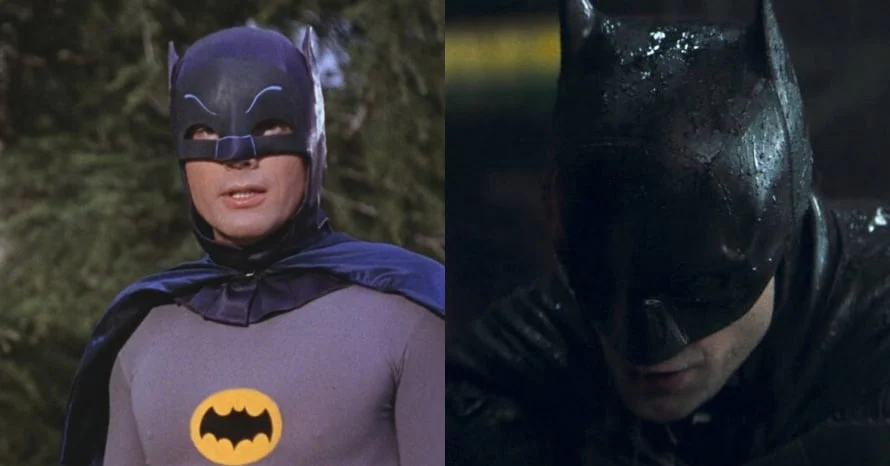
Batman began as a simple vigilante in his debut in 1939, but with The Dark Knight Returns in 1986, he became a study in trauma and vengeance. The campy, colourful hero of the 1960s evolved into the morally conflicted Dark Knight of the 1980s, haunted by the murder of his parents and battling with his own methods of justice. Even Spider-Man, the friendly neighbourhood hero, struggled with guilt, loss and the burden of responsibility. These once one-note characters became fractured reflections of a broken society that created them.
Angela Ndalianis notes that modern superhero narratives began to “mirror the political and cultural climate of their time”. The need for hope in the Golden Age changed to the want of introspection and cynicism. Audiences wanted heroes who bled, doubted and failed. The publications of Watchmen and The Dark Knight Returns in 1986 marked a new era. Both works deconstructed the myth of a hero, questioning whether power can truly coexist with morality.
This new generation of superheroes wasn’t about perfection, but perseverance. They no longer represented what we were, they represented what we struggled to be. Marvel and DC heroes became human, and in doing so, more heroic than ever.
The new version of a “hero”
Heroism in comic books no longer revolves around perfection, it’s rooted in humanity. The heroes of Marvel and DC evolved from noble icons of righteousness into complicated, introspective figures who reflect the real struggle of the world surrounding them. Their battles are not only against villains, but against themselves: their guilt, grief and identity. Heroism today is not defined by moral certainty, but by the courage to act despite moral confusion.
The transformation in comic storytelling mirrors the evolution of society itself. The “rise of the antihero” reflects how audiences have come to expect honesty and realism from their heroes. The need for optimism of the 1940s didn’t survive the pessimism that followed decades of war, civil unrest and political corruption. Readers began to crave characters who reflected their own flaws, not an abstract, unattainable ideal. In response, Marvel and DC redefined their heroes, moving away from patriotism and perfection to embrace ethical ambiguity and emotional depth.
I found my dads’ comic book collection by accident in 2019. Dad owned comic books from the 1930s until 2004 and had them labelled in chronological order. I remember reading them and finding them ridiculous, especially as a 14-year-old fuelled by cynicism, until I reached the 1960s with The Amazing Spider-Man. Peter Parker’s internal monologues, his guilt, self-doubt and financial struggle was like finding the Holy Grail. He broke the conventions of the superhero genre: he wasn’t wealthy, confident of flawless – he was bullied, a bit of a loser and became a hero by chance. He was a teenager juggling responsibilities. The humanisation of the superhero paved the era of flawed protagonists that followed.
By the time I had reached the 1980s, the rise of the antihero became impossible to ignore. The Dark Knight Returns presented an aging Batman, operating in a morally decaying Gotham and haunted by trauma. Similarly, Watchmen dismantled the concept of the superhero altogether, portraying vigilantes as psychologically damaged and politically dangerous. These darker, more introspective comics reflected Cold War paranoia, urban decay and the erosion of faith in authority. Heroism was no longer national, unquestioned virtue, it was a philosophical dilemma.
On the other side of comic publishers, Marvel’s Daredevil: Born Again (1986) continued this trend by showing Matt Murdock’s collapse under corruption and betrayal from everyone he loves. Frank Miller’s legendary run stripped away the myth of invincibility and replaced it with raw vulnerability. Daredevil wasn’t saving the world; he was trying to survive it. Likewise, John Constantine – a personal favourite of mine – was first introduced in The Saga of the Swamp Thing a year prior, in 1985. He later got his own comic book series, Hellblazer, in 1988 – which is still running. He is the embodiment of a cynical antihero, a man who uses magic but rarely feels powerful. Constantine is a chain-smoking, sarcastic, morally inconsistent man in a world weary of traditional saviours. His stories revolved around compromise and consequences, never about glory.
These shifts showed the deep, cultural need for authenticity. As Liam Burke notes, superhero comics became “modern mythologies”, constantly reinvented to address fears and ideals. As ancient myths evolved with the societies that told them, so too did Marvel and DC’s narratives. Every reboot, retelling and character reinterpretation captured the anxiety of its generation. The gritty realism of the Modern Age showed that gods bled and saints sinned, just like us.
This evolution has been described as a process through which superheroes became “social barometers”, measuring cultural change and collective identity. Comic books began tackling real-world issues: racism, addiction, political instability, gender, and power. Green Lantern/Green Arrow directly addressed poverty and inequality. X-Men used mutants as allegories for marginalised communities, exploring prejudice and belonging. These stories were rooted in social commentary: messy, grounded.
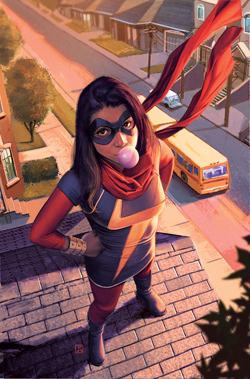
Carolyn Cocca expands this idea by arguing that the modern heroism also redefines gender and diversity. Characters like Wonder Woman and Ms. Marvel challenge traditional masculine archetypes of dominance and stoicism. Wonder Woman’s compassion and moral reasoning became central to her strength, not secondary to it. Meanwhile, Kamala Khan, the first Muslim superhero, represents a new generation of readers who see heroism in cultural identity and community.
This evolution isn’t abandoning the superhero ideal – it’s defining it. Comics like Hellblazer, Sandman and The Punisher question whether heroism can survive in morally grey world, while others like All-Star Superman revisit traditional ideals through emotional sincerity. Grant Morrison’s All-Star Superman takes traditional heroism, and reimagines it as empathy, not brute strength. Superman still saves the world time and time again, but his power lies in understanding and love for the people. The contrast between human limitation and mythic responsibility defines this modern era of comic storytelling.
Even as new comics deconstruct heroism, they continue to act as reflections of their time. They critique the same institutions earlier heroes once defended. Comics like The Boys and Watchmen aren’t dark for shock value; they serve as social commentary on the dangers of unchecked power and celebrity culture. They remind readers that our heroes are not immune to corruption, and the mask can hide ego as easily as virtue.
What emerges from this transformation is a new kind of heroism, one that values empathy, accountability and moral questioning over physical strength. The most compelling modern heroes aren’t ones that win every battle, but the ones who keep fighting when victory feels impossible. Constantine lighting another cigarette after losing a friend; Spider-Man returning to patrol after burying Aunt May; Batman refusing to kill even the worst of his enemies. These are acts of endurance, not perfection.
Marvel and DC’s comic books have now become cultural mirrors. They don’t simply entertain; they interrogate what it means to be good in a complicated world. The superhero, once a beacon of absolute morality, is now a reflection of collective uncertainty and resilience. As society wrestles with ethic complexity, so too its heroes.
In the end, the redefinition of heroism in comic books shows how deeply these stories are tied to human experience. The capes and masks may remain, but the meaning beneath them has changed. Heroism today is not about divine power, but about human persistence, the willingness to do good even when the world no longer believes in it.
So, what is “heroism”?
Heroism in comic books has never been linear. It evolves alongside the world that reads it. From the perfection of Superman and Captain America to the realism of Constantine and Batman, Marvel and DC have continually redefined their versions of a hero. Each generation’s hero reflects the fears, ideals and contradictions they face. The wartime comics offered certainty and moral clarity, and the modern age offers complexity, vulnerability and self-doubt.
As readers, we don’t expect our protagonists to be void of a slight imperfection. We expect them to be real. We expect them to question, fail, learn and pick themselves up again. This isn’t a loss of morality, but a deeper understanding of it. As our society grows more aware of itself, so too does our stories. Comic books remain cultural mirrors: colourful, exaggerated, yet profoundly human.
Marvel and DC’s heroes endure because they adapt. They learn that heroism is not about being above others, but about confronting our flaws, accepting them, and choosing to do good anyway. That is what it means to be a hero.
 Jessie Goates
  LeighCor