
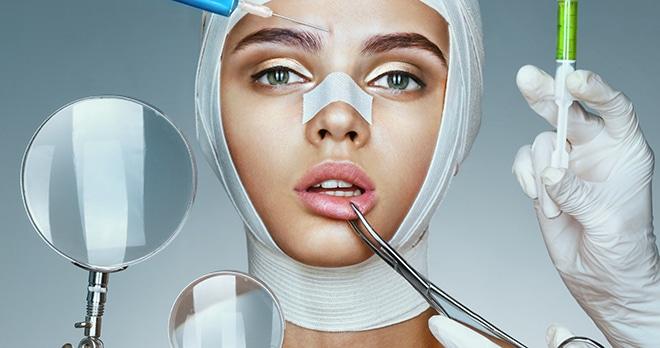
Scrolling through TikTok, users might stumble across a creator documenting their day, but instead of it being a simple coffee run or get ready with me, they are going to get a cosmetic surgery done. Some people praise these creators for being transparent and honest, which I do think is better than lying about it and hiding it. However, this type of content can also cause detrimental damage to today’s youth.

Cosmetic surgery has evolved from being something discussed in private, to broadcasted as ‘everyday’ content. Combined with TikTok’s powerful influence over trends and identity, has severe implications. TikTok has become a major source of ideas regarding beauty, self-care, and identity for young people. It also encourages what psychologists call parasocial relationships. Today’s creators pride themselves in being ‘true to themselves’, which inherently isn’t a bad thing, however, it can create a false sense of closeness and friendship which doesn’t exist. These parasocial relationships on TikTok are a big part of this shift in cosmetic surgery being a ‘casual’ life choice, and for influencers’ younger audiences who are more impressionable, it can make them view these surgeries as a ‘must have’ in order to meet societal beauty standards that they see on their screens.
The connection that users have with creators on social media, is not a new concept. Parasocial relationships have existed longer than social media itself. Back in the 1950’s, theorists like Horton and Wohl describe parasocial relationships as one-sided bonds that audiences form with media figures, making a viewer feel like they know someone who doesn’t even know them. Today, TikTok has taken this concept and blown it through the roof.
Unlike other social media platforms like Instagram where content is more structured and performative or YouTube where videos feel more distant due to the levels of production and length, TikTok thrives on the intimacy and relatability of content. As TikTok has features like video replies to comments, content on the app feels more conversational, closer to a FaceTime call with a friend then just consuming content for the purpose of entertainment. Similarly, this is then further reinstated by the types of content that gets posted on the app. Day in the life or get ready with me videos often play out like a FaceTime call, making viewers generally feel like they are actually hanging out with the creator. These stylistic choices build a sense of intimacy that other platforms cannot replicate as effectively. So, whilst relatable content is the norm for TikTok, it also can create the illusion of friendship, which at times can be dangerous.
These parasocial relationships heightens trust between creators and their audiences, making them more susceptible to their influence. This influence is not always a bad thing, however, when a creator that people trust like a friend start sharing things that they are doing, it is easy for today’s impressionable youth to jump on the bandwagon. This ‘bandwagon’ could be as simple as someone copying their favourite creators’ nails, to something more serious and life-altering like cosmetic surgery, all from seemingly harmless TikTok videos.
Younger audiences are especially vulnerable to this influence as Gen Z spends more time on TikTok than any other platform and many use it as their main source of information and advice. As their identities are also still forming, and their perception of beauty and self-care predominantly comes from TikTok, it can turn dark quite quickly. With an increasing number of young adults getting cosmetic surgeries, inspired by their favourite creators. This is where parasocial relationships move from simply being entertaining to potentially shaping life-changing decisions that young people make about their bodies.
A massive shift has occurred on TikTok, where cosmetic surgery has become a part of everyday content. What once was something quite private, often only discussed with close friends and family and only admitted to years later, is now being shared online to millions of viewers in real time. One of the more common formats used for this is the Get Ready With Me (GRWM) video. Typically, these videos feature creators chatting to their audience while doing their makeup or choosing outfits. The appeal of these videos lies in their simplicity and relatability, making viewers feel like they are spending time with a friend.
However, this familiar format has started to include something quite different. Creators are increasing filming GRWM videos not to get ready for an event, but to go get cosmetic surgery. The video follows the creators through the same steps of getting ready, but this time they are on their way to a clinic to get Botox or lip filler and that is the main topic of conversation. As the structure of the video follows the same structure, the act of getting a cosmetic procedure is frames as just another part of their routine, and almost mundane.
For many influencers, sharing these experiences comes from a place of honesty, and they frame it as ‘just being real’ with their audience, however it may be doing more bad then good. An example of this would be the creator Vanessa Knight, who has over 800 thousand followers on TikTok. She has documented her surgeries step by step in a series of TikTok videos. Her most recent showcasing her getting a surgical lip flip and her mum getting Zirconium Crowns in Turkey. Not only did she share the end results, but she also shows the entire process, even the cost break down, before’s and after’s and the name of the place, almost like a paid promotion, which there was no indication of it being.
On the surface, this transparency feels refreshing in comparison to the era where celebrities denied having any work done. Followers are often praising these creators for their ‘authenticity’, which deeps their trust and parasocial connection with the creator. This transparency however has it’s draw backs. By turning surgery into casual content, influencers present cosmetic surgery as a lifestyle choice instead of a serious decision. Fans can be scrolling on their For You Page and see someone showing off their new nails, and then the very next video is of their favourite influencer showing their surgical before and after’s. This completely repositions these cosmetic surgeries from being a serious choice into a trend.
This normalisation is concerning as it has severe impacts, especially on today’s impressionable youth. Surgeries have immense amounts of risks that are often invisible in the short-form content of TikTok. When creators frame these surgeries as part of their ‘self-care journey’, young audiences, who are still developing their sense of identity, may believe that altering their appearance is necessary to feel beautiful and accepted. So, the real problem is not necessarily the transparency itself, but the way platforms like TikTok turn serious things into everyday content for entertainment.
What makes TikTok so persuasive is that creators don’t always have to tell their fans to do something in order to influence them. Simply documenting their own choices, like sharing a video of them going to get lip filler or even just mentioning cosmetic surgery in passing can be enough to influence the way their followers perceive cosmetic surgery. When creators present cosmetic surgeries as casual or routine, it can subconsciously shift the way they perceive cosmetic surgery into thinking that it is a normal part of self-care instead of a significant medical decision.
The effect is strengthened by Parasocial relationships, where viewers feels like they know and trust an influencer. Research show that these one-sided bonds can heighten viewers’ susceptibility to influence because they perceive the creator’s choices as credible and as an aspiration. So, the influencers choices can quickly start to be seen as a social cue of societal expectations to their viewers. Generally speaking, when someone close to you undergoes a procedure, it becomes easier to view it as something less scary and more socially acceptable. This also applies within parasocial relationships and cosmetic surgery. Over time, what should be a personal choice can quickly change from the subtle social pressures to keep up with the beauty standards that repeatedly get modelled online.
TikTok’s algorithm only reinforces this pressure. Once a user interacts with even one video about cosmetic surgery, whether out of curiosity, interest or surprise, the ‘For You Page’ algorithm notices. Very quickly, similar videos will start appearing, and this creates an echo chamber where cosmetic surgery content is amplified, giving the impression to viewers that ‘everyone’ is doing it. Studies have found that this algorithmic reinforcement plays a part in normalising cosmetic surgery, especially for younger audiences. For younger viewers who are still developing their sense of self and social comparison habits, the constant videos from relatable creators documenting these cosmetic surgeries can make these procedures feel not only acceptable but expected in order to meet today’s beauty standards.
The relatability of the content on TikTok is what makes it even more persuasive. These creators aren’t distant celebrities showing off their luxurious and unattainable lifestyles, they’re often everyday people sitting in their bedrooms, talking to their audience like they would to a friend. So, even if an influencer never explicitly encourages their followers to go under the knife, the cumulative effect of this content can quietly and quickly reshape ideas of beauty and self-worth. For younger audiences especially, the normalisation of surgery on TikTok can plant ideas that these modifications are the pathway to go down to keep up with the beauty standards displayed on TikTok. Turning cosmetic enhancements into an ordinary part of growing up online.
The most concerning factor of cosmetic surgery being content on TikTok is its effect on young audiences, especially Gen Z and younger millennials. Research shows that this demographic has the fastest growing number of people seeking cosmetic enhancements and surgeries. TikTok’s content normalising these surgeries and pushing unrealistic body standards plays a massive role in this growth. Young people are already in the stages of forming their identity and appearance and social belonging plays a big part in it. When they repeatedly see cosmetic surgery as a casual and relatable thing, they are more likely to think that surgery is a necessary part of improving themselves and their looks.
This is extremely damaging, especially for this demographic as their frontal lobes are not fully developed until their mid-twenties. This part of the brain in responsible for critical thinking, impulse control, and long-term decision making. Meaning that they lack the neurological maturity to make decisions by properly assessing the potential risks and consequences to undergoing cosmetic surgery. The risks itself are quite significant, as cosmetic surgeries have the same health complications as many other medical procedures.
Other than the major health risks to go under the knife, there is also the financial burden. Surgeries and other treatments can cost thousands of dollars and often require ongoing upkeep in order to maintain results. So, for young people who are only just starting to work, it can quickly become a costly cycle. On top of this, there is also the big risk of regret. What feels desirable at 20 may change by the time that they are 30 and beauty standards and trends are constantly evolving. Many people who start these surgeries when they are young often find themselves wishing they had waited or chosen differently.
There is also the case that these surgeries can be addictive and when someone begins it can become difficult to stop. As people are often trying to purse ‘perfection’ it can often spiral into them wanting more, fuelled by them thinking that they always ‘need’ more. TikTok’s influence majorly fast-tracks this cycle due to how cosmetic surgery is positioned on the app as an ‘everyday’ casual decision instead of a serious medical procedure with a multitude of risks. This leaves an entire generation exposed to the risks of cosmetic surgeries and make them believe that their natural selves need ‘fixing’.
TikTok has drastically changed the way cosmetic surgery is perceived, shifting it from a private decision into a casualised form of content. Through parasocial relationships, relatability and the way the algorithm amplifies content creators, creators hold a lot of influence over their followers. What can appear as a harmless ‘get ready with me’ video can quickly and quietly reposition cosmetic surgeries as routine and even expected. For younger audiences who are still developing their sense of self, this influence can be especially damaging. This leaves them exposed to the health, financial and body image risks, making them believe that their natural selves are not good enough. So, whilst transparency online can appear like authenticity, it can often blur the line between sharing and selling.
At what point do parasocial relationships stop being harmless and start shaping our most intimate decisions about our bodies?
 Guan QiuYu
  REN Ren
  Tan Kane