
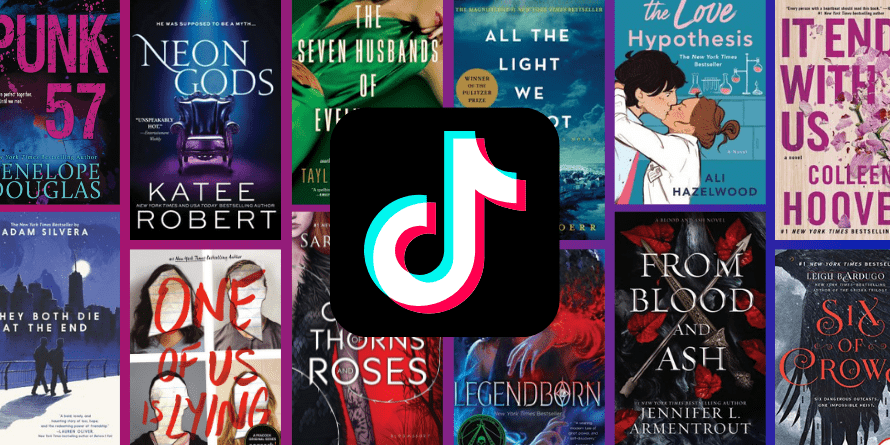
I was visiting my local Dymocks when I first discovered that BookTok had broken free from my phone screen and had transcended into the real world. There, in the middle of the store, with a sign painted in bright, vibrate colours, was a stall that declared: “#BookTok Favs – Read what’s trending!” I remember looking at the books from authors like Colleen Hoover and Sarah J. Maas while thinking to myself: Books can trend now?
If you’ve got a TikTok account, there’s a good chance you’ve stumbled across a BookTok video before, whether you’ve recognised it or not. Rising to popularity in 2020 and 2021, BookTok is the niche section of TikTok created by readers, for readers. With content ranging from book hauls to reviews to recommendations, BookTok has established itself as a vibrant community of book lovers and an authentic means to discover information about books.
However, while BookTok has promoted book sales, it has also hurt the publishing industry, turning reading itself into something more about trends and overconsumption rather than the production and enjoyment of quality literature.
The Rise of BookTok
Bookish spaces have existed on the internet long before BookTok. From early internet forums on places such as UseNet in the 1990s and early 2000s, to the popular BookTube and Bookstagram (the niche sections for book lovers on YouTube and Instagram) which have been around since the early 2010s. While all of these spaces have the same kind of bookish content that can also be found on BookTok, none of these platforms have had the impact on the publishing space quite like BookTok has.
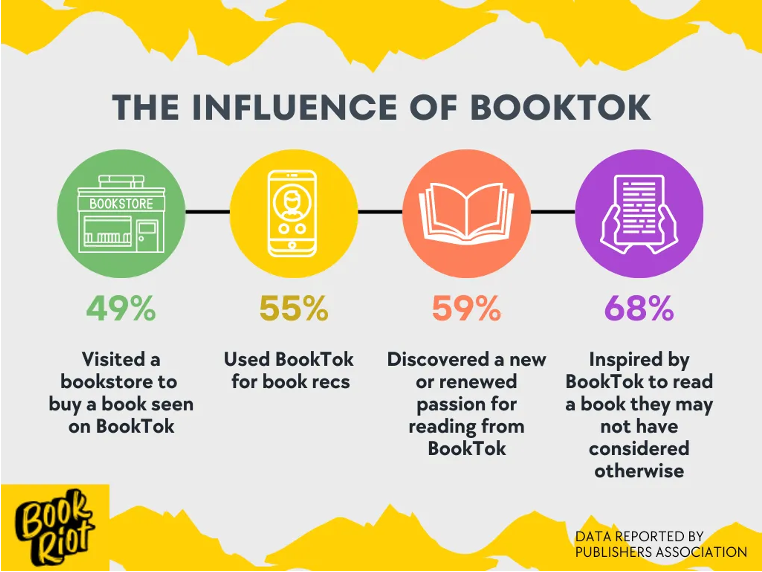
According to TikTok data, as of 2025, #BookTok has accumulated over 370 billion views. Because of the app’s set-up, which relies on its algorithm, unique platform of user engagement, and the utilisation of its ‘For You Page’, people can easily interact with each other. This allows readers to easily come together to discuss their favourite books, characters and tropes – like a big online book club.
Due to the algorithm and BookTok’s popularity boom, it’s not surprising that it has had a profound impact on driving up book sales. Book sale tracking company NPD BookScan says that BookTok has contributed to a major jump in book sales, and that “no other form of social media has ever had this kind of impact”. In 2021, the UK saw a 5% rise in book sales, reaching a new high of £6.7bn. Australia, too, has seen a rise in TikTok’s most popular genres of Sci-fi and Fantasy, which were up by 85% in 2024.
But while BookTok has influenced an obvious jump in book sales, has it really made reading more popular?
When being a reader is more important than actually reading
One of the biggest influences BookTok has had on the reading community is the shift from intentionally reading to “being a reader”. Once, reading a book meant meaningfully engaging with the content you were consuming. Now, BookTok has created a new version of being a reader, where the act of reading is becoming performative. People want their identity to be known as a reader instead of being focused on the actual reading, making it seem like some sort of identity performance.
But this shift is detrimental to the act of reading itself.
In a now-deleted TikTok video that accumulated more than 30 million views, BookTok creator @yannareads stirred up controversy when she told viewers that she was struggling to read the popular book Six of Crows due to her irritation that there were “too many words” on every page.
And an even more extreme example comes from user @wren.sbi. In her TikTok video, she showed off how she could “read” over 100 books in a week – because she uses an AI program to summarise them for her.
The act of reading seems to be becoming lost, with some readers becoming more concerned with adding as many titles to their name as they can. This quick overconsumption is taking away from the genuine purpose of reading, showing how BookTok is driving quantity over quality.
The fast-fashionisation of books
This pressure to read and buy more has influenced the publishing industry’s shift towards producing more. The Australian Human Rights Institute describes fast fashion as “the reproduction of clothing rapidly produced by mass-market retailers at low cost” – and some very real connections can be drawn between the current production of books and this fast production of clothing. Books are being bought because of trends, much like clothing is, and not because people want to read them or find value in the writing.
And this, of course, has led to the overconsumption and overproduction of books. Conspicuous consumption is the act of buying goods and services just to display wealth and social status – rather than caring about the items practical value. Or, in this case, buying a copious amount of pretty books to fill up bookshelves without caring about the content and meaningful consumption of said books.
Once, book hauls used to include 6-10 books, but now it’s not uncommon for them to include 50, or even 100+, books.
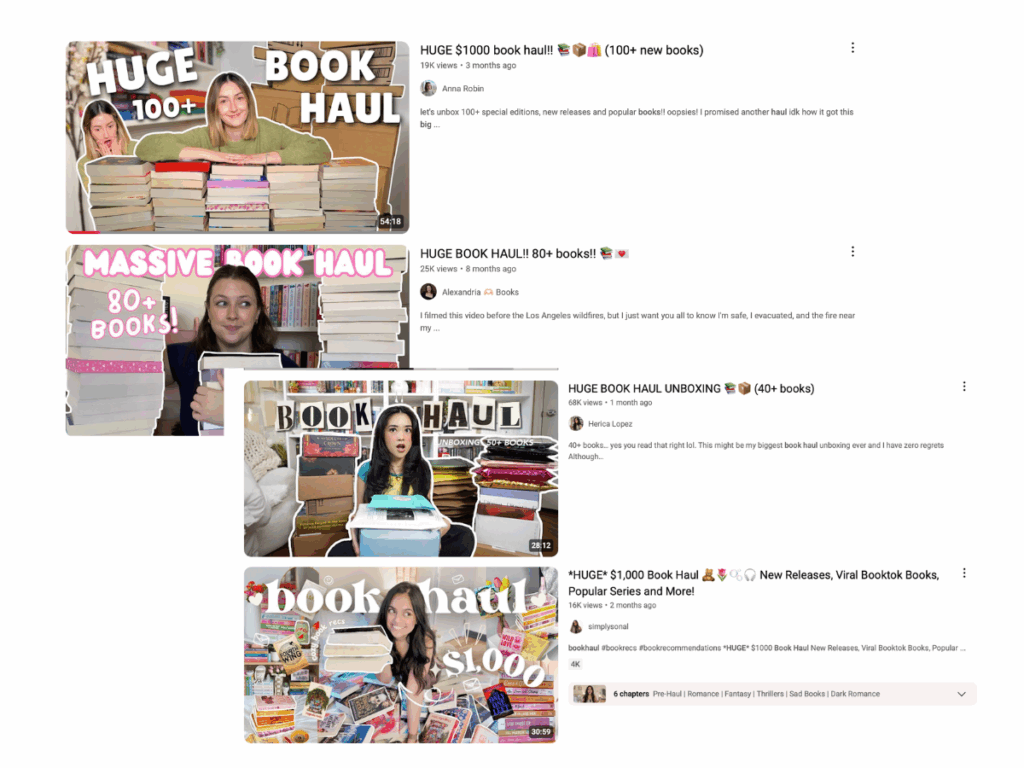
In a YouTube video titled “Having 800+ books in your physical TBR is not normal, BookTok’s massive TBR problem”, creator Georgia Neoh stressed the dramatic impact that overconsumption is having on people’s to be read piles and the act of reading itself. “We have to stop with the overconsumption of buying and not actually consuming what we’re buying,” she says. “You’re simply buying books just for the sake of buying it.”
Impacts on the publishing industry
The overconsumption of books, though, is obviously fuelling the publishing industry. These days it has become integral for publishers to capitalise on the hype of BookTok to ensure they stay relevant in a rapidly moving and constantly changing market. Major organisations, such as leading Australian bookstore Dymocks and big five publishing house Penguin, have pages dedicated to BookTok and recommend currently trending BookTok reads.
BookTok is even impacting how publishing houses choose what books to publish. Rebekah West, editorial director of Piatkus Publishing, told Trill Mag about her discovery of best-selling author Elsie Silver on TikTok. When she saw that Silver’s views were continuously growing, and her self-published books were climbing the charts, Rebekah quickly secured a publishing deal with her.
It’s a good start line to know what people want. If a book is self-published and goes a bit viral on TikTok, you get this kind of blueprint of knowing that people like this. – Rebekah West via TrillMag
While it’s no surprise that publishers will use books trending on TikTok to secure publishing deals, it can become problematic when looking at exactly what books are trending and consider what books, and authors, they may be taking the place of.
While some researchers say that BookTok has created a space for diverse communities and therefore promotes books that would have previously been overlooked in the traditional publishing industry, others argue that diverse authors still struggle to achieve the same amount of success on the platform as white authors. This disparity can be proven by visiting the “BookTok” page on any bookstore or publishing house website.
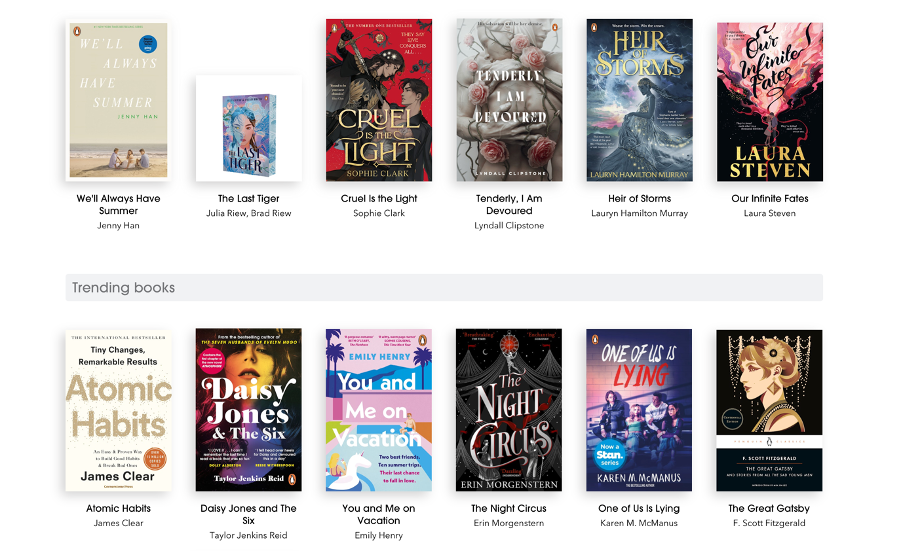
So, while BookTok has proven to be a good platform to get authors discovered and traditionally published, there is an obvious bias towards who exactly those authors are (or what they look like), with lower quality books that fit the trends being chosen over books with more substance.
Does it have spice?
And we’re not talking about the turmeric kind. It’s not just about what authors are getting published, but also about what kind of stories are being published. BookTok has introduced a rise in smut and spice (otherwise known as sexual content or erotica) in books. There is even a subsection of BookTok called #SmutTok dedicated just to this. Certain genres like romantasy (a blend of romance and fantasy) and general romance are popular on BookTok – and one thing that both genres have in common is the high likelihood that there will be graphic smut within the pages. Fuelled by this sudden surge of popularity, online searches for books with smut even increased by 78% between 2023 and 2024.
I’m not here to judge anyone on their reading tastes. I, too, have been known to enjoy a good smut scene. But smut in books has become oversaturated, often slipped into scenes for no other reason than to just be there, completely taking away from the main plot.
And that’s not to mention the popularity of Dark Romance on TikTok, a genre that promotes smut beyond “spicy” alongside situations that are often dangerous and illegal in their romance. Since people of any age can use the app, this extreme version of romance alongside the oversaturation of spicy books is a particular problem. This rise has even influenced romance books with cartoonish, illustrated cover designs making sexually explicit books seem young adult friendly.
The tropification of books
The overproduction and “fast-fashionisation” of books have no doubt changed the quality of the books being published – but are BookTok books “bad”, or are they just targeted at a different readership demographic?
Since BookTok’s demographic is largely women, it makes sense that romance and romantasy are the main books that trend on the app. But that still doesn’t negate the fact that interesting plots are being replaced with tropes, such as the increasingly popular enemies to lovers.
It’s becoming common to find books advertised by these tropes too, with them often listed in the title line of eBooks on online platforms, and “Trope reveals” being used as a promotional marketing technique on various platforms.
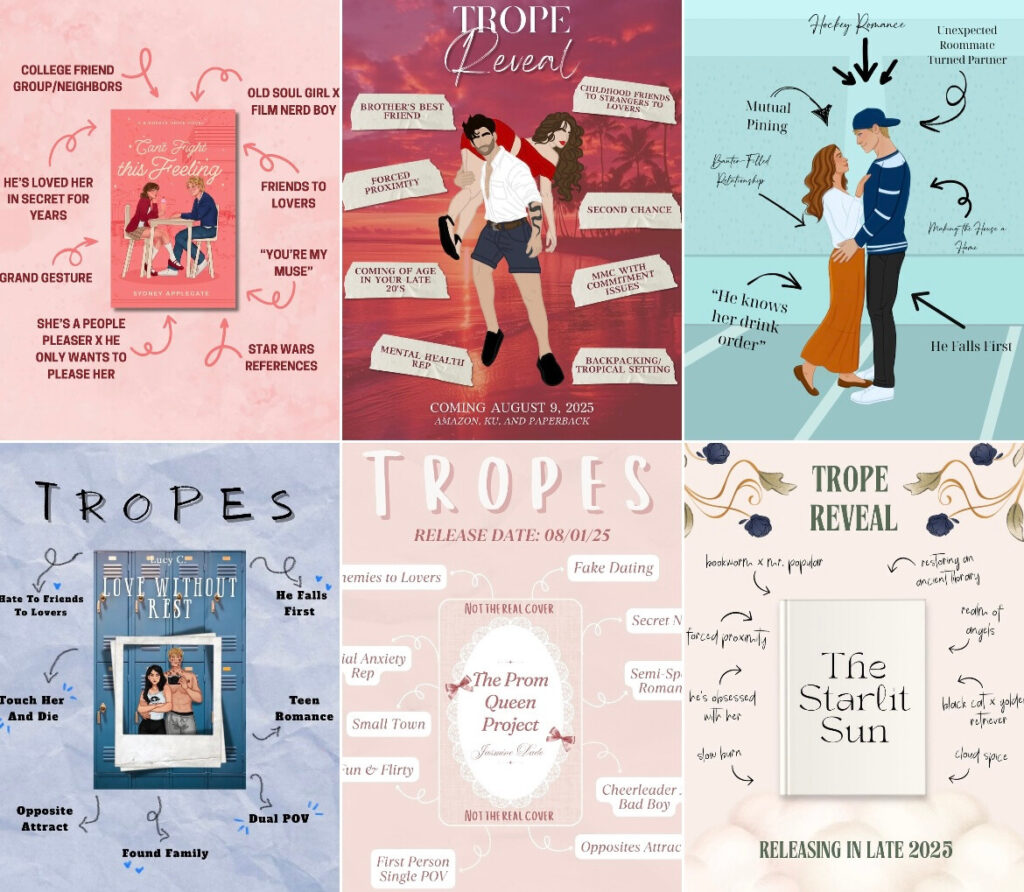
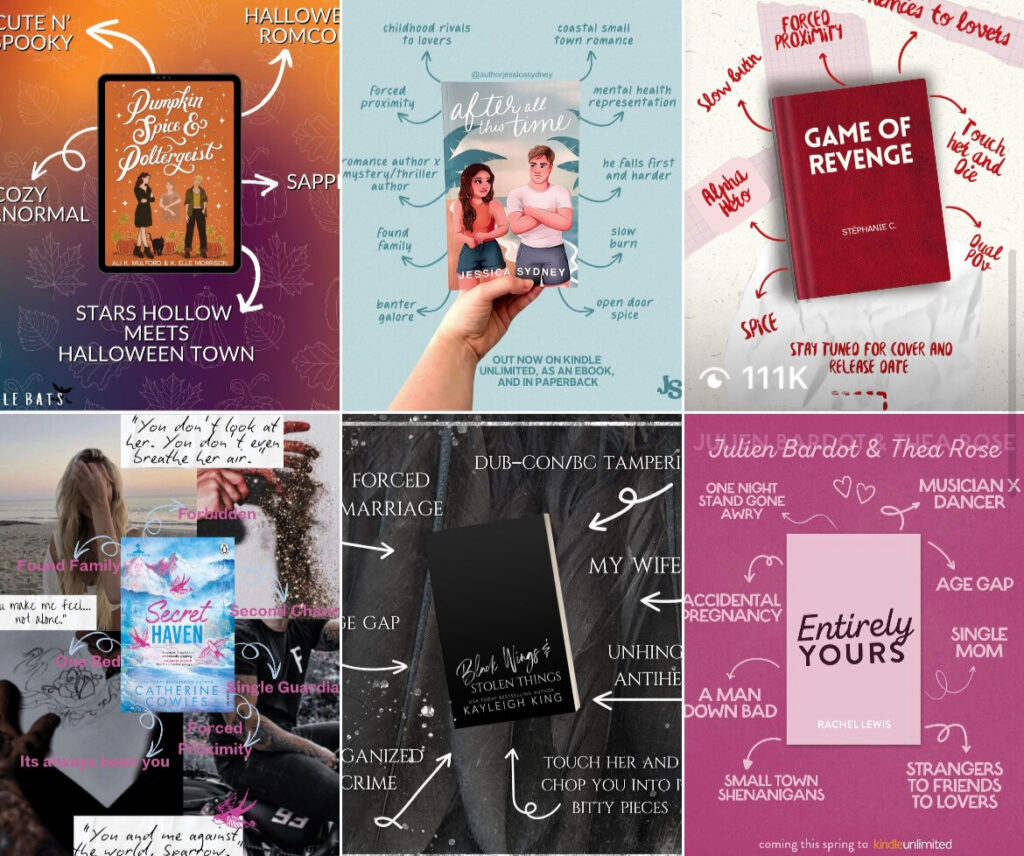
There’s a reason why all BookTok books are starting to sound the same – with audiences now being drawn to these tropes instead of the plots, authors are, of course, using these tropes increasingly.
To put it into perspective, it’s like if someone took The Great Gatsby and marketed it with the tropes “pining,“ “exes to lovers” and “love triangle,“ and ignored the themes of social class, cynicism toward the American Dream and glamorization of certain problematic/abusive themes. The way BookTokers recommend books has made it so that readers flock to books just for one trope and ignore the rest of the novel. – Isabella Madruga via The John Hopkins News-letter.
There’s a real fear that publishers are choosing to publish books with popular tropes while ignoring glaring writing and plot issues, and that they’re chasing sales and trends over quality written literature. It’s hard to disagree when finding an original premise in a book these days is next to impossible.
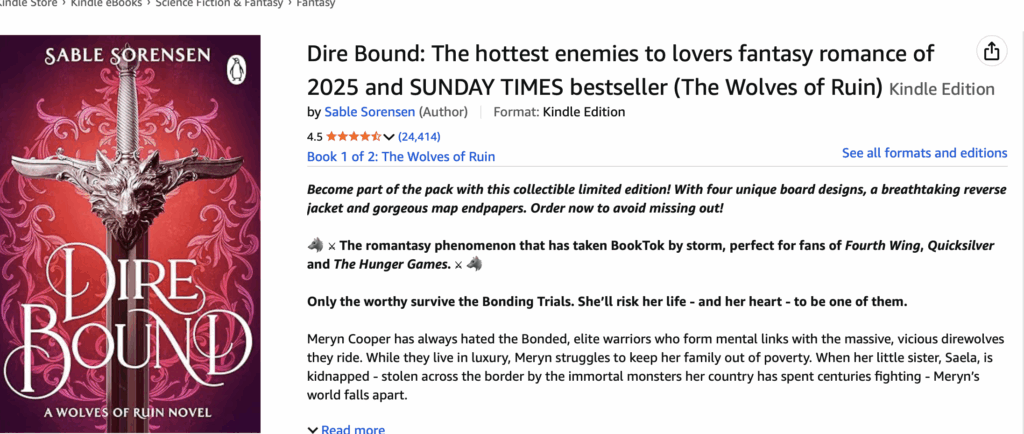
I recently picked up the book Dire Bound by Sable Sorensen, drawn to the interesting premise outlined in the blurb. A unique fantasy world with people being able to ride Dire wolves sounded amazing to someone who is a big fan of Game of Thrones. However, the spicy content began within ten pages of the book. It only took me about 50 pages of trope after trope more to realise the entire premise was almost an exact replica of Rebecca Yarros’s Fourth Wing, one of the biggest BookTok phenomenon’s.
The final takeaway
There’s no denying that BookTok has had positive impacts on the publishing industry. Sales are up, the industry is booming, and people are reading more (or are they?), but this comes with its own downfalls. Our society has an overconsumption problem that is being fuelled by TikTok, and that has bled into this industry. We are seeing that affect the quality of the books that are being published – plots are being replaced with tropes and smut, and we’re becoming more obsessed with being seen as a ‘reader’ than with thoughtfully consuming the content we’re reading.
BookTok may have given us a new way to read, but it’s also given us a new way to forget what reading is really for. Because of this, books are losing their magic and sparkle to trends and overconsumption. So, maybe the question shouldn’t be about what’s trending, but whether what’s trending is actually worth reading.
So why don’t you put down your phone and go to a bookstore to choose a book that you actually want to read, not a book that TikTok is telling you to read. Maybe put yourself on a book buying ban and try out slow reading – take time to actually meaningfully engage with the words on the pages.
In the end, not only will your bank account thank you, but your brain will too.
 Guan QiuYu
  REN Ren
  Tan Kane