
A livestreamed surgery about private parts of female patients were exposed to the camera without being coded from the Affiliated Hospital of Shaanxi (China) University of Chinese Medicine became a trending topic. After some online users made inappropriate remarks in the comment section, the livestreams room was reported and interrupted. The hospital issued a statement stating that the livestream was merely an internal instructional video. However, the majority of female users are very angry about this (click to have a look!)
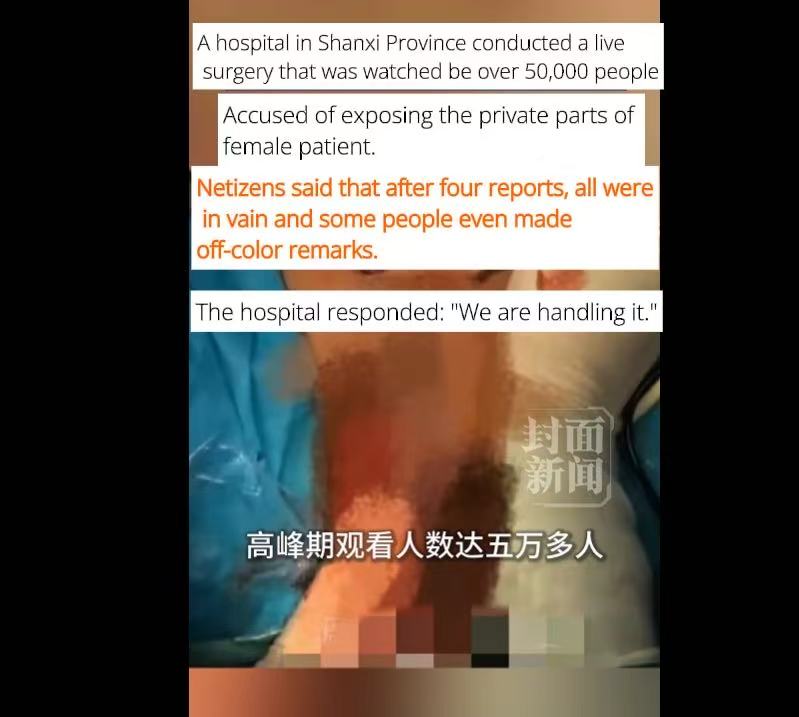
- Whether “medical education” have the right to let the public access to an exposed body.
Despite many medical professionals claim that for medical surgery, patients are only distinguished by their condition, not their gender.
generate knowledge…, development and effects of diseases, improve… and ultimately to advance individual and public health.
These purposes can never take precedence over the rights and interests of individual research participants.
Medical education does require observation and learning. Dissection laboratories, surgical demonstrations, and cadaveric studies are all normal components of medical training. But this does not mean that any display of the patient’s body can reasonably be considered educational. The key difference is consent. The cavaders were donated for teaching under a clear agreement. However, patients have primary bodily autonomy, knowing how, where, and to whom their bodies will be presented.
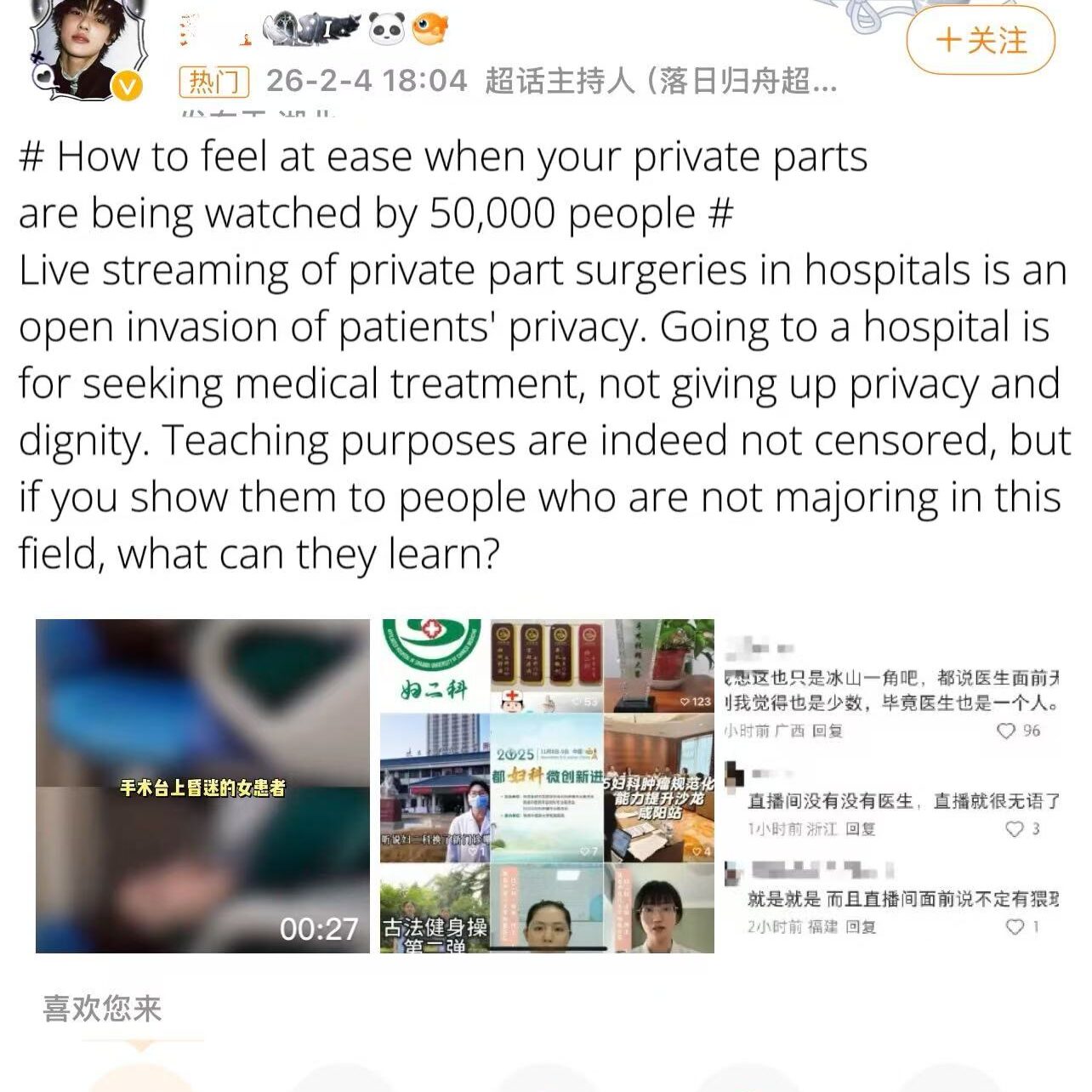
- It is no longer merely for educational, if the hospital puts the livingstream on a public social media platform.
At the same time, this can be explained in different rhetorical situation. A surgery shown in a controlled teaching context is not the same as a surgery shown to the open internet. The audience, purpose, and context have changed. Additionally, the environment is a public social-media environment with comments and circulation rather than operating room. In this context, surgical procedures often lose their meaning of learning and are instead transformed into objects of consumption by an environment driven by “attention economy”.
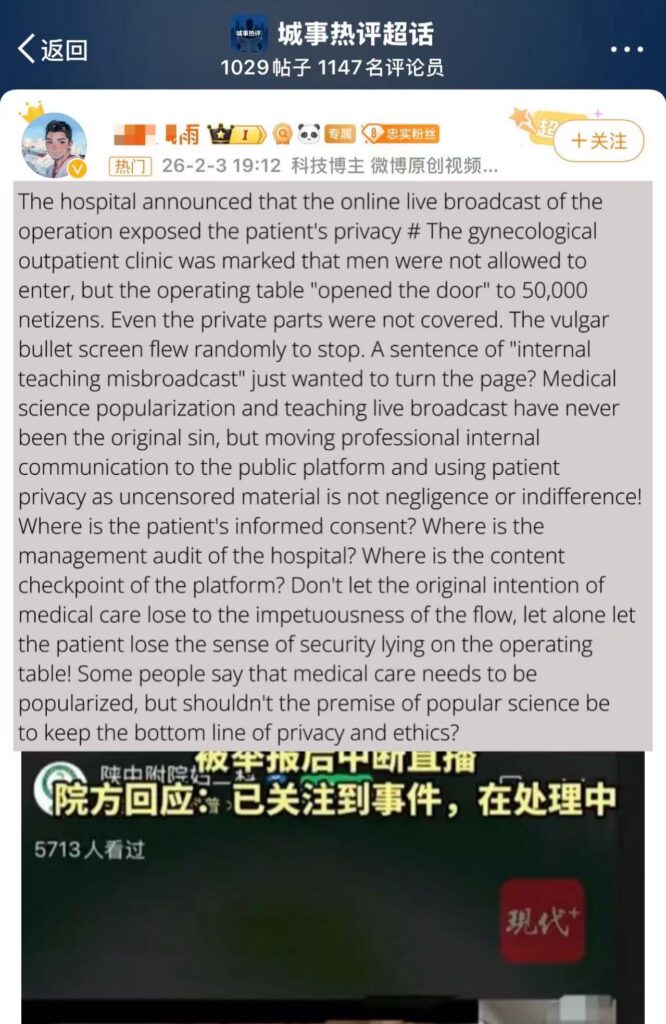
- It’s not just a woman
The focus of the controversy is not only on human bodies, but also on women’s bodies. In fact, the livestream reflects a more important fact, that is society’s “historic gaze” on women’s bodies. That is why this controversy feels especially gendered. Women are often viewed, judged, and regulated over times. In more cases, more “academic” learning or when its social significance outweighs women’s autonomy over their own bodies, people then ignore women’s rights and even women themselves.
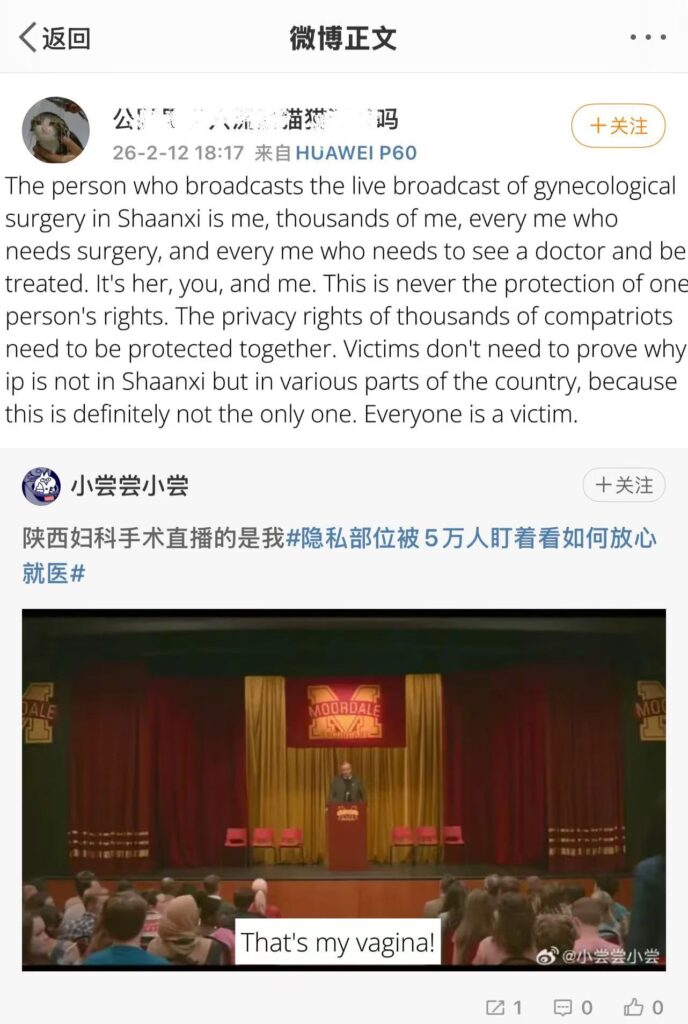
It reinforces society’s violating of women rather than treats them as deserved respected individuals. If medical education requires blasphemy, then perhaps it is not education at all.
A blogger under this hot topic

 Joleen Jublee
  Jamez
Jamez  Scarlett Johnstone