

With the fast rhythm of society, more and more short video platforms such as TikTok, RedBook, Instagram, etc. have already infiltrated the daily lives of people around the world, and this trend is even more obvious in Asia. Whether it’s a daily commute, a short break between classes or work, the huge number of people are often swiping down on their phones, constantly flipping between one short video after another. Lee (2025) points out that, the time users spend browsing the software is only 1.7 seconds, after which they will decide whether to continue browsing or simply skip it. Although there is no doubt about the entertainment, convenience and completeness that short videos bring, there is also a growing issue: more and more users are finding themselves unable to settle down to watch a longer video, and often choose to scroll away after only the first few seconds of watching the video and feeling bored. This has caused a wide range of discussions: in the digital age, is the attention rate of human beings declining?
Public opinion generally credits this problem to the “short video addiction”. But rather than a general decline in attention spans, attention has been redistributed due to a mix of the video platform’s design mechanisms, the faster rhythm of society, and fragmented time. It is important to point out that this redistribution is not without impact. This article suggests that human attention span is not always in decline, but it does have some impact due to the act of watching short videos over a long period of time. This article will use academic literature and real-life examples to analyze the impact of long videos if people are unable to focus on reading them, which groups of people are most significantly affected and what users can do to minimize the risk.

Image source: Everyone is swiping Tiktok – Search Images
As more and more people realize that they have difficulty focusing on a long video, a more honest question is: Has this change begun to affect some of people’s daily performance of attention? For example, when studying or working, it is difficult to keep focusing and can’t stop picking up the phone to swipe short videos, after a short entertainment, it is hard to quickly return to the original things to do. It is this subtle performance that is the short-term attention risk harm caused by short videos. The main feature of the short video that is continuous push, fast paced, information intensive, although this pattern does allow users to constantly switch the content to find their favorite information, but this in the rapid attention span at the same time, it is also a way to change the time to maintain the attention.
As Chiossi et al. (2023) pointed that, the use of short videos disrupts the user’s prospective memory (PM), which can weaken the user’s memory of “what they had to do next.” This means that even if short videos are not watched for a long period of time, their interference with attention may still build up over a short time, affecting learning efficiency and work behavior.
Meanwhile, similar research has shown that the brain after watching a short TikTok video will often only be interested in activities that also provide the same kind of satisfaction, which makes it difficult for users to think deeply (Ye et al., 2025). This further proves the impact brought about by short videos. It not only affects memory but also influences users’ interest in other matters. In sum, these seemingly small events are reminding us that short videos have not only changed users’ viewing habits, but also have a real impact on short range focusing ability in daily life.
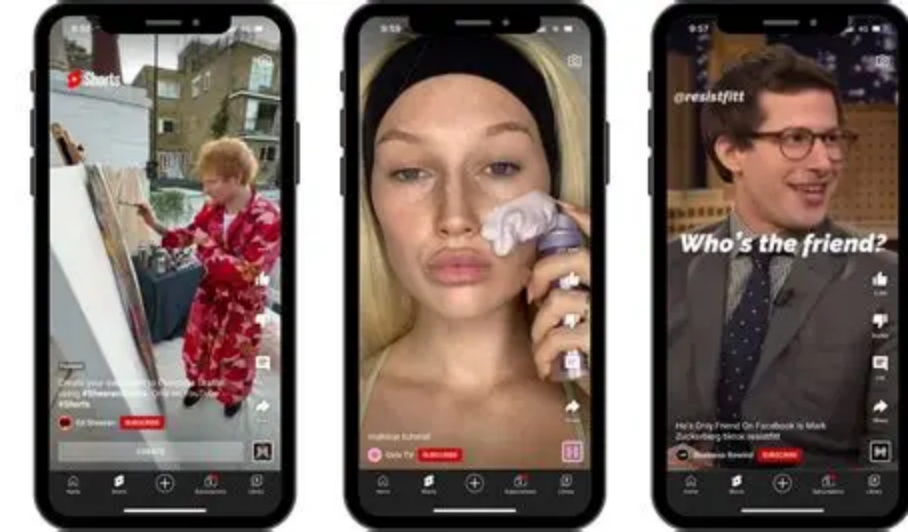
Image source: Short video – Search Images
If the short-term effect is that attention is disturbed and fragmented, the long-term effects of focusing on short videos are not only a steady decline in attention span, but are followed by the emergence of a series on psychological problems. As Mathur (2025) noted, the human brain gradually adapts to the type of stimuli it is most often exposed to, and short videos often provide that stimulation. After users have been immersed in this model of content in short videos for a long time, they will feel especially hard pressed or even irritated by long video content that needs to put in a lot of attention, or in their work and study. Even when the user wants to pay attention, they may find it difficult to stay focused for an extended period of time.
This problem is particularly apparent in China’s teenage population. By December 2021, the number of short video users in China had already peaked at 934 million, with teenagers becoming the largest group of users (Lu et al., 2022). Teenagers are a key period for developing attention span, and if they indulge in short videos for a long time, it is highly possible that it will have some impact on their own awareness.
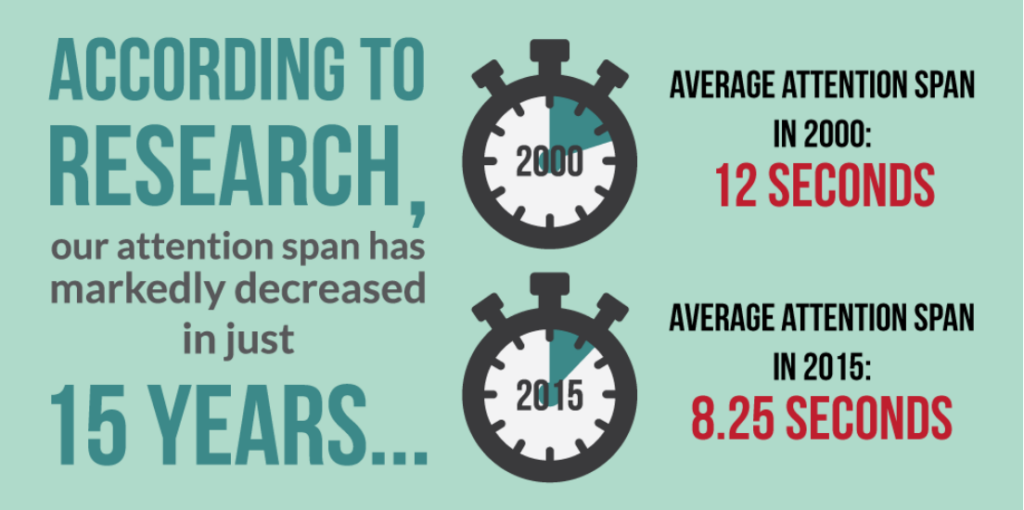
Image source: Infographic: The Human Attention Span [DATA] | Wyzowl
As Ignatescu (2025) points out, the addition of algorithms changes the type of video content that teenagers watch, making them more exposed to potential risks, while the problem of short video addiction is growing. The research reports that about 68% of teens say they have trouble to pay attention to do school assignments for even keep more than a minute after getting watching short videos. In other words, the impact of this is not simply a decline in attention, but involves broader cognitive and psychological facets.
Similarly, Jiang and Yoo (2024) found that prolonged watching of short videos may lead to an increase in negative emotions, which may affect an individual’s daily functioning. Even if users can realize the harm caused by short video addiction, it is a very difficult thing to remove. These research and data are showing that the long-term effects are not as simple as being easy to distract and not being able to focus deeply, but can lead to a range of psychological and physiological problems.

Image source: The dangers of short videos – Search
While there are a number of reports that suggest that watching short videos can be disruptive and even risky, some scholars argue that this can’t simply be labeled as a “decline in attention span”. The opposite is because different media need different levels of attention, attention is redistributed. The short videos didn’t lead to a weakened attention span, but shaped a pattern of attention that allowed for a more rapidly fragmented information environment.
A research study found that users were both able to keep a high level of attention while watching short form videos, whether or not they were inclined to become addicted to short videos (Chen et al., 2022). This result suggests that the issue is not simply that short videos affect attention, but that in this fast moving digital age, people’s attention is being redistributed and led into media environments that are more compatible with the mechanics of short videos. The change and development of digital platforms has pushed people to switch between different types of attention modes in different environments, such as short video messages that only need timely feedback from the user, while long videos require the user to access in depth thinking and inputs. When users have been in the former state for a long time, it is natural that there will be some discomfort in swapping to the latter environment.
As Baumgartner et al. (2025) showed, fast paced content can affect executive function in the short term, but there is still little evidence about its long term effects on attention. In our fast rate social environment, short video is a product of the times, and people’s attention is naturally transformed to be able to adjust to the state of this medium, not just affected and weakened. When discussing the impact of short videos, it is important not to generalize by saying “it causes a decline in attention ”. Short videos allow attention to be turned into distribution patterns, a natural result of modern media use habits.
Based on the above research data and real cases, it can be concluded that the impact of the appearance of short videos on attention is not just a single “decline”, but should be understood as a kind of structural redistribution. However, the effects of attention being allocated are not completely neutral and can also be different depending on the population and situation. The short video platform can realize accurate recommendation through the joining of big data and algorithms, plus the timely switching mechanism of endless sliding, which can sustainably train the user’s attention to make fast switching. This attention model is very relevant and adapted to the short video scenario, as the user can find and understand the information in a very short period of time, or get the emotional value to make feedback accordingly, and so on. However, when this mode of attention is suddenly replaced by some situations that need deep focus, such as studying and working or watching some long videos, users become unable to concentrate. And that’s the limitation and risk that attention redistribution brings.
Xu et al., (2023) research states that younger age groups (especially adolescents aged 12-13 years old) show a stronger negative relationship between the use of short video apps (SVA) and their perceived ability to perform academically compared to their older age groups. This research can prove that if teenagers use short videos for a long period of time, which results in an unbalanced distribution of attention, it can reshape the way they use their attention, and even have an effect on their ability to learn, which is often called “short video addiction”. However, for adults and even more mature age groups, it brings less cognitive and academic harm, but instead because of the unique interactivity and diversity of short videos, it can activate the user’s creative thinking and provide a platform for emotional support and information exchange. This research discovery further suggests that short video use is not equally risky at all ages. Instead, the impact depends on the age of the user and how they use it, the younger the group, will more vulnerable to the risks posed by this distribution model.
In addition, the study by Al-Leimon et al. (2025) also pointed out that the negative effects of addiction to short videos are universal and not subject to large differences, whether the person’s own attention is high or low. This means that we cannot see short videos as the only cause of the overall decline in attention span. The appearance and popularity of short videos do not present the only risks or benefits, but they go hand in hand. While short videos deliver convenience, entertainment and emotional support, they are also reshaping the structure of attention and amplifying the risks faced by different groups. Social needs amplify this issue, as in this fast rate social environment globally, especially in Asian countries, where fragmented time is becoming the rule, people are no longer able to spare more time to watch some longer video content, and it just so happens that short videos are filling the gap to a certain extent, while the use of attention span is being changed as well. The real issue to be focused on is not the decline of attention, but the gradual loss of adaptability to content that need depth, patience and sustained effort after a long period of immersion in the short video environment, which is the key challenge posed by the short video era.

Image source: The emergence of short videos is just distributing one’s attention – Search
To summarize, the rapid growth in popularity and favorability of short video platforms in the digital age is really changing the way people use their attention. As opposed to simply reducing this phenomenon to a widespread decline in human attention, it is better to understand it as a structural redistribution of attention that has happened as a result of a concert of platform algorithms, an increased societal tempo, and a fragmented time structure. More attention needs to be given to the fact that this distribution is not completely neutral, and its impact can be influenced to varying levels by different groups. For example, youth groups are more easily exposed to the risks related to such influences, such as reduced learning capacity, psychological dependence, and so on. The impact of short videos, on the other to adults, is more at the level of attention use habits and efficiency, and can even bring positive feedback. It is clear that the problems caused by short videos are not simply “attention loss”, but are linked to age and usage patterns. Thus, the core argument of this article is that human attention is not always in decline, but the way it is allocated is being reshaped in a media environment dominated by short videos.While this reshaping has brought convenience and entertainment, it has also steadily reduced people’s ability to adapt to depth, patience and sustained engagement with content. The real challenge is not to refuse short videos completely, but to minimize this “risk” in this inevitable digital age.

Image source: The emergence of short videos is just distributing one’s attention – Search
 Guan QiuYu
  REN Ren
  Tan Kane
