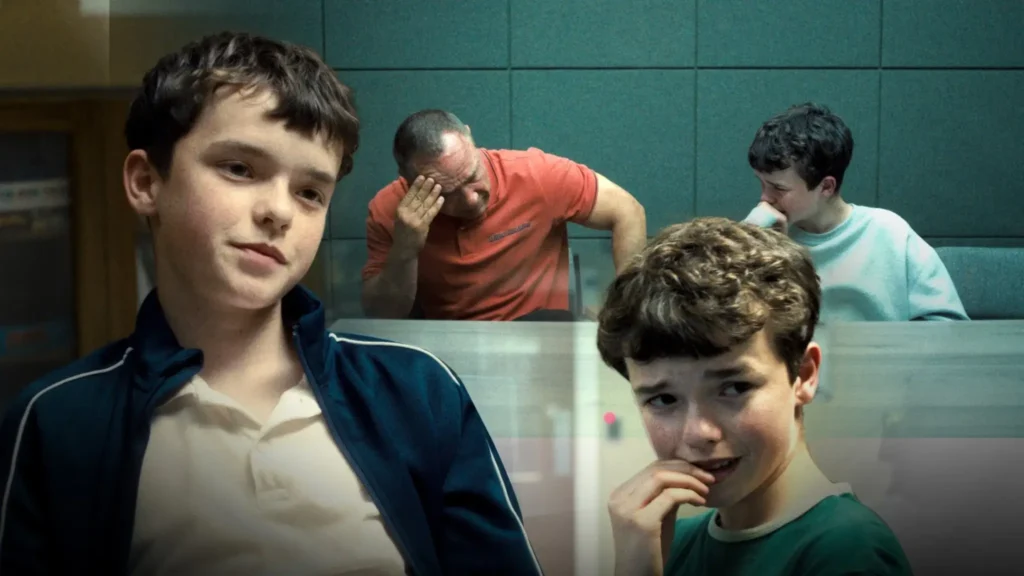
Netflix series Adolescence was praised for its thought-provoking investigation of the effect that incel culture has on families. Adolescence is centered on a lonely British teenager, 13-year-old Jamie Miller, who is revealed to increasingly spend time in echo chambers for the misogynist and socially alienated. Without sensationalising this topic, it provides the how, and why behind such a path; from adolescent pressures to internet driven confirmation bias, to the interconnectedness of an individual’s psyche with society (Aiolfi et al., 2024).
“Eighty percent of women are attracted to twenty percent of men. You must trick them because you’ll never get them in a normal way.”
Jamie’s own relatives are at the center of the tale: His parents, Anna and Mark, and his older sister, Lisa. The show depicts them as loving, supportive and well-meaning parents who had no idea their child would have an online life. It is an example which is resonant with families today, challenged to accommodate change in a pace where technology becomes outpaced. Parental surveillance is not absent, it is just impossibly overwhelmed by the scale and complexity of digital ecologies. (Blake & Brooks, 2022; De Vettor et al., 2025)
One of the most compelling things about Adolescence is that it does not seek to demonise Jamie, nor his family. Jamie is a fully formed teenager: frustrated, vulnerable, and desperate to fit in. At the same time, the series speaks to the family’s distress with candour, emphasising how difficult it is to learn that one’s child has been ensnared in potentially dangerous online subcultures and comitted a horrific crime. It is an approach that helps viewers to empathise and think more broadly about the impact of wider society and hostile digital spaces. (Czerwinsky, 2024; Meuller, 2023).
“So I thought when she was, like, that weak, she might… she might like me.”
Only further imbuing emotion into the series is the visuals and production design. Close-ups utilised during interfamily dialogue are imbued with an intimacy where slight variances of expression allow the audience to feel emotions. In contrast, the scenes shot as Jamie internet experience are often lit cold and clinical, visualising the alienation and disconnection pervading any link with these echo-chambers and communities. This visual contrast reflects a central theme of a more sinister underside: the human element vs its negative online counterpart (Hilton, 2025; Tassi, 2025). The grand cause of anxiety that is the digital medium of communication at the centre of adolescent lives is omnipresent, but it is through subtle sound-design decisions, such as the persistent ding of notifications that never ends, and a background humm of powered computers, that the anxious sense of atmosphere is instilled.
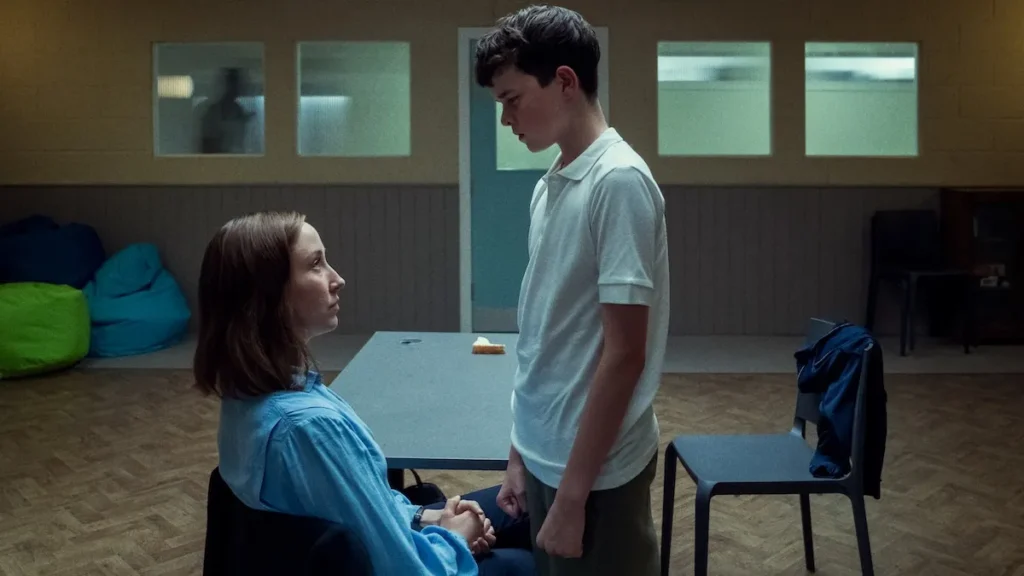
Adolescence has continued to impress critics with its organic yet tender family dynamics. Without melodrama and caricature, it highlights the genuine and lasting struggles of families in terms of understanding, and coping with, their children’s online behaviour, and the very real potential impacts this can have (Sheehan, 2025). It has opened up critical conversations surrounding digital literacy and mental health, the need for encouragement and honest conversations between parents and young people. It is punishing you when you make that mistake and not surround yourself with active youth in their media lives, that will drive positive digital communities and reduce the radicalisation opportunity (Meuller, 2023).
“Her weakness made her more gettable. Was that your theory?”
Across all episodes, the threats of peers and the benefits of positive role models are also handled very well. Other characters, such as Jamie’s friends and school personnel, offer alternative viewpoints that illuminate the complexity of the situation, struggling and trying to guide the adolescent identity crises. In this way, Adolescence avoids a strictly fatalistic portrayal of online radicalisation, illustrating the very real need for intervention and support, and showing that these acts of empathy, guidance, and community are pathways for recovery and growth (Travers, 2025; De Vettor et al., 2025).
Despite how horrifically bleak the series can be, it does provide elements of hope. Small acts — family conversations, therapy, and hobbies — demonstrate the resilience and evolution when it comes to family. It reinforces the need for empathy and compassion, not shaming. Which explains why whereas it is an arresting crime procedural, Adolescence is also socially relevant media that provokes thought about the role of technology in the lives of adolescents and families (Broyd et al., 2023). The series stands out for its human aspect.
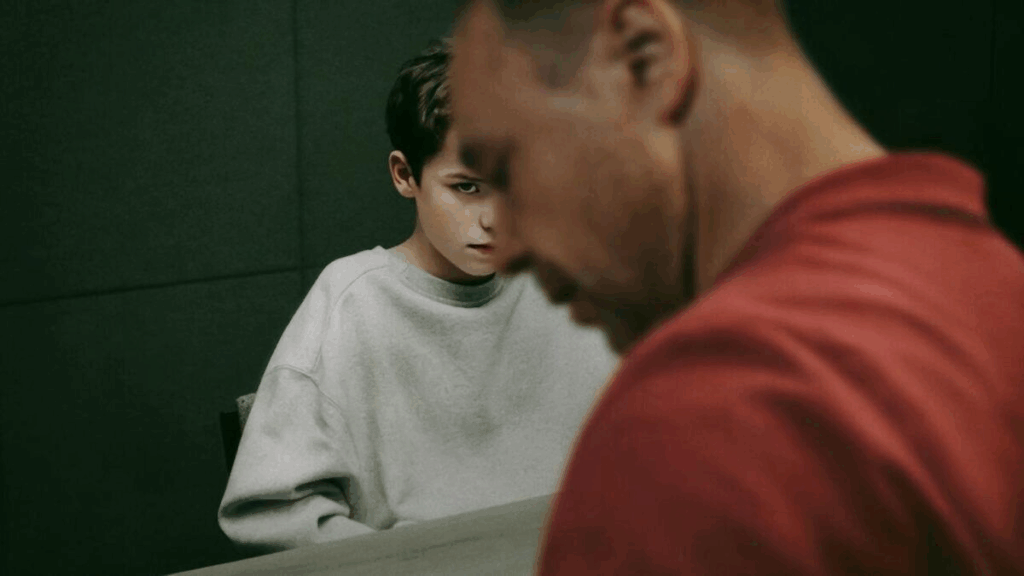
Netflix’s Adolescence is a well-written and relevant series that portrays the meeting place of online subcultures, mental health, and families with grace and empathy. Intertwining the individual struggles of Jamie with the upheaval experienced by his family shows audiences a realistic perspective into the very real conflicts of modern adolescents and the helplessness and naivety of those around them.
Adolescence, through its uniquely intelligent and crafted visual storytelling and multifaceted characters, serves us dark themes so seamlessly it will continue to spark conversation about digital literacy, teenage wellbeing, and the responsibilities of parents and society to prevent the horrific potential outcomes of what such dangerous, poisonous environments can produce.
 Shoujie Wang
  Yinan Zhou
  SUN Yinchen