
In society today, social media has become the leading influence on current trends, societal norms and even the perception of self-worth. Social media platforms expose individuals to different portrayals of beauty standards. This is mostly through celebrity posts, beauty influencers, etc. Younger generations are being raised in a society where they are constantly exposed to these beauty standards and the unrealistic expectations that make someone ‘beautiful’ or ‘worthy’. Through the use of social media platforms such as Instagram, Tik Tok, Facebook, etc young people are constantly comparing themselves to what they see on social media which can have massive negative impacts on their self-image and mental health. These platforms have created a negative environment that allow younger generations to constantly compare themselves and result in them filtering or editing their own images to portray themselves like what they are exposed to. The rise of social media influencers has been a massive factor for these unrealistic expectations, through the constant posts demonstrating filtered posts that demonstrate flawless appearances. However, recently many influencers have been using their platforms to promote body positivity and inclusivity. Social media is rapidly becoming a vital part of society, it has had a massive dominance on self-image and portrayal of beauty, in both negative and positive ways.
Social media has raised multiple concerns since their rise in popularity, concerns such as its impact on mental wellbeing, cyber-safety and social unity (Centre for Digital Wellbeing, 2021). However, their role in the portrayal of unrealistic beauty standards have created massive concerns, particularly for the wellbeing of younger generations. Younger generations are being raised in a generation where social media is their main source of information, it is also a place where they are exposed to unrealistic beauty standards (Jain, 2023). This exposition is due to their ongoing exposure to social media influencers. Many influencers and celebrities are constantly posting themselves on social media, their posts consisting of themselves looking flawless with absolutely ‘no imperfections’ (Kaur & Kumar, 2021). This means that each posts shows a particular influencer or celebrity that are size 8, skinny waist, no acne and just ‘perfect’. However, behind these posts are ‘digitally manipulated photos’, meaning the photos have been edited or angled differently to ensure ‘perfection’ (Xie, 2024). These photos are resulting in the beauty standards to be defined by what is shown on social media, research has stated that younger generations at the age of 13-18 years are active on social media being exposed to these body images for an average of seven of hours per day (Xie, 2024). Furthermore, unrealistic beauty standards have massive impact on self-image and how young people perceive themselves. Body image dissatisfaction is caused by the exposure top these unrealistic beauty standards, Xie (2024) further states that individuals who use social media are shown to have an increased feeling of depression compared to those who are less on social media. Viewing these beauty standards increase insecurities within young people, through the increase exposure of models with skinny waists compared to individuals who are average size or plus size create an unfavorable body image within individuals. In addition, in many ways social media platforms themselves are heightening the situation through their beauty filters and editing features. By having the ability to easily edit images and have a beauty filter when creating videos only heightens the insecurities of younger users. Demonstrating to younger users of the easiness of changing their appearance to seem ‘perfect’ only further worsens the insecurity of the younger users of social media. However, social media influencers are not the only contributes to these unrealistic beauty standards.
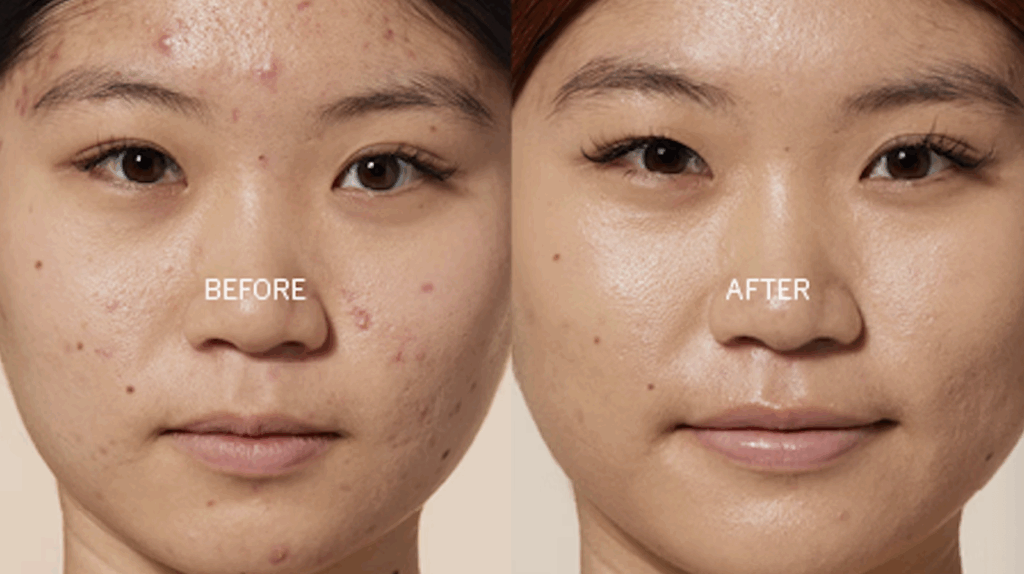
Image: Babor’s ‘My Skin My Story’ campaign
While social media influencers are a massive influence on the unrealistic beauty standards, it is evident that the beauty brands themselves are also a contributing factor. Beauty standards and a person’s ‘ideal’ appearance is demonstrated within the marketing for beauty products. These products can include any sort of beauty or cosmetic products such as makeup, skincare, etc. An example from Babors campaign ‘My Skin My Story’ demonstrates how insecurities such as acne is used to promote their product. Social media has become an effective way for businesses to promote their products to their consumers, mostly done through well-known influencers or developing their own ads. Beauty businesses often exploit insecurities that many individuals have and use these insecurities to promote their products. These businesses outline natural human occurrences such as acne, wrinkles, etc, labelling them as ‘imperfections’ and stating that their products are the solution. This only identifies individuals’ insecurities and that they must be fixed or improved. The problem concerning the advertising of these beauty companies is the negative outcomes that occur, how it effects the younger generation that are active on social media. The way beauty companies advertise their products through the promotion of unnatural body standards, resulting in people comparing themselves to the advertisements (Tiippana, 2022). This has had a massive impact on individuals’ self-esteem and resulting in body dissatisfaction. Tiippana (2022) further explains ethical advertising which is discussed due to the negative side effects to certain advertising techniques. Ethical advertising is discussed in different levels, micro level which is concerning the individuals, meso level which concerns the group or organization and finally the macro level which has effects on society. Beauty companies must view their marketing ethics at a macro level and consider how their advertising effects society. Younger generations are not aware on the advertising strategies that these beauty companies incorporate, however, these companies must incorporate ethical advertising views to ensure their main priority is the wellbeing of their users. Although the exposure of social media results in many negative impacts on self-esteem, there have been recent positive impacts for the younger generation.
Despite the many negative influences, social media has recently been a chance for many influencers to challenge these unrealistic beauty standards and promote inclusivity within their videos. Many influencers have taken the opportunity to use their mass followers to promote body positivity and reassure viewers that posts on social media can be edited to look a certain way. With the ongoing increase of Tik Tok, influencers much as Spencer Barbosa and Samyra have used their platform to promote size inclusivity within fashion and demonstrates the fakeness of social media. Tik Tok provides more opportunities for these influencers to demonstrate these messages by creating a space for creativity and authenticity, allowing the chance to promote body positivity. By promoting body positivity, younger users on tik tok can understand that most content they view on social media is edited to look ‘perfect’ and educates them to think in a positive way regarding their self-image. Cohen et al (2021) states that body positivity portrayed on social media has created a shift in perspective, meaning that it has constructed a positive embodiment creating a ‘positive body relationship and comfort.’ This has also been associated with an improvement of psychological, social and emotional wellbeing for individuals active on these social media platforms. Body positivity on social media include acknowledging that everyone is unique and appreciating these features that are inconsistent on social media (Cohen et al, 2021). In addition, social media has created a space which communities have developed hashtags such as #BodyPositivity and #bopo which has popularized body positivity throughout the internet. Creating visibility on the importance of body positivity creates a space for younger users to appreciate their appearance and understand inclusivity. Social media is a large space that should be used to influence a positive view on self-image and reassure younger generations on their uniqueness.
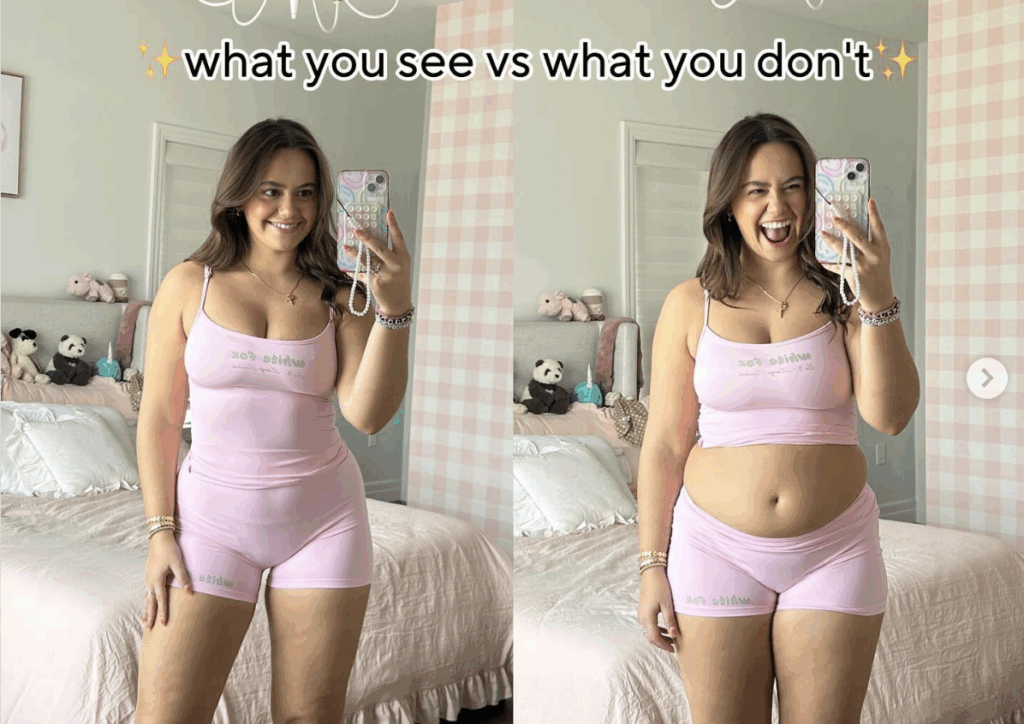
Image: Spencer Barbosa Instagram Post (body positivity)
Social media has had a massive influencer on the younger generation and how they view their self-worth. It has influenced issues regarding mental health, self-worth and younger users’ confidence level. Although social media platforms have created opportunities for positive change for positive body image, it doesn’t hide the fact that these unrealistic expectations are still demonstrated and changes to photos are made easy within these platforms. Not only should the younger users understand these impacts, the parents and guardians are responsible to make a difference. Parents and guardians have the responsibility to educate themselves on these issues and teach younger users on the fakeness of social media, helping younger users to understand the difference between manipulated and real posts. This can be done by showing the posts under the #BodyPositivity hashtags or the influencers who use their platform to promote positive body image. In addition, incorporating this social media education and digital wellbeing into school education will be extremely beneficial to teach individuals at a young age of the manipulation within social media. The issue of social media and self-image has become extremely harmful for the younger generation, it has become a sense of mental health, self-image and the ongoing beauty pressures portrayed on social media. Recognizing these issues and educating younger users early ensures the future of social media to become a space for body positivity and growth.
 ZHANG QITING
  Lu Yumeng
  Huang Wanyi