
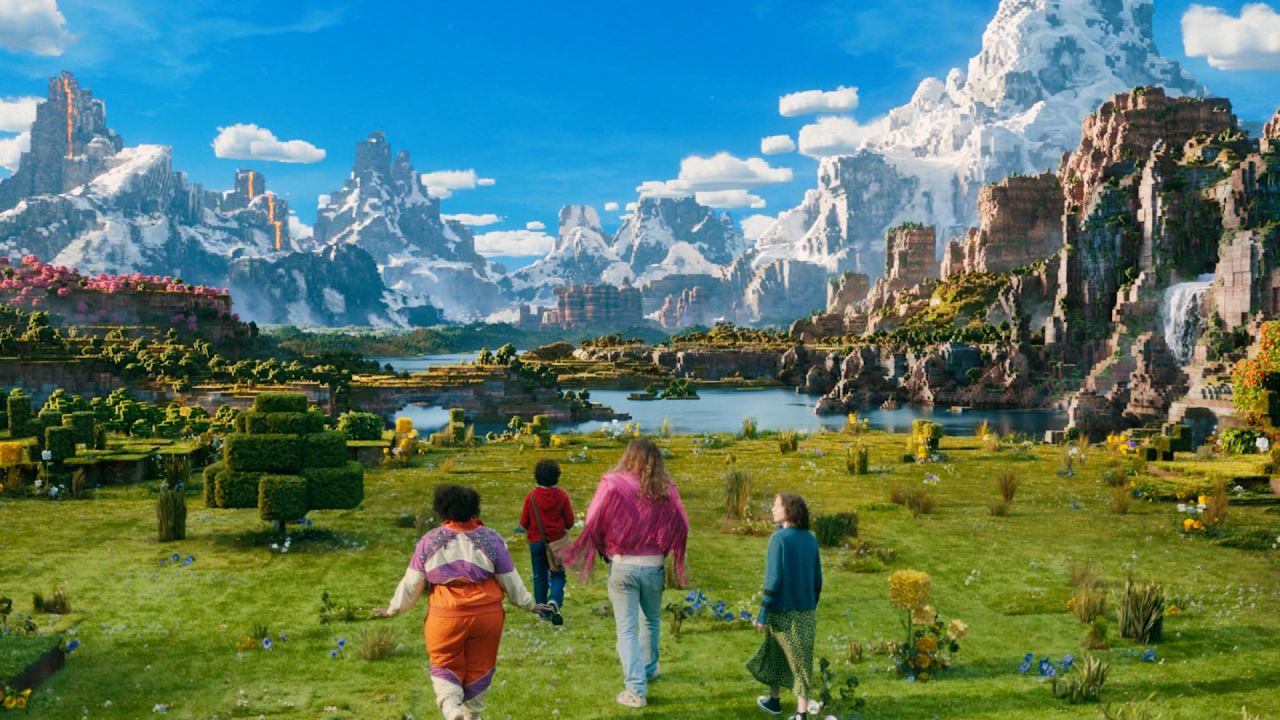
In April 2025, Minecraft: The Movie created chaos, causing cinemas to turn into pixelated playgrounds, where nostalgia rained like confetti and popcorn scattered like digital debris. The global cultural frenzy blurred the lines between gaming and spectacle. Transforming one of the most recognisable video games into a live-action film was a bold risk, especially considering the troubled history of video game adaptations.
In spite of the obstacles, Minecraft: The Movie exceeded global expectations, capturing the attention of both loyal fans and casual viewers. Worldwide discussions were quickly ignited, regarding the influence of gaming intellectual property and the potential for the virtual environments created and enjoyed by people to serve as the next base for Hollywood’s major franchise. More than just a film, it became a fun experiment in conveying the chaos, creativity, and community of a digital realm on the big screen. Could player-driven experiences successfully transition into a passive format? This film demonstrated that they could, turning pixelated landscapes into cinematic wonderlands and nostalgia into worldwide discussions.
In doing so, it didn’t merely adapt a game, it explored cinema’s capacity to encapsulate imagination, freedom, and shared enjoyment, establishing a new standard for gaming adaptations across the board. Occasionally, the pixels can indeed spring to life, and Minecraft has just illustrated how.
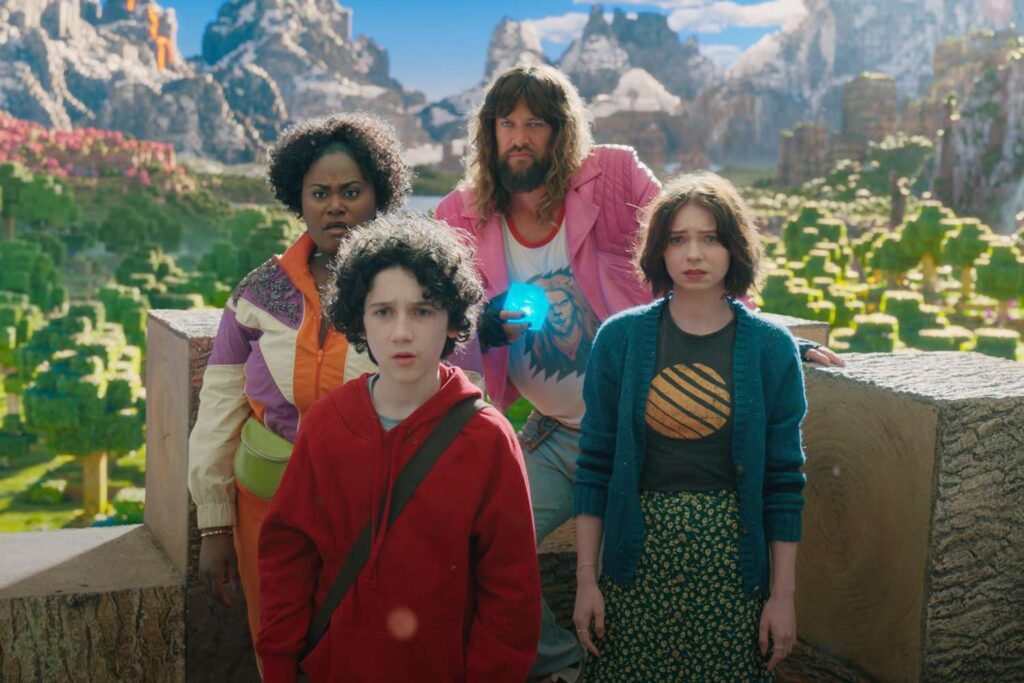
Image: People
Where It All Began and The Risk
When Minecraft was released in 2011, it seemed so simplistic that it might not achieve worldwide popularity, a blocky, pixelated sandbox game where players could mine, craft, and survive in infinitely generated environments. Nevertheless, that simplicity was its brilliance. Developed by Mojang and initially created by Markus “Notch” Persson, the game encouraged players to envision, construct, and mold their own worlds with a level of freedom that few games provided. What began as an independent passion project rapidly evolved into a cultural phenomenon, leading to spin-offs, educational adaptations, and a Netflix series. Following Microsoft’s $2.5 billion purchase in 2014, Minecraft expanded significantly, establishing itself as not just a game, but a cultural phenomenon and a platform for creativity.
Transforming Minecraft into a film seemed unavoidable, considering its position as the top-selling video game ever and its significant influence on popular culture. Selling over 300 million copies and having a community that includes all age groups, the game’s impact goes well beyond consoles and PCs, it has led to merchandise, novels, educational initiatives, and even live events. For Hollywood, transforming Minecraft into a film presented an opportunity to access an existing worldwide audience whose imagination had already generated countless narratives within the game. The difficulty was in converting a sandbox environment lacking a central storyline into a film narrative that still resonated with what players cherished. Upon the release of the film’s initial trailer in 2024, it attracted significant criticism online, as fans voiced their concerns about its tone and visuals diverging too much from the essence of the game. The dispute underscores a larger conflict between Minecraft’s organic creativity and the corporate drive to monetise its cultural influence.
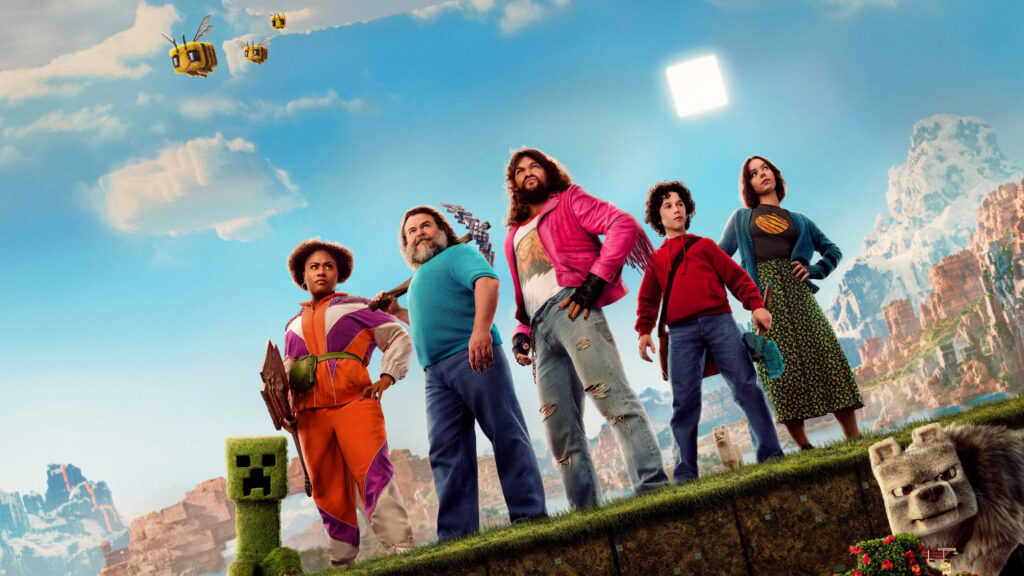
Image: Flicks
Level Up: Video Games as the Next Major Franchise in Cinema
The emergence of video game adaptations as prominent cinematic franchises is hard to overlook. Following the unanticipated popularity of films such as The Super Mario Bros. Movie (2023), Hollywood studios have increasingly started to see video games as dependable sources of box-office success, appealing to both loyal fans and broader audiences. Minecraft: The Movie serves as a prime example of this trend, capitalising on a vast, multi-generational fanbase built over almost twenty years, with over 300 million copies of the game sold globally. Unlike many adaptations from other media, this film harnesses a culture of interactivity and participation, providing a pre-existing audience that is profoundly engaged with the universe, characters, and creative opportunities of the original material. Its success highlights a more extensive shift in the industry, gaming intellectual properties are beginning to compete with, and, in some instances, exceed, comic books and traditional franchises as the basis for cinematic “shared universes.” By converting the boundless creativity of digital realms into major films, studios are not only pursuing financial gain but also investigating how interactive media can transform narrative approaches in mainstream cinema. This trend underscores the increasing cultural and commercial influence of video games, establishing them as the next frontier for transmedia franchises that can connect with audiences across generations, platforms, and international markets.
How Nostalgia and Accessibility Engage Audiences Effectively
The success of Minecraft: The Movie highlights how nostalgia and accessibility serve as effective tools for engaging audiences across different generations. Unlike many other video game adaptations that depend on intricate lore or complicated mechanics, Minecraft relies on its open-ended, creative premise, which is easily recognisable and understandable for both kids and adults. For life-long fans, the film evokes a profound sense of nostalgia by incorporating familiar blocky graphics, iconic mobs, and the shared memories of countless hours spent building and exploring virtual landscapes. This emotional connection fosters a strong bond between the movie and its primary audience, who see pieces of their own experiences mirrored on screen. Meanwhile, the film’s simple storytelling, focus on humor, and family-friendly adventures ensure that it is accessible to newcomers who might not have played the game but can still appreciate the narrative without needing prior knowledge.
The marketing strategy enhanced this inclusivity by showcasing Jason Momoa’s star appeal, emphasising comedic aspects, and presenting the story as an entertaining, universal adventure instead of a niche adaptation. By merging playful nods with widespread attraction, the film illustrates how nostalgia can rekindle interest in established fans while accessibility breaks down barriers for new viewers. Collectively, these approaches demonstrate that achieving a balance between shared memories and inviting, easy-to-follow entertainment is not only productive for box office success but also crucial for cultural endurance, enabling Minecraft: The Movie to resonate far beyond its primary gaming audience.
Fan Culture and Transmedia Storytelling
Serving as a vibrant illustration of how fan culture and transmedia storytelling function in the contemporary media environment, Minecraft: The Movie was clearly more than a film adaption. The release of the film was strategically crafted to resonate with a fanbase recognised for its creativity, collaboration, and commitment. Collaborations with Minecraft servers, viral challenges on TikTok, influencer partnerships on YouTube, and the introduction of themed merchandise enabled fans to engage far beyond the cinema. This was not merely a promotional effort for a movie, it aimed to activate an already existing participatory culture where audiences excel at producing, sharing, and remixing content. By offering downloadable content associated with the film, the franchise blurred the distinction between spectator and creator, equipping fans with the means to reinterpret and extend the narrative within the game’s sandbox setting. This embodies the core of transmedia storytelling: narratives that spread across numerous platforms and encourage audiences to co-create meaning rather than just passively consume. The increase in Minecraft’s player base following the movie’s release emphasises the effectiveness of this approach, illustrating that the film did not merely adapt a game but revitalised its community. Therefore, Minecraft: The Movie illustrates how modern adaptations thrive not by supplanting fan culture, but by enhancing it through intertwined realms where cinema, gaming, and digital fandom meet.
Consequences and Evaluation
Minecraft: The Movie makes one thing abundantly clear, that Hollywood has unearthed a new lucrative opportunity, and it’s in pixels. Video game properties are no longer just a risky venture as they are rapidly becoming a reliable source of income. With this film demonstrating that gaming franchises can achieve both critical success and box office revenue, it practically challenges studios to ramp up their adaptation efforts. Anticipate everything from The Legend of Zelda making its cinematic debut to a big-screen revival of Among Us, or even a continuation of Five Nights at Freddy’s that keeps viewers on the edge of their seats. Gaming IP is swiftly rising to the same level of prestige once held by comic book franchises, creating expansive transmedia worlds that include films, streaming shows, merchandise, toys, and yes, even interactive downloadable content that ties in.
Beyond financial considerations, the film underscores a cultural transformation. For Gen Z and Gen Alpha, video games are not merely hobbies, they’re symbols of identity, communal spaces, and nostalgia all merged into one. Adaptations like this do more than provide entertainment, they affirm the virtual realms that influenced a generation, turning pixelated landscapes and unique characters into mainstream cultural icons. Suddenly, gaming transcends from being just “children’s play”, it has become a common language, a reference point for youth, and a badge of community.
Image: CNN
However, it’s not entirely smooth sailing through this pixelated utopia. There’s a significant risk of oversaturation, an influx of rushed or poorly executed adaptations might prompt audiences to lose interest quicker than a Creeper detonating near a home. Another threat is superficiality, merely transferring a game’s visuals to the screen without grasping its essence or mechanics won’t suffice. And the most challenging dilemma? Player agency. Games thrive on the element of choice and interactivity as films are inherently more passive. Can the excitement of embodying a hero, or villain, ever fully transition from the controller to the cinema? Only time, along with a few more pixelated hits, will provide the answer.
Conclusion
Forget about caped heroes and magical sagas as Hollywood’s latest box office sensation is a collection of blocky pixels in a square world, and against all odds, it truly delivers. Minecraft: The Movie transcends the typical blockbuster experience as it serves as a model for Hollywood’s changing cinematic goals. For many years, major films drew their source material from literature, comics, and mythology, but now, digital landscapes and pixelated realms have become recognised as cultural cornerstones. What were once simple pixels designed for entertainment have evolved into effective storytelling tools, capable of carrying complex narratives, unforgettable characters, and visuals that can captivate audiences of all ages. Through Minecraft, Hollywood demonstrated that the creativity of millions of players, their endless hours spent building, exploring, and surviving, can hold as much significance as the visions of directors and screenwriters.
The film’s success also marks a pivotal shift in how franchises are developed. Iconic worlds are no longer limited to books or comics, they can emerge straight from the sandbox of video games, encouraging audiences to not just watch, but engage, remix, and inhabit these realms. To be honest, the cultural impact was unmistakable as Minecraft: The Movie did more than generate think pieces, it ignited memes. Images of Jason Momoa as a blocky hero dominated X (formally known as Twitter), while TikTok was flooded with parody “blocky” dances, and, in some theatres, the excitement was so intense that popcorn was literally tossed into the air (likely in sync with the creeper explosion scenes). These shared moments of laughter emphasise how profoundly the film became integrated into fan culture while simultaneously appealing to the casual moviegoer seeking an enjoyable experience.
Looking ahead, future analyses might draw parallels between Minecraft and earlier adaptations like Super Mario Bros. or Sonic the Hedgehog, examining how interactivity enhances fan devotion and supports transmedia storytelling. What is already evident, however, is that the distinction between gaming and cinema has been joyfully, chaotically, and perhaps even memefully blurred. If the 20th century presented superheroes as contemporary myths, the 21st century has introduced us to something more whimsical, pixels as pop-culture icons. And judging by the abundance of memes, merchandise, and popcorn-strewn theatre floors, this is just the beginning.
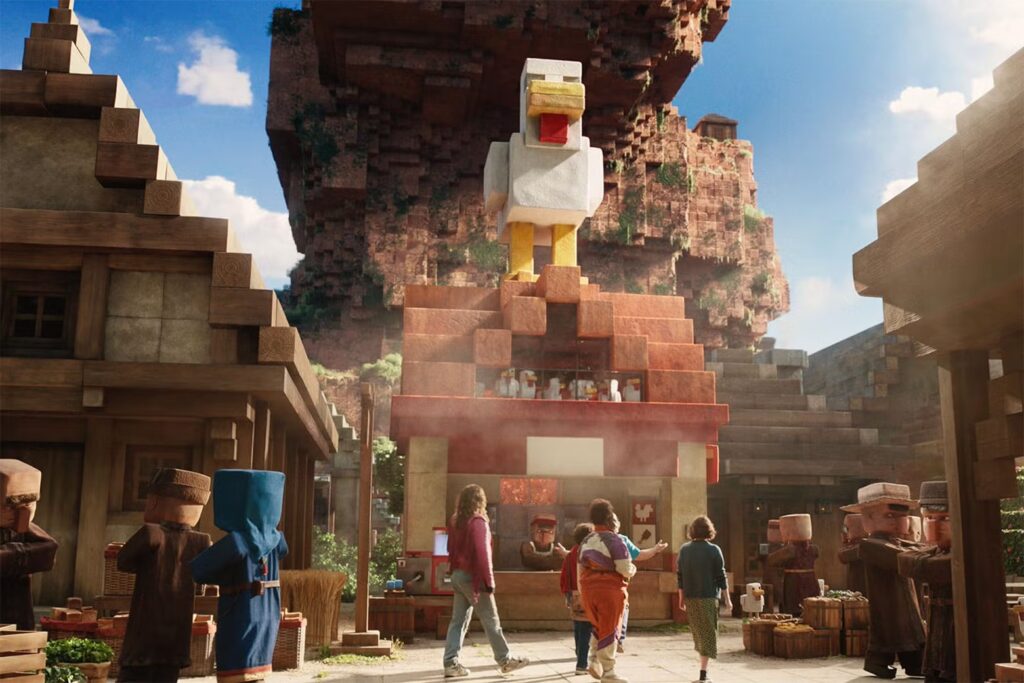
Image: Slate
Written by Kate Edwards
 Guan QiuYu
  REN Ren
  Tan Kane