
By Liuhaonan movie#hero#villain#youtube
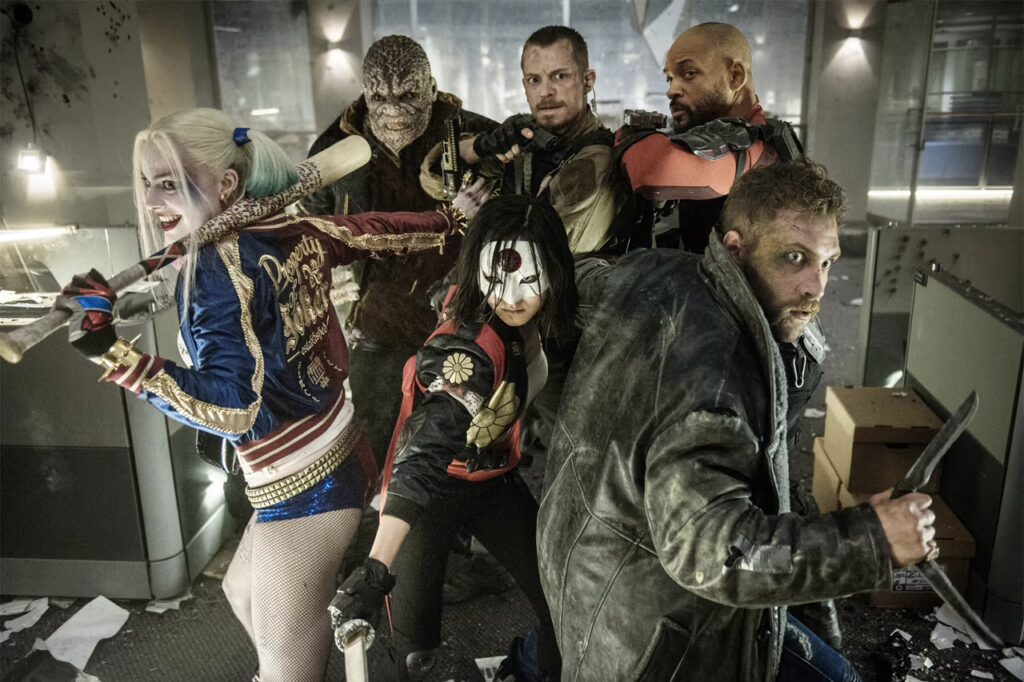
Photo from: Hypebeast
If you are a crazy movie fan, then 👇
Open TikTok at any time of day, and you will probably see a villain.
Maybe it’s Joaquin Phoenix dancing down the stairs as the Joker—from the movie”JOKER.”
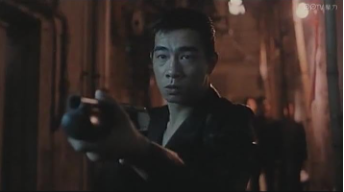
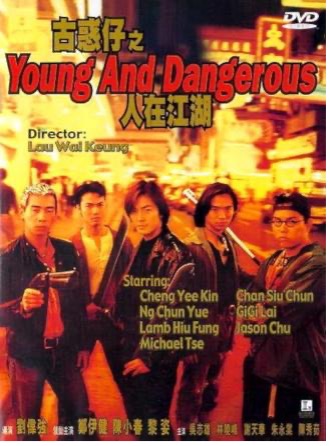
Maybe it’s a moody edit of a triad boss smoking on a rooftop—–from the film “Young and Dangerous”.
Or it’s a “villain era” get-ready-with-me video where the creator tells you how to dress “like you don’t care who gets hurt”.
For young people, this is the media background noise of daily life. Pew Research reports that 93% of U.S. teens use YouTube and 63% use TikTok, and about half say they are online “almost constantly”. Worldwide, TikTok has passed USD$1.5 billion monthly active users, and its fastest-growing audience is teenagers and people in their early twenties. Nearly 20% of teenagers always use TikTok to watch, 23.3% use TikTok most of the time, 12.4% use it occasionally, and 9.2% never.
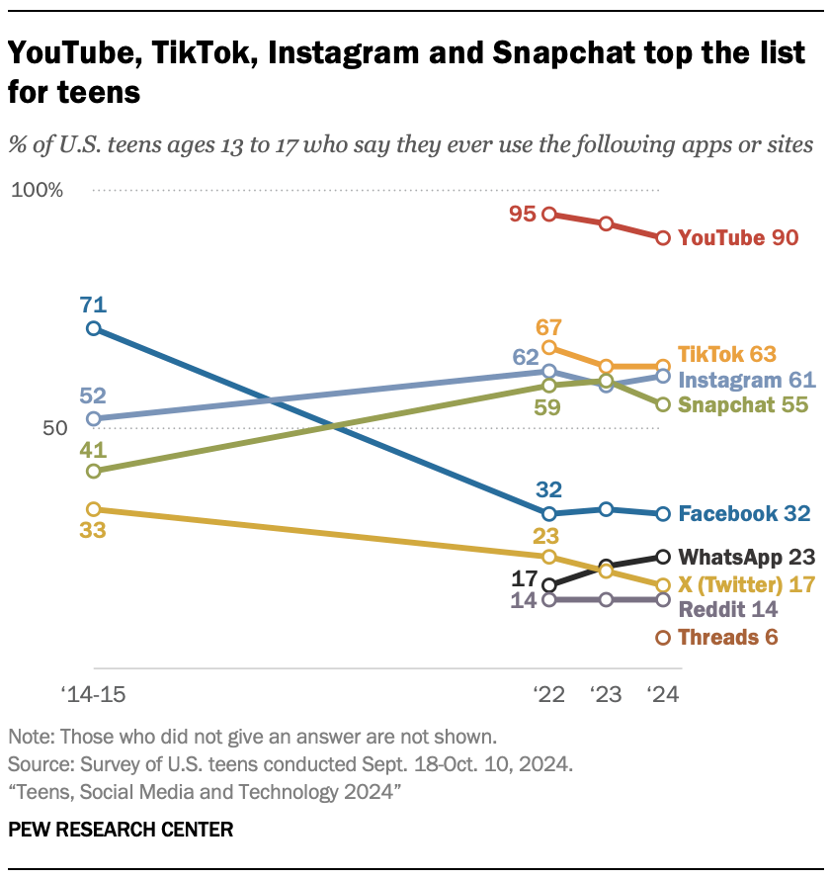
Photo from: Pew Research Center
When so many teenagers of those feeds are filled with violent movie clips and “charming villain” aesthetics, it is fair to ask a simple question:
How do villain-centred films, and the social media built around them, shape the way young viewers think about violence and heroes?
Villain-centred movies like Joker and Young and Dangerous should be watched with caution by young audiences because they can turn violent criminals into attractive role models.
Anti-hero or Villain Lead? When Empathy Turns Into Cheering
Before we argue about “harm,” we need clean labels. An anti-hero is still the main character, just missing the usual heroic traits—often selfish, messy, or morally shaky. A villain-centred story goes further. This often throws a wrongdoer into the limelight and encourages us to live life as they do. It might very well be clever writing. It also shifts the tone of the story. One might pity a character; one might not necessarily want to emulate them. Media scholar Jonathan Cohen refers to this identification when instead of merely observing a character, the individual swaps shoes with the character for a moment. In the online culture, the narrative is conveyed in the form of edited clips, not in full-fledged stories. Thus, the effects fade. The trouble is in distinguishing the end of empathy and the start of fandom.
This is not a yes/no question. It does not take one film to turn a teenager into a murderer. But a combination of fashionable films, sophisticated algorithms, and the notion of a “villain era” can very easily confuse thoughts about violence with cheers for violence.
video from YouTube: why bad guy so cool.
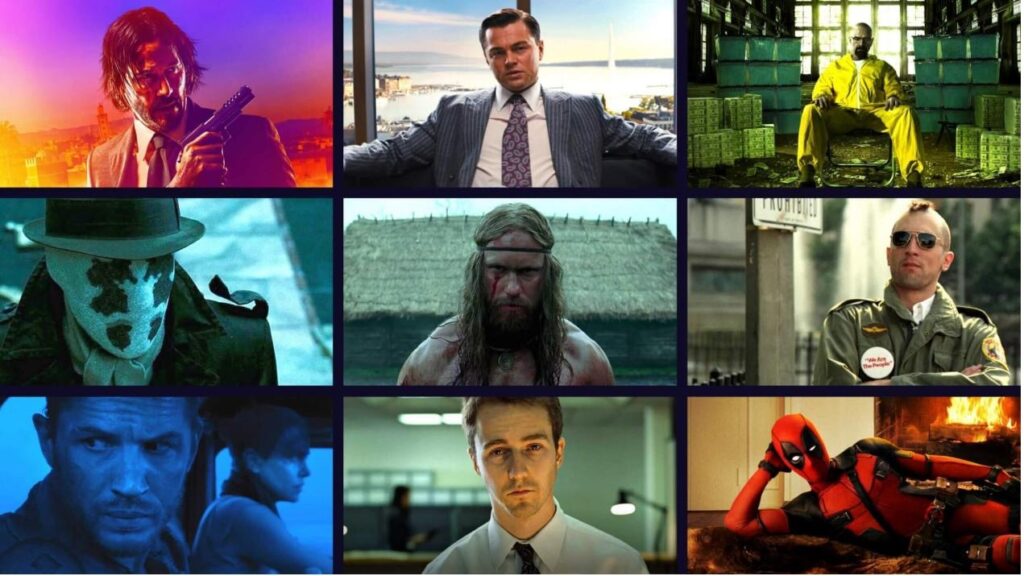
Photo from: Studio Binder
When a Villain Becomes a Brand: Joker and the Normalizing of Violence
Osipov says some screen villains just disappear from the screen. A villain that is a “cult” icon has his/her style and attitude imitated and replicated. With time, this repeated exposure leads to anger and violence being normalized, especially among teens yet to discover what is right and what is wrong. He describes how the speech pattern of the Joker character is a kind of act that allows the audience to identify with him.
Joker is a perfect case. The film made over USD$1.07 billion worldwide. This kind of reach does not go unappreciated. It means Arthur Fleck’s face paint, stance, and attitude of “I’m done playing nice” are all over the place: in the edits, in the reaction videos, in the memes, and in the costumes. And when a meeting between people and the Joker occurs in pieces—one cool dance move, one punch line, one slow-motion shot—that doesn’t mean people get the whole picture or the price of the violence. Many film critics consider this film to be a work of art.
“Watch this and you’ll become violent” – that’s Osipov’s message. No – it’s weaker than that. It’s frightening: when it comes to violence, our standards can shift. And then comes branding the bad guy – at which point you can’t tell criticism from applause. That’s why the next question is about learning – what does repeated media violence teach us to feel, and to do?
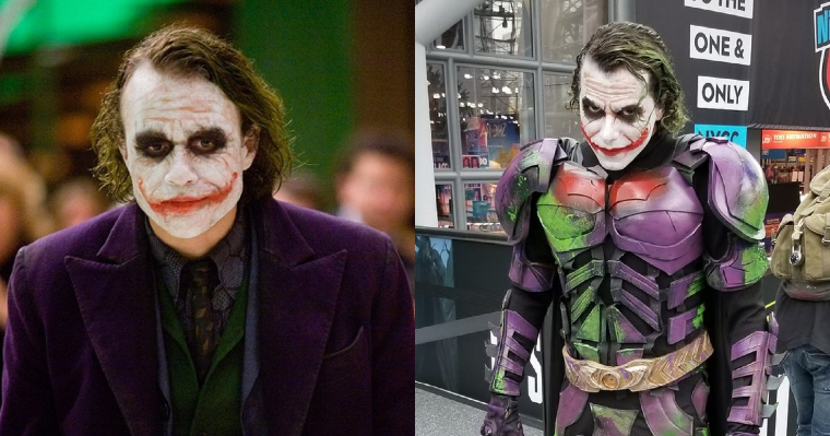
Photo from: JUKSY
The film’s defenders argue that it is a warning. The role Arthur Fleck is not a cool mastermind; he is a sick, lonely man failed by social services and mocked by the rich. A popular YouTube video essay called “Joker Was a Warning” makes exactly this point, reading the film as a critique of how society abandons vulnerable people until they snap.
From Shade Cinema
When Violence Becomes a Script: Young and Dangerous and “Aggressive Scripts”
Craig A. Anderson’s warning is not “watch one violent movie and you become violent.” It’s more annoying than that. He says violent media can teach “aggressive scripts”: simple attack plans you can pull out when you feel insulted or boxed in. The script is basic – someone crosses you, you strike back. It’s a ready-made way to solve stress: swing first, talk later. When the hero wins by hitting first, that move starts to feel normal. If enough repetitions occur, the audience can desensitize themselves to the blood and the pain, and thus the victim does not seem as real. This is especially true for teenagers, who are still learning what constitutes “normal” conflict.
That’s why Young and Dangerous is a good case. It follows teen triad boys, but it also sells their world as a tight brotherhood with sharp clothes and a code. The film “set a trend” by framing gangsters as “young heroes”. In its Andrew Lau profile, the Archive notes the film grossed over USD$2.7million (HK$21 million) in Hong Kong. So Anderson’s point lands: stylish violence can teach a script, then numb the feelings that should stop it. Next up – why do most fans still not cross that line?
Watching the Anti-hero Without Buying the Violence
Media scholars Daniel Shafer and Arthur Raney say anti-hero stories work because viewers find a way to “make it okay” (Shafer & Raney, 2012). We can justify the character and keep cheering. We can read them as a “force for good.” If we think the anti-hero is fighting a worse evil, acting for love, or hitting back at a cruel system, our moral warning light turns down and we feel thrill instead of disgust. You can still debate if the methods are right.
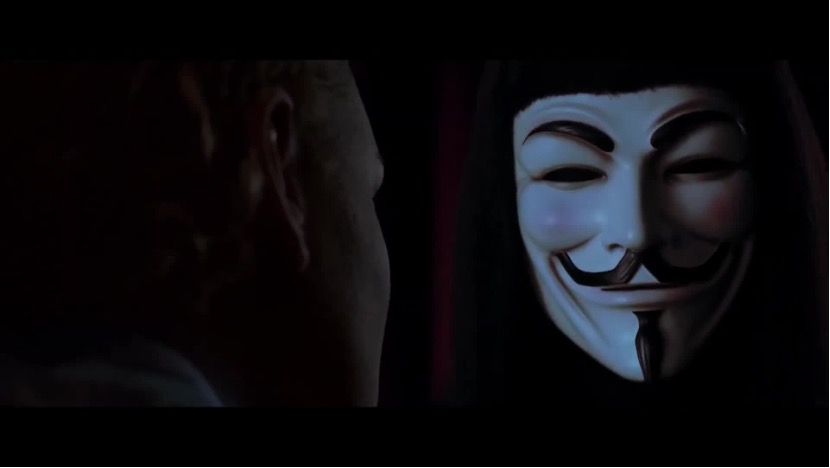
That logic fits V for Vendetta (2005). The British Film Institute (BFI) notes the film caught flak for a sympathetic take on terrorism. V blows up buildings, yet the movie frames it as a strike against a fascist state, so the explosions play like release, not horror. The film also reached a mass audience (about USD$130 million worldwide) (The Numbers, 2006). And the Guy Fawkes mask escaped the screen: CBS News describes it as a symbol used by Occupy protesters (CBS NEWS, 2011). Most people wear it to signal resistance, not to copy V’s violence. That supports Shafer and Raney’s point: you can borrow the meaning of the story while keeping a distance from the crime.
Many countries have banned this film that affects the behavior of teenagers. Even in some countries, like Singapore, teenagers who imitate gangster plots are detained to prevent them from imitating such behaviors.
This is the optimistic interpretation: we get to enjoy the moral complexity while still condemning violence in the real world. Here, violence in cinema could actually urge us to reflect more about power and propaganda in our films. It’s complex, to be sure, but often hardly mindless. I don’t mind this. But it overlooks where these narratives are going to – teenagers should not be allowed to imitate such violent behaviors.
I Say: When does a story stop being just a story and start acting like a script you can copy?
Type 1: The short step from empathy to “role model”
Movies can inspire us to feel sympathy for a character without requiring that we emulate them. This is what we can expect. It gets complicated when empathies become permissions – if movies make teenagers believe that violent behavior is permitted, then these movies will cause great harm. The antihero comes with the convenient crutch of explanation. “Yes, they acted badly. Just see what the world did to them.” In the case of *V for Vendetta*, the antihero comes as a symbol of revenge against the cruelty of the state. The symbol breaks free. When the Guy Fawkes mask becomes a real protest logo, it shows how fast “I get this character” can turn into “I am this character” (CBS NEWS, 2011). Most people stay in the first zone. But for younger viewers who are still learning what “resistance” looks like, the mask can blur the line between message and method. That’s the risk – not instant corruption, but a slow shift where the character becomes a template.
Therefore, many countries have imposed classification restrictions on violent movies. Teenagers aged 10 to 14 can watch them with their companions, those aged 15 to 17 can watch them with their companions, and those under 18 are prohibited from watching.
Type 2: When style + edits make the villain look “cool”
There are movies that not only tell a story, but also market an atmosphere–It is an atmosphere of freedom that is either painful, arrogant or crazy. And the best thing about atmospheres is the way they travel through the internet. Case in point: the film “Joker,” in which even people who dislike the protagonist have to admit it’s visually and sound impressive. It won big awards, including Best Actor and Best Original Score at the Oscars, which stamps it as “serious art,” not just shock content (Oscars, 2020). But then trim that and put it on social media. This 10-second clip can take breakdowns and transform them into mood clips, featuring nice color correction, a beat drop, and a quote from society. This way, the suffering is trimmed away, and the swagger remains. This is how one achieves a different kind of villain that essentially feels like a fashion statement. This interpretation is not applied to the film, but social media makes it possible.
Type 3: The learning effect of repeated violent clips
One viewing does not equal life in a stream. The more problematic issue is the issue of repetition. Once violent images become something you scroll through on a regular daily basis, your brain will come to equate them with background noise. This does not mean that you will act out what you see. Research studies on violence in the media have shown the negative effects of violence as background noise to potentially have an effect on thinking more aggressively (Rebellon et al., 2010). Furthermore, the issues within the functions of the platform mean the same violent images are recycled, re-edited, and reused, not an end event but merely the highlight reel. In this manner, violence simply becomes something you understand as a “move.” Conditioning in the manner I wish to address is not the issue in one movie.
Case contrast: Why Young and Dangerous deserves more caution
Here’s why I worry more about Young and Dangerous (1996) than films like Joker or V for Vendetta. It’s not “more violent.” It’s closer to the real life of our teenagers. The theme begins with the category of teens, friendships, loyalties, and standings. These combined ingredients are essentially teen fuel, it may lead to a crime. When the protagonists are cool, speaking cool, and acting like one Imagines that their ‘gang life’ is no longer something remote. That is a dangerous offer for viewers who already feel small or bored. Many teenagers commit crimes because they learn about the gangsters in movies.
Also, the copy parts are simple. You don’t need clown paint or a grand political speech. You can copy the hair, the jacket, the swagger, the way the group talks. It’s everyday cosplay. And because the characters are young, the line between “character” and “possible me” gets thin fast. If you want one key risk condition, it’s this – “When a film sells pride as the reward for violence, imitation becomes social, not just personal.”
Counterpoint and limits: most people won’t copy, but we need guidance
To be fair, most viewers don’t watch an antihero and go “Let’s do that.” Shafer and Raney (2012) argue that audiences can enjoy antiheroes while still judging them, because people build moral excuses inside the story without accepting the same acts in real life. That’s real. V for Vendetta is a good example (CBS NEWS, 2011). The Guy Fawkes mask became a protest symbol, not a bombing manual.
So I’m not calling for bans. I’m calling for viewing guardrails, especially for teens. A start can be made by parents and schools to simply chat after a movie show and ask three questions: Who got hurt? What made the movie make something look ‘cool’? What will happen in real life? Online platforms also play a role to promote full context clips over hype clips. Movie fans will also set the tone. Videos like “Joker Was a Warning” show how commentary can pull viewers back from idol worship (Shade Cinema, 2025).
That’s my rule: imitation is something most people won’t carry out . Without the rule, the most impressionable audience hears the message the loudest.
So, do violent anti-heroes “turn people bad”?
Not by default.
The larger problem comes when the story becomes a template. This risk elevates when the narrative comes close to you personally, when the movie depicts violence as stylish, and when social media insists on showing you the same “best” pieces over and over. This is when compassion can easily give way to imitation—particularly with young audiences who are still navigating the world of power and respect.
My two cents – Don’t panic, but do not leave children unattended with the algorithm. Watch in context. Discuss afterwards. Ask what the movie didn’t show (pain, consequence, victims). Let’s also end the promotion of hype cuts of consequence. If we offer instruction, these movies are still art.
References
Anderson, C. A., Berkowitz, L., Donnerstein, E., Huesmann, L. R., Johnson, J. D., Linz, D., Malamuth, N. M., & Wartella, E. (2003). The influence of media violence on youth. Psychological Science in the Public Interest : A Journal of the American Psychological Society, 4(3), 81–110. https://doi.org/10.1111/j.1529-1006.2003.pspi_1433.x
Anderson, M., Faverio, M., & Gottfried, J. (2023). Teens, Social Media and Technology 2023 YouTube, TikTok, Snapchat and Instagram remain the most widely used online platforms among U.S. teens. https://www.pewresearch.org/wp-content/uploads/sites/20/2023/12/PI_2023.12.11-Teens-Social-Media-Tech_FINAL.pdf
Box Office Mojo. (2019). Joker. Box Office Mojo. https://www.boxofficemojo.com/title/tt7286456/
Brian Welk.(2025).How Do Teenagers Consume Movies and Shows? Nearly Half of Them Say Rarely on a TV.https://www.yahoo.com/entertainment/tv/articles/teenagers-consume-movies-shows-nearly-130000989.html
Castmagic. (2025). TikTok Users by Country in 2025: Global Stats & Rankings. Castmagic.io. https://www.castmagic.io/post/tiktok-usage-by-country
CBS NEWS. (2011, November 4). “Vendetta” mask becomes symbol of Occupy protests. Cbsnews.com. https://www.cbsnews.com/news/vendetta-mask-becomes-symbol-of-occupy-protests/
Cohen, J. (2001). Defining Identification: A Theoretical Look at the Identification of Audiences With Media Characters. Mass Communication and Society, 4(3), 245–264. https://doi.org/10.1207/s15327825mcs0403_01
Graphic Policy. (2020, March 3). V for Vendetta: A mask becomes un-Moore’d in time. YouTube. https://www.youtube.com/watch?v=PzV2O3Y-U5g
Hartmann, T. (2017). The “Moral Disengagement in Violent Videogames” Model. Game Studies, 17(2). https://gamestudies.org/1702/articles/hartmann
Hong Kong Film Archive. (n.d.). Andrew LAU. https://www.filmarchive.gov.hk/documents/6.-Research-and-Publication/06-02-Filmmakers-Search/English/Andrew-LAU_e.pdf
Hong Kong Film Archive. (2023, October 11). Young and Dangerous – Hong Kong Film Archive. Filmarchive.gov.hk. https://www.filmarchive.gov.hk/en/web/hkfa/pe-event-2023-comics-fs-film12.html
Hypebeast. (2023, August 12). 2016 年版《自杀小队 SUICIDE SQUAD》有望推出「導演剪輯版」. Hypebeast. https://hypebeast.cn/2023/8/suicide-squad-directors-ayer-cut
IMDb. (1996). Young and Dangerous. Imdb.com. https://www.imdb.com/title/tt0116456/
IMDb. (2006, March 15). V for Vendetta. IMDb. https://www.imdb.com/title/tt0434409/
IMDb. (2019, October 2). Joker. IMDb. https://www.imdb.com/title/tt7286456/
JUKSY. (2018, October 4). 粉絲在紐約動漫節 Cosplay「小丑」 神似希斯萊傑連 DC 官方都出面大讚!. JUKSY 街星; JUKSY. https://www.juksy.com/article/83292
MediaSmarts. (2012, May 15). Critically Engaging with Media Violence. MediaSmarts. https://mediasmarts.ca/violence/critically-engaging-media-violence
memehongkong. (2023, November 24). 黑幫電影教壞細路?《古惑仔》系列美化犯罪份子?電影對社會的潛移默化效應同大家理性討論一下!〈炳雄:電影 X 蕭析〉2023-11-25. YouTube. https://www.youtube.com/watch?v=82SWzEbZ7Ps
Moon. (2021). Why Men Love American Psycho. Www.youtube.com. https://www.youtube.com/watch?v=uVlj_MhIxmc
Oscars. (2020, February 9). Experience over nine decades of the Oscars from 1927 to 2025. Oscars.org | Academy of Motion Picture Arts and Sciences. https://www.oscars.org/oscars/ceremonies/2020
Osipov, D. V. (2024). Communicative Behavior of Mass Culture Icon Villain and the Influence on Destructive Behavior in Youth. Joker’s Case. Galaktika Media: Žurnal Media Issledovanij, 6(1), 156–171. https://doi.org/10.46539/gmd.v6i1.418
Pew Research Center. (2024, December 12). Teens, Social Media and Technology 2024. Pew Research Center; Pew Research Center. https://www.pewresearch.org/internet/2024/12/12/teens-social-media-and-technology-2024/
Rebellon, C. J., Piquero, N. L., Piquero, A. R., & Tibbetts, S. G. (2010). Anticipated shaming and criminal offending. Journal of Criminal Justice, 38(5), 988–997. https://doi.org/10.1016/j.jcrimjus.2010.06.016
Shade Cinema. (2025, October 2). Joker was a Warning. YouTube. https://www.youtube.com/watch?v=4mqKBsTbaZ0
Shafer, D. M., & Raney, A. A. (2012). Exploring How We Enjoy Antihero Narratives. Journal of Communication, 62(6), 1028–1046. https://doi.org/10.1111/j.1460-2466.2012.01682.x
Studio Binder. (2020, January 8). What is an Anti Hero? Definition and Examples in Film and Literature. StudioBinder. https://www.studiobinder.com/blog/what-is-an-anti-hero-definition/
Singapore Police Force. (2021, March 3). The police have zero tolerance towards secret society activities and will not hesitate to take action against those who choose to be associated with gangs [Facebook post]. Facebook. https://www.facebook.com/singaporepoliceforce/posts/the-police-have-zero-tolerance-towards-secret-society-activities-and-will-not-he/10160672882014408/
The Numbers. (2006). Verifying. The-Numbers.com. https://www.the-numbers.com/movie/V-for-Vendetta
Worth, K. A., Chambers, J. G., Nassau, D. H., Rakhra, B. K., & Sargent, J. D. (2008). Exposure of US adolescents to extremely violent movies. Pediatrics, 122(2), 306–312. https://doi.org/10.1542/peds.2007-1096
 Guan QiuYu
  REN Ren
  Tan Kane