
While social media platforms deliberately exploit psychological vulnerabilities to maximise profit, not all engagement is harmful, and awareness of this manipulation can open the door to healthier digital habits.
The average person unlocks their phone 150 times a day, yet almost none of those actions feel intentional. It starts innocently enough – a quick scroll while waiting for the kettle to boil. Ten minutes later and you’ve scrolled past the latest manufactured outrage, clickbait headlines and your friend’s holiday snaps via an endless cascade of things the algorithm has decided you’ll love. What began as a connection has become a compulsion. In the age of the attention economy, every tap, swipe and pause is monetised. As the saying goes, if you’re not paying for the product, you are the product. Social media platforms are engineered to capture and hold attention, translating human focus into profit. They promise connection, but their business model depends on keeping users anxious, distracted, and endlessly engaged. This deliberate design blurs the line between communication and addiction, reshaping our sense of time, self and wellbeing. Our collective mental health has become collateral damage in a marketplace that thrives on our distraction. Yet even as these platforms manipulate attention, not all digital attention is harmful. Recognising these mechanisms is the first step towards using them more consciously.
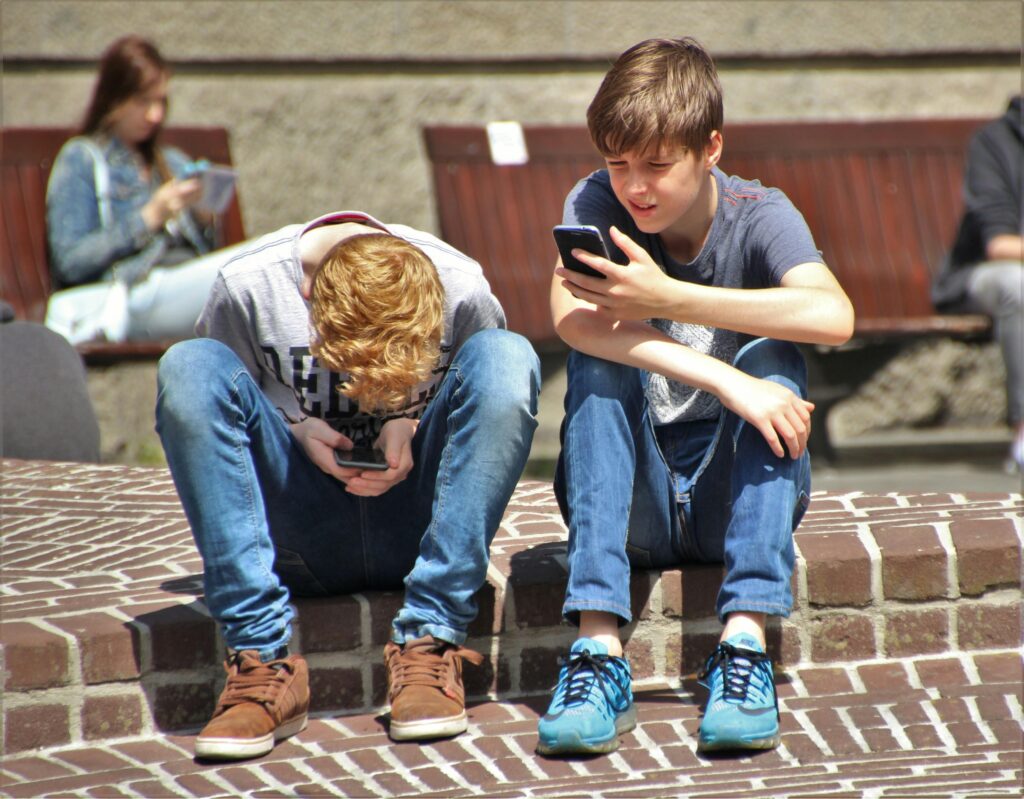
Social media is often hailed as a revolutionary tool for connection and self-expression. People argue that it brings friends and families closer, allowing us to stay in touch across distances that would otherwise make meaningful interaction difficult. Platforms like Instagram, TikTok and Facebook are celebrated for their ability to foster communities: niche hobbies, fan groups and support networks thrive online in ways that might never have existed offline. This is the story most platforms and commentators tell: social media connects us, empowers self-expression, and fosters community.
The narrative goes that social media empowers individuals. Marginalised voices can reach wide audiences, creators can learn, teach and inspire, and everyday users can discover communities where they feel seen and heard. Sharing experiences, achievements and struggles online is framed as a positive act, keeping us informed, helping us empathise with others, and providing a sense of belonging. In this view, social media is a playground for creativity, learning and social engagement, a place to debate and celebrate.
Even mental health discussions often emphasise the potential benefits. Online peer support groups, mental health campaigns, and communities centred around hobbies or self-improvement are positioned as lifelines for those who might otherwise feel isolated. In short, the dominant story is that social media connects, informs and enriches, helping people belong, express themselves, and access resources that improve their lives.
While popular discourse emphasises connection and fun, research confirms that social media can provide real benefits under certain circumstances. Studies suggest that online communities offer social support, particularly for individuals who feel marginalised or isolated offline. Naslund et al (2016)1 highlight the potential for peer support groups to reduce symptoms of anxiety and depression, allowing participants to share experiences and access coping strategies in a low-risk environment.
Social media also supports the formation of “weak ties,” the casual, geographically dispersed relationships that can expand networks, provide new perspectives, and foster learning. Hampton (2015)2 argues that these connections increase social capital, giving individuals access to information and opportunities that might otherwise be unavailable. Similarly, Manago (2015)3 notes that platforms enable users to maintain friendships and strengthen bonds that would be difficult to sustain in person, especially for younger users transitioning through transitional life stages.
Beyond social connection, some research suggests social media encourages creativity and self-expression. Liu et al. (2016)4 found that participation in hobby or interest-based communities can provide a sense of identity, mastery and accomplishment. Even mental health initiatives can benefit from platform reach, campaigns, hashtags, and online educational content can normalise discussion of mental wellbeing and reduce stigma.
In this sense, social media is not inherently harmful. When used intentionally, and with awareness, it can facilitate support, learning and personal growth. Yet these benefits are not universal; they depend on individual use patterns, platform design, and social context.

Human attention has become big business. As Goldhaber (1997)5 first pointed out, in the digital age, attention is scarce, and platforms compete for it relentlessly. Social media doesn’t just want your clicks, it wants your focus, every second of it. Zuboff (2020)6 calls this “surveillance capitalism” – your online behaviour, every tap and pause, is tracked, analysed and monetised. If you aren’t paying for the product, you are the product.
Apps are designed to be addictive. The longer you stay, the more ads you see. Algorithms select content to provoke a reaction, often anger, outrage or anxiety, because on average, negative emotions are easier to trigger than positive ones. Feeds never end, videos autoplay, and posts load endlessly, creating a sense of perpetual incompleteness. It’s a system built to keep users scrolling, sometimes at the cost of your mental health.
At the individual level, the attention economy exploits predictable psychological vulnerabilities. One of the strongest is the brain’s dopamine system. Dopamine drives curiosity, the urge to check, and the impulse to seek new information. Social media delivers instant rewards, likes, messages, updates, creating a loop in which dopamine triggers seeking, the platform delivers gratification, and the cycle reinforces itself. Over time, this makes it difficult to stop checking the phone or to tolerate moments of boredom. But chemical hooks aren’t the only mechanism at play, platforms also exploit social instincts.
Platforms also leverage social reciprocity, a deeply human instinct. If someone likes your post, you often feel obligated to acknowledge theirs; if someone follows you, you’re nudged to follow back. These micro-transactions create a subtle sense of social debt that keeps users engaged. Fear of missing out (FOMO) is another lever, platforms thrive when people feel like they must stay always updated. Yet living in a state of constant vigilance fragments attention and heightens anxiety. As Tristan Harris7 argues, once we accept that we cannot see everything, we realise we don’t miss what we don’t consume. When these pressures stack together; they produce one of the most common behaviours associations with the attention economy: doomscrolling.
Doomscrolling, a form of passive, repetitive social media consumption, illustrates these dynamics. A 2023 study by Satici et al8. found that doomscrolling is more common among neurotic individuals, and less common among those who are conscientious, extraverted or agreeable. Doomscrolling is strongly associated with FOMO, social media addiction, and is known to increase psychological distress, reducing life satisfaction, mental wellbeing, and overall harmony in life.
These patterns are intensified by intermittent variable rewards, the same reinforcement mechanism used in poker machines. Each time we refresh a feed or check for notifications, is a small gamble, maybe something good is waiting, maybe not. This unpredictability keeps users returning. No-one set out to weaponise email notifications, but once designers recognised the power of intermittent reinforcement, it became embedded across platforms. These addictive loops are especially potent when someone is already struggling emotionally.
Loneliness amplifies the pull of social media. Platforms promise connection yet often deepen isolation, encouraging quick, emotionally predictable interactions – likes, shares, and swipes – rather than meaningful communication. Research shows9 that the lonelier someone is, the more time they are likely to spend scrolling, making loneliness become both the problem and the product. The COVID lockdowns made this dynamic difficult to ignore – TikTok usage surged not just out of boredom, but because the platform offered instant emotional micro-hits that temporarily soothed isolation. But these momentary comforts come at a cost. The lonelier someone feels, the more they rely on low-effort digital contact, and the less energy they have for deeper forms of connection. This created a loop where social media promises relief but delivers only distraction. In other words, loneliness isn’t just a symptom amplified by platforms, it’s a resource they quietly mine.
Even the body begins to respond. Phantom vibration syndrome (PVS), first identified around 2010, is the sensation of feeling a phone vibrate even when it hasn’t. This reflects how deeply the phone-checking loop embeds itself. Linked to perceived stress and smartphone addiction, PVS demonstrates how behavioural loops extend into physical experience. When behaviours become bodily reflexes rather than choices, the issue moves beyond personal responsibility and into design ethics.
Individual responses, while well-intentioned, are limited. Digital detoxes, mindfulness apps, and ‘screen time’ features offer temporary relief, but cannot counter the structural design of the platforms themselves. In some cases, these tools paradoxically reinforce engagement, keeping users within the ecosystem while promising control. Moreover, the ability to disconnect is not equally available. Logging off social media is easier for those with social, financial or educational privilege. Many rely on platforms for work, social connections, or accessing essential information. The question arises: is quitting social media an act of resistance, or a luxury afforded only to some?
Yet resistance is possible. Users have begun to experiment with algorithmic sabotage10, such as intentionally curating or resetting feeds, and forming intentional communities where engagement is more deliberate. People are deliberately liking random posts to break the recommendation loop. Spaces like hobby or learning focused communities provide genuine support, creative outlets and opportunities for growth. Not all engagement is harmful; the key lies in conscious use and awareness of the underlying mechanics. What matters is how and why we engage.
Systemic solutions are crucial. Policy measures, such as data transparency requirements, age restrictions, or even design standards, could mitigate exploitative practices. Just as governments now recognise the psychological cost of being constantly reachable through workplace “Right to Disconnect11” reforms, social media platforms may require similar boundaries. Human-centred design, including friction-based interfaces, chronological feeds, and opt-in recommendation systems, could restore users’ control over attention. Platforms have a responsibility to reduce the compulsive loops created by intermittent variable rewards and to respect wellbeing, rather than exploiting it.
Understanding these mechanisms does not require rejecting technology altogether. By recognising how attention is monetised, users can make more deliberate choices, and platforms can be held accountable for design choices that shape behaviour. Awareness and systemic reform together offer a path towards digital spaces that connect, inform, and enrich without undermining mental health.
- Naslund, J. A., Aschbrenner, K. A., Marsch, L. A., & Bartels, S. J. (2016). The future of mental health care: peer-to-peer support and social media. Epidemiology and psychiatric sciences, 25(2), 113–122. https://doi.org/10.1017/S2045796015001067 ↩︎
- Hampton, K. N. (2015). Persistent and Pervasive Community: New Communication Technologies and the Future of Community. American Behavioral Scientist, 60(1), 101-124. https://doi.org/10.1177/0002764215601714 ↩︎
- Manago, A.M (2015). Media and the Development of Identity. Emerging Trends in the Social and Behavioral Sciences. https://emergingtrends.stanford.edu/files/original/94421651d0e46d387ba844d72e0658537fb21da5.pdf ↩︎
- Liu, D., Ainsworth, S. E., & Baumeister, R. F. (2016). A Meta-Analysis of Social Networking Online and Social Capital. Review of General Psychology, 20(4), 369-391. https://doi.org/10.1037/gpr0000091 ↩︎
- Goldhaber, M.H., (1997), The attention economy and the Net, in First Monday, 2(4) https://firstmonday.org/ojs/index.php/fm/article/download/519/440?inline=1 ↩︎
- Zuboff, S. (2020). The age of surveillance capitalism: The fight for a human future at the new frontier of power. The Yale Law Journal, 129(5), 1460–1515. https://research.ebsco.com/c/xsfqnt/viewer/pdf/66sxgjjb2j?route=details ↩︎
- Harris, T. (2016) How Technology Hijacks Your Mind. Medium.
https://medium.com/thrive-global/how-technology-hijacks-peoples-minds-from-a-magician-and-google-s-design-ethicist-56d62ef5edf3 ↩︎ - Satici, S. A., Gocet Tekin, E., Deniz, M. E., & Satici, B. (2023). Doomscrolling Scale: its Association with Personality Traits, Psychological Distress, Social Media Use, and Wellbeing. Applied research in quality of life, 18(2), 833–847. https://doi.org/10.1007/s11482-022-10110-7 ↩︎
- Bonsaksen, T., Ruffolo, M., Price, D., Leung, J., Thygesen, H., Lamph, G., Kabelenga, I., & Geirdal, A. Ø. (2023). Associations between social media use and loneliness in a cross-national population: do motives for social media use matter?. Health psychology and behavioral medicine, 11(1), 2158089. https://doi.org/10.1080/21642850.2022.2158089 ↩︎
- Gault, M. (2025). The Gizmodo Guide to Stopping Algorithms from Ruining Your Life. Gismodo.https://gizmodo.com/the-gizmodo-guide-to-stopping-algorithms-from-ruining-your-life-2000584899 ↩︎
- Fair Work Ombudsman (n.d.) Right to disconnect. Australian Government. https://www.fairwork.gov.au/employment-conditions/hours-of-work-breaks-and-rosters/right-to-disconnect ↩︎
 Guan QiuYu
  REN Ren
  Tan Kane