
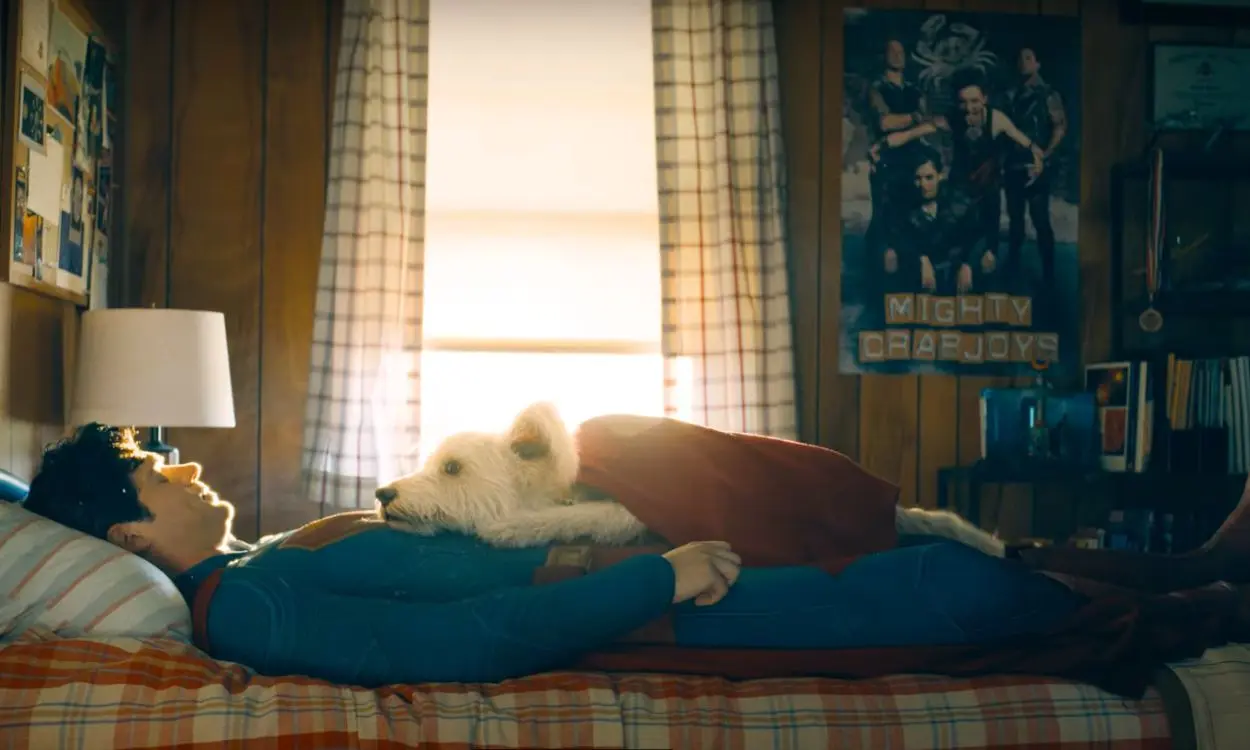
Earlier this year, my family and I went to see Superman (2025), directed by James Gunn and starring David Corenswet as Superman. I enjoyed the film; I was enamoured by Krypto, the rambunctious and poorly trained superdog and compelled by the relationship between Lois Lane, played by Rachel Brosnahan, and Clark Kent/Superman. Of the superhero movies I have seen this year—the others being Thunderbolts* and The Fantastic Four: First Steps—Superman (2025) is my favourite.
What with its 90% audience rating on Rotten Tomatoes, I think it is safe to say I am not the only one to enjoy Superman (2025). Jiya Roy Prasad calls it “The Brightest Reboot Yet”, and Eva Nimmo says one of the movie’s greatest successes is its light tone: “instead of the frequent dark, gloomy and brooding style of the earlier versions, this movie brings back hope, bright pops of colour and much-loved humour”.
Of course, I specify that I am talking about Superman (2025) to differentiate it from the at least ten other Superman movies (Do Superman 2 (1981) and its 2006 Richard Donner cut count as separate movies? Does Supergirl (1984) count as a Superman movie? Different lists make different calls. And this is not even getting into TV adaptations). It leaves me wondering why there are so many Supermen.
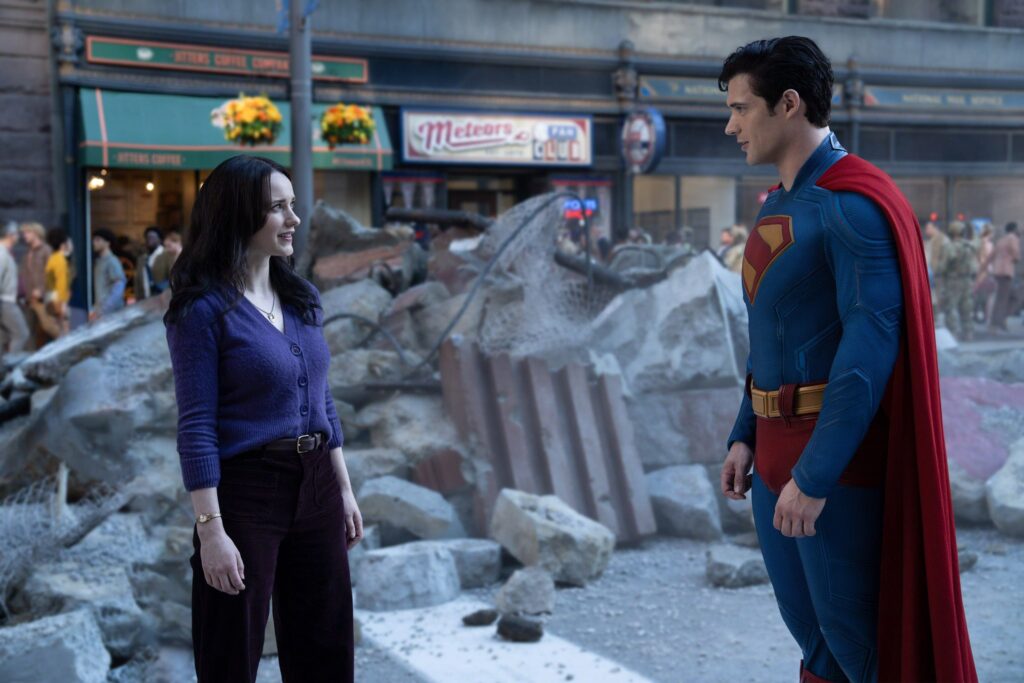
One reason, of course, is money. Of the top 10 highest-grossing films this year, I would argue only one—F1: The Movie—is an original narrative. The rest are either sequels (e.g. Ne Zha 2), remakes (e.g. Lilo & Stitch) or adaptations (e.g. The Minecraft Movie). Of the top 10 highest-grossing films of all time, only 2 are not sequels or later in a franchise: Avatar and Titanic. Known franchises make more money. According to Dr Lauren Rosewarne from the School of Social and Political Sciences at Melbourne University, as quoted in the ABC, “They are less risky because they are a known entity”. It can be difficult to sell audiences on something completely new. Dr Darren Fisher, a director and the head of the film department at Bond University, says, “if there is no existing IP [intellectual property] or fan base, it becomes harder and harder”. Over the last 5 years COVID-19, the popularity of streaming services, and the writer’s strike in the US have incentivised film studios to play it safe; and playing it safe means working with what they and their audiences know. Remakes with bigger budgets and more special effects are made to create a spectacle—a spectacle hopefully big enough to tempt people into cinemas.
However, while working with established stories is less risky than trying something new, it is not entirely without risk. Though it also features the popular Superman and Batman, Justice League (2017) has a lukewarm Rotten Tomatoes audience rating of 67% and even worse critics’ rating of 39%. In a 2025 study, Philippe Aurier and Guergana Guintcheva find that failing to meet expectations can cause a serious hit to audience satisfaction with adaptations of their favourite stories. When discussing Lilo & Stitch (2025), Hudson Yang goes as far as to say, “These changes to the characters have completely ruined my childhood memories.”
Aurier and Guintcheva’s study looks at the “partial re-consumption” of stories; that is, when someone decides to read, watch, or otherwise consume a story that is similar but not identical to one they have consumed before, such as a remake or adaptation. Partial re-consumption is motivated by a positive experience with the first instance of the story, which makes people want to relive it and their associated emotions. So, for someone who enjoyed reading Superman comics, or who was a fan of one of the previous 10-ish Superman movies, and who then decided to watch Superman (2025), watching Superman (2025) is an act of partial re-consumption.
But expecting the same experiences from a different take on a story can set people up for disappointment: discrepancies are inevitable, and they lead to what Aurier and Guintcheva call “disconfirmation”—a mismatch between expectations and what is experienced. Greater disconfirmation leads to less satisfaction. When Prasad says, “David Corenswet embodies the Superman fans have grown up with”, as opposed to the broody Superman played by Henry Cavill in the Zack Snyder films, she is expressing greater confirmation between Superman comics and Superman (2025) and greater disconfirmation between Superman comics and the Superman portrayed by Cavill and Snyder. Because Superman (2025) better meets audience expectations of Superman, it is the more satisfying Superman movie.

Meeting expectations is not all that affects satisfaction when partially re-consuming stories. Another factor is the perceived addition of value. When adapting books to movies, Aurier and Guintcheva find music, special effects, and “seeing things brought to life” are commonly cited as value additions. Music especially amplifies emotions and adds to a narrative: “a well-chosen soundtrack during a sad scene can bring a tear to my eye!” says study participant Sara. Another way a remake can add value, according to Dr Rosewarne, is by reflecting shifts in culture. In the wake of the #MeToo movement in 2017, adaptations of Little Women, Wonder Woman, and The Beguiled were considered “feminist updates”. And, Dr Rosewarne says, “after 9/11 there were lots of remakes of Cold War films because the same anxieties within a culture are present”. Superman (2025) has movement and music not seen in a comic book, and it reflects current political anxieties.
Immigration is a major issue in the US, with President Donald Trump promising “mass deportations” earlier this year. Since Superman first appeared in Action Comics No. 1 in 1938, he was sent to Earth from a distant planet to escape its destruction; on its official Twitter (now X) account, DC openly claim Superman is a refugee. His alien origins play a significant part in Superman (2025). “I mean, Superman is the story of America,” Gunn said in an interview in June. “An immigrant that came from other places and populated the country, but for me it is mostly a story that says basic human kindness is a value and is something we have lost.” His statement, that Superman is an immigrant, was subjected to right-wing backlash. Fox News reportedly responded by calling Superman “Superwoke”, and anchor Kellyanne Conway said, “We don’t go to the movie theatre to be lectured to and to have somebody throw their ideology onto us.” One X (formerly Twitter) user said, “So I guess we’re all skipping Superman! Go woke, go broke!”, and another, “I’m going to skip seeing Superman now. Director is an absolute moron to say this publicly the week before release. America is desperate for apolitical entertainment and Hollywood is unable to deliver it.”
Also in June, the Hebrew Immigrant Aid Society reported that the US Immigration and Customs Enforcement (ICE) detained, on average, about 20,000 immigrants each month from February through May, and that approximately 59,000 immigrants were being held by ICE in June. As of October, military-style immigration sweeps are ongoing in the US.
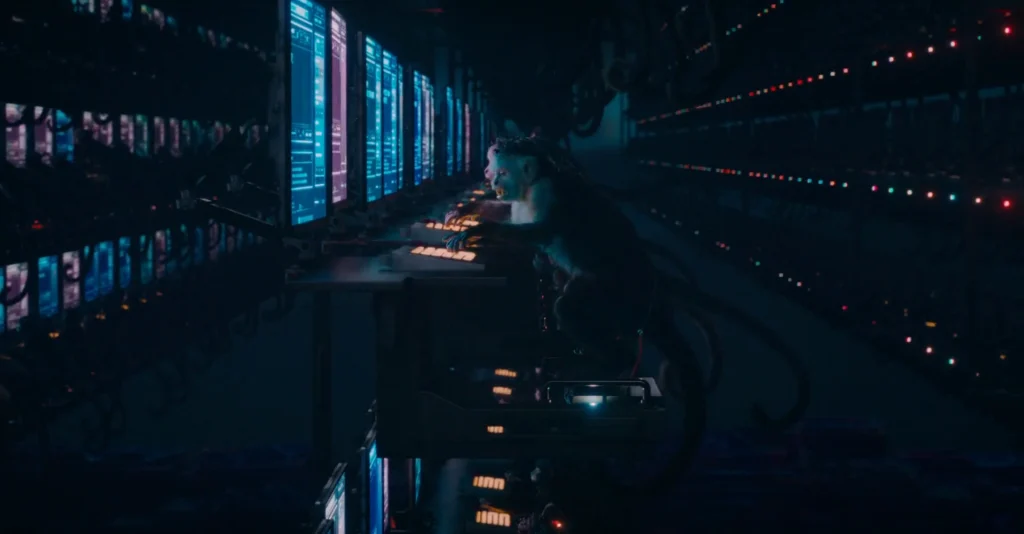
Back in Action Comics No. 2 in 1938, Superman faces off against US munitions manufacturer Emil Norvell, who incites a war in a small South American republic for profit. In 2025, Superman still wants to prevent foreign wars stoked with US weapons, but he is fighting against a distinctly contemporary take on villain Lex Luthor, played by Nicholas Hoult. Hoult’s Luthor, says Jake Kleinman in Huffpost, is “an obvious metaphor for the tech bro oligarchy currently attempting to consume American democracy”, whose legions of employees “would seem right at home working for Musk’s Department of Government Efficiency.” With an army of monkeys at keyboards, Luthor orchestrates an online smear campaign against Superman, specifically targeting his alien heritage. Norvell could not have used this type of attack back in 1938, but harmful disinformation campaigns are a very real fear for audiences in 2025.
Superman’s (2025) Luthor backs the well-armed fictional country Barovia in attacking its significantly weaker fictional neighbour Jarhanpur. Gunn claims, “when I wrote this the Middle Eastern conflict wasn’t happening. So I tried to do little things to move it away from that, … It really is fictional.” But watching Superman (2025) in July this year, it is hard to look at Barovia’s violence against Jarhanpur and not see Israel’s violence against Palestine. Still, as Kleinman says, “It’s not Gunn’s fault that the real world suddenly resembles a Saturday morning supervillain’s fever dream.”
Retelling and adaptation are baked into superhero stories. Beginning as short, self-contained, episodic comics limited only to a few pages, they had no overarching narratives for characters to move through. They only ever existed in the current moment, untethered from continuity and time, according to Umberto Eco and Natalie Chilton. The lack of clear continuity means episodes do not have to occur in order. So, writers can jump backwards and forwards in time, adding details, filling in backstory, rewriting backstory, and creating alternate realities. Stories of Superman’s childhood as Superboy can be told alongside those of his adulthood. When his cousin Supergirl is introduced, previous Superman stories are re-told or re-interpreted to account for her presence. As an adaptation, Superman (2025) may reflect the current moment, but it also reflects this history; it is in conversation with Supermen past but disconnected from their continuity.
One of Gunn’s inspirations for Superman (2025) is All-Star Superman (2005 – 2008), which features many elements that appear in the movie. There’s Krypto the Superdog; robots attending Superman’s Fortress of Solitude; a giant monster attacking Metropolis; Lex Luthor… but one specific All-Star Superman story Gunn draws on for Superman’s characterisation is about Superman talking a teenager called Regan down from suicide. Superman No. 1 (1939), Superman for All Seasons (1998), and the 1941 – 1943 Superman animated series are also cited as inspirations.
Marvel co-creator Stan Lee reportedly once said “The Scarlet Pimpernel was the first superhero I had read about, the first character who could be called a superhero.” In Baroness Orczy’s The Scarlet Pimpernel, the seemingly harmless English aristocrat Sir Percy Blakeney adopts a secret identity to rescue French aristocrats from the guillotine and leaves the image of a scarlet pimpernel as his calling card. It was first produced as a stage play in 1903, then published as a novel in 1905, and in 1934 was adapted to film. If we do take The Scarlet Pimpernel as the first superhero, then superhero movies predate Superman.
Of course, The Scarlet Pimpernel did not spring out of nowhere. Set between France and England in 1792 and featuring historical figures such as Maximilien Robespierre and the Prince of Wales (later, King George IV), it drew heavily on the history—particularly that of the French Reign of Terror.
Following this line of thought, it seems no stories are truly original; everything is inspired by something. But lack of true originality is not a lack of creativity. As Dr Rosewarne says, “being able to tell a story hundreds of different ways and securing an audience, that is its own kind of creativity … It tells us how important certain stories are to our culture.” Perhaps it is little wonder there are so many Supermen, and I should instead be wondering how Superman will be told next.
 Guan QiuYu
  REN Ren
  Tan Kane
Hi Brittany,
I enjoyed reading this article on the latest Superman movie – and indeed the rundown on all the many Supermen. Archetypal theory suggests there are no original stories, but I would argue that there are original ways to tell the same tale over and over. This was thought-provoking and entertaining – loved the snippet of the original comic hero. Thank you for an enjoyable read.