
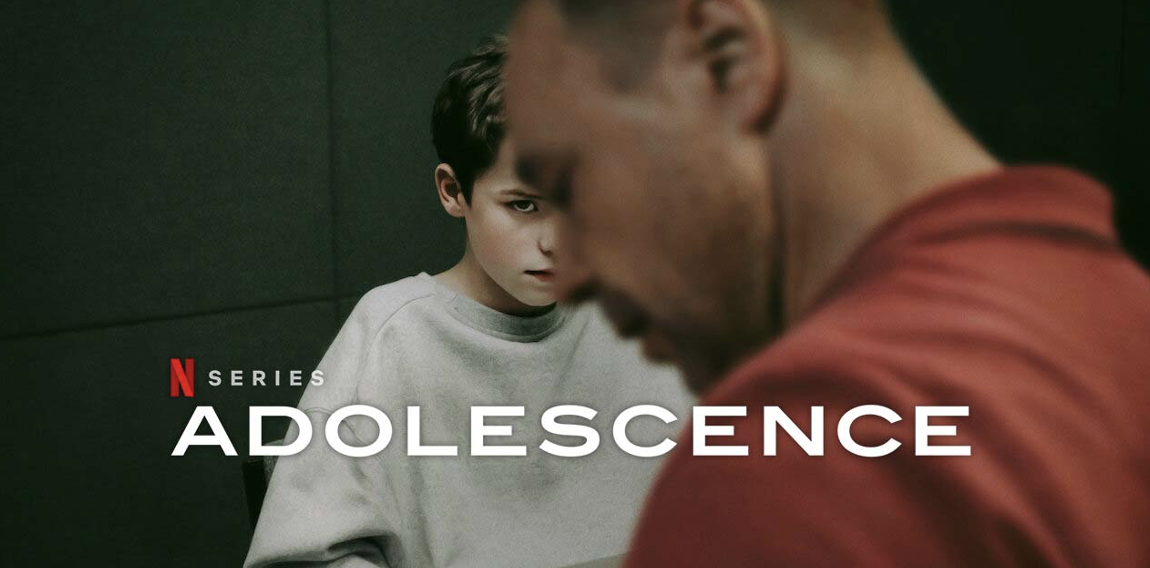
Teen drama Adolescence took the world by storm after its release on Netflix in early 2025, becoming one of the most talked about shows of the year – not only for its daring narrative choices but also for its unsettling exploration of Jamie’s online radicalisation into the manosphere.
The series begins with the shocking arrest of 13-year-old Jamie Miller for the murder of his female classmate. In the episodes that follow, Adolescence delves into the causes behind Jamie’s actions and the ripple effects his arrest has on his friends and family. As the series progresses, it gradually exposes the toxic influence of cyberbullying, radical online communities, and the blurred boundaries between offline and online identity. What makes Adolescence especially striking is not just its subject matter, but also in the way the story is told. Each episode is filmed in a single continuous shot, immersing viewers in a claustrophobic rhythm that keeps them glued to their seats, waiting to see what happens next. This storytelling choice locks the audience in as events unfold. As director Philip Barantini explains:
“I think what the one-shot does is makes you sit up and you can’t take your eyes off of it, because if you do blink for a second you miss something. It draws the audience in”.
Yet the show’s impact didn’t end when the credits rolled. Online audiences responded with a mix of intrigue, critique and dark humour. Audiences produced memes, heated Reddit debates, and viral TikTok edits that both amplified and trivialised the shows messages. In this sense, audience reactions became an extension of the world the show depicts.
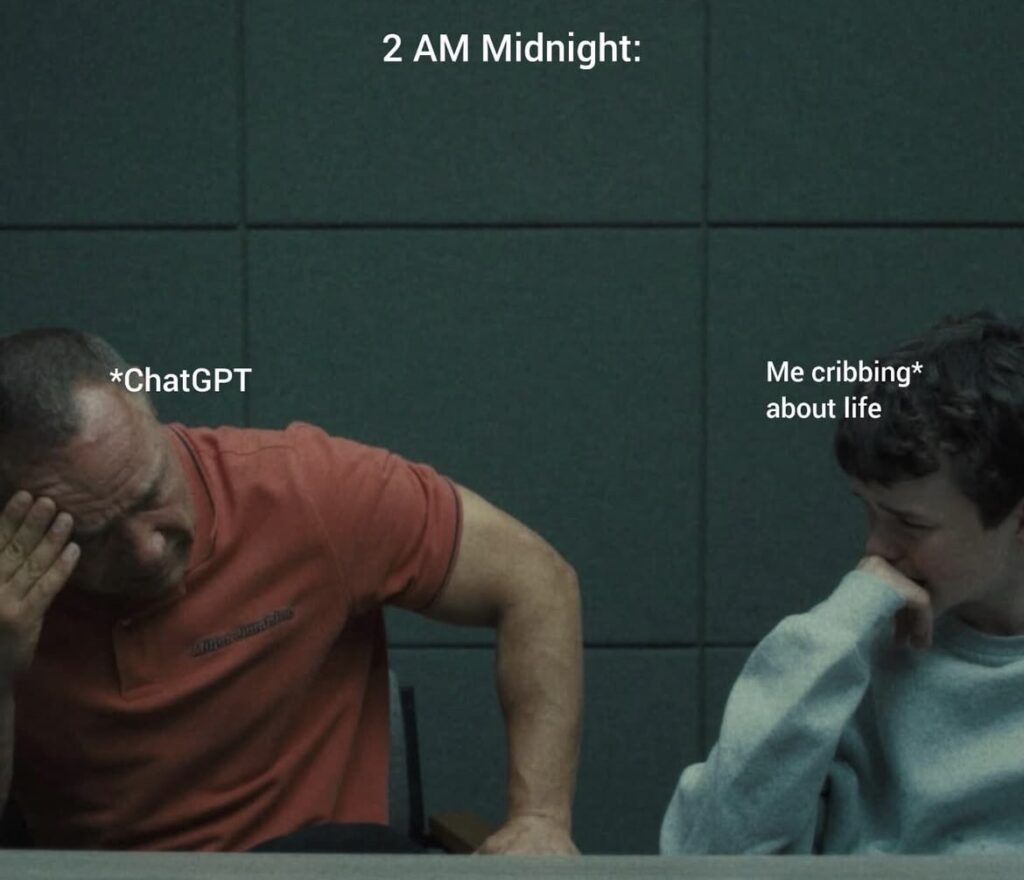
Adolescence Memes. Image: Instagram.
Adolescence portrays social media and online subcultures, capturing the tone and practices of online life. It invites viewers to interact through memes, debates, and viral edits, turning audience engagement into an extension of the digital worlds the show depicts.
How Adolescence portrays social media and online subcultures:
At its core, Adolescence is about the weight that online spaces place on teenagers’ lives, which is often invisible to those outside of it. Detective Luke Bascombe initially remains unaware of the pervasive influence of incel culture and the “red pill” ideology among the school’s teenage student’s, a theme that becomes especially evident in the second episode. Both Bascombe and the audience begin to understand these online subcultures after his son explains how certain emojis carry hidden messages. He talks about symbols like the “blue pill” and “red pill” in the manosphere, concepts that signal deeper ideological positions to those in the know. Bascombe responds, “You’ve been watching The Matrix?” and his son replies, “What?”, revealing both his father’s misunderstanding and the way these references fly under the radar for outsiders. Through this exchange, the show highlights how digital radicalization can unfold quietly in everyday life.
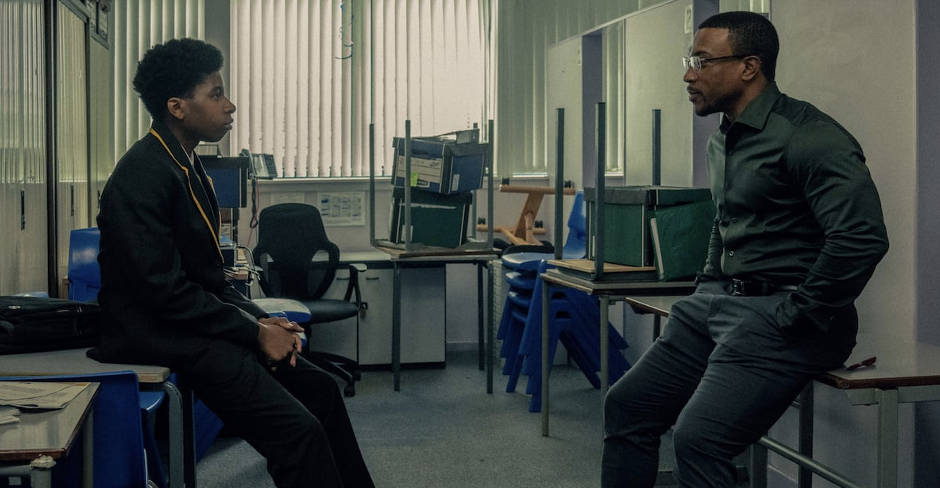
Detective Bascombe and his son. Image: The National.
In The Matrix (1999), taking the red pill symbolizes being awakened to the truth of reality, whilst the blue pill represents remaining in comforting ignorance. Online subcultures have co-opted this symbol, twisting it into the so-called “red pill” ideology, which claims to reveal a hidden truth about gender – that men are oppressed in a world rigged in women’s favour. In Jamie’s world, this “red pill” metaphor becomes a gateway into resentment disguised as enlightenment.
For Jamie, this rhetoric becomes a lifeline. What begins as casual curiosity of scrolling through chat forums and social media feeds slowly hardens into fixation, as he finds a sense of belonging in the very spaces that amplify his insecurity and resentment. These communities tell him that loneliness is not his fault. Adolescence captures how an isolated teen’s search for meaning online can spiral into something darker.

The Matrix’s Red Pill or Blue Pill. Image: Wired.
Through Jamie’s story, the series explores cyberbullying and radicalisation. From its opening episode, Adolescence situates cyberbullying not as background noise but as a central, destabilising force in Jamie’s life. He becomes absorbed in online forums and social media feeds, where posts and conversations feed his insecurities and amplify his isolation. The immersive single continuous shot of each episode visually reinforces this claustrophobia. The camera lingers on Jamie’s face as he reads the comments, and there is no cut to provide the audience relief. They are trapped in the same suffocating feedback loop that Jamie cannot escape.
Jamie looking at the comments Katie made on his Instagram. Image: Institute for Family Studies.
As Adolescence progresses, it becomes clear that Jamie has been increasingly exposed to and absorbed by toxic content and extremist rhetoric circulating within the red pill and manosphere digital subcultures. These online spaces offer him a sense of validation and belonging, reinforcing his insecurities whilst normalising anger and resentment towards others. This depiction aligns with the findings of Floriani et al. (2025), who argue that online subcultures shape not only the language teens use but also their social identities. Jamie’s gradual adoption of the language, symbols, emojis, and attitudes of these digital communities, evident in his offline behaviour, highlights how deeply online belonging can influence a young person’s identity and behaviour.
Audience Responses and Online Engagement:
If Adolescence critiques the intensity and consequences of the digital world, the online response to the show became a case study in its own right. Within weeks of the shows release, TikTok and Reddit were filled with memes, viral edits, and debates about the series’ meaning. On TikTok, the most widely circulated content from Adolescence consisted of short edits of Jamie’s breakdowns, remixed with trending audio clips. Users paired intense scenes of cyberbullying with upbeat pop tracks, creating ironic juxtapositions that drew millions of views. While these edits introduced the show to new audiences, they often stripped away its nuance, reducing complex critiques of digital harm into aestheticised snippets.
However, some TikTok edits focused on the show’s emotional depth, highlighting how the events affected characters such as Jade, Katie’s best friend, and her struggle to cope with the grief of losing her friend, and Jamie’s father, Eddie, who faced challenges in trying to support his family through Jamie’s arrest. These edits drew attention to the human consequences of the story, rather than just its dramatic or shocking moments.
Reddit hosted more sustained discussions dissecting a variety of the show’s themes and impacts, highlighting how differently people responded to the series. Some posts focused on the human impact, with users expressing sympathy for characters like Jamie’s father, simply stating, “I feel so bad for the dad in this show man”. Another thread titled, “How has the success of the Netflix series “Adolescence” helped men?”, argued that while the series raises awareness of online radicalisation and cyberbullying, it may inadvertently reinforce negative stereotypes about isolated or disadvantaged boys. The user suggested that like true crime media, the show could amplify paranoia and distrust towards men by portraying extreme scenarios in a dramatic, fictionalised context. This perspective highlights the complex and contrasting ways in which the themes in Adolescence can be interpreted.
Audiences didn’t just watch Adolescence, they reshaped it. Through memes, edits, and online discussions, viewers reinterpreted the series in ways that could both simplify and amplify its themes. Online audiences often distilled the show’s darker themes into sharable snippets: scenes of bullying became viral TikTok videos, and moments of radicalisation circulated for shock or spectacle. Even so, this social media engagement brought the story to a far wider audience, exposing more people to the series’ central ideas than traditional viewing alone could achieve.
This dynamic aligns closely with Henry Jenkins (2006) concept of participatory media, which describes how audiences in the digital age are no longer passive consumers but active collaborators in shaping media texts. Jenkins argues that fans and users contribute to meaning-making by remixing, commenting on, and circulating content across digital platforms, creating what he terms as “participatory culture”. In the context of Adolescence, TikTok edits, Reddit threads, and meme creation represent exactly this phenomenon. Viewers are not simply observing Jamie’s story – they are inserting themselves into it, responding to it, and extending its cultural life online. By turning moments of radicalisation or emotional breakdown into widely shared content, audiences become co-creators of the narrative’s afterlife. This co-creation can also influence how new audiences interpret the series, as circulating memes and edits shape perceptions before viewers even watch the episodes. This participatory culture does not merely reflect the show’s themes; it actively participates in constructing their meaning.
Jenkins also notes that participatory media fosters a sense of agency and belonging. For many viewers, engaging with Adolescence online is a way to participate within a conversation, to feel connected to others who are invested in the same story. Yes, as the series itself demonstrates, this kind of engagement can act like a double-edged sword – while some users highlight the human cost of Jamie and his family’s experiences, others reduce the characters and plot to spectacle or dark humour, reflecting the same feedback loops of validation and radicalisation portrayed in the show. Adolescence therefore provides a real-world example of Jenkins’ theory in action, showing how participatory media can magnify both empathy and sensationalism within digital culture. This further reflects how audiences shape the stories they consume in powerful and sometimes unpredictable ways.
Adolescence has undeniably left a lasting cultural imprint. Educators and mental health professionals have cited the series in discussions about online safety, using its vivid depictions of cyberbullying and digital peer pressure as teaching tools. Advocacy groups have also referenced the show in discussions against online harassment, highlighting its relevance to real-world social issues. Meanwhile, memes, viral edits, and debates around the series, though often reductive, ensured that its central themes remained part of the public conversation long after the final episode aired.
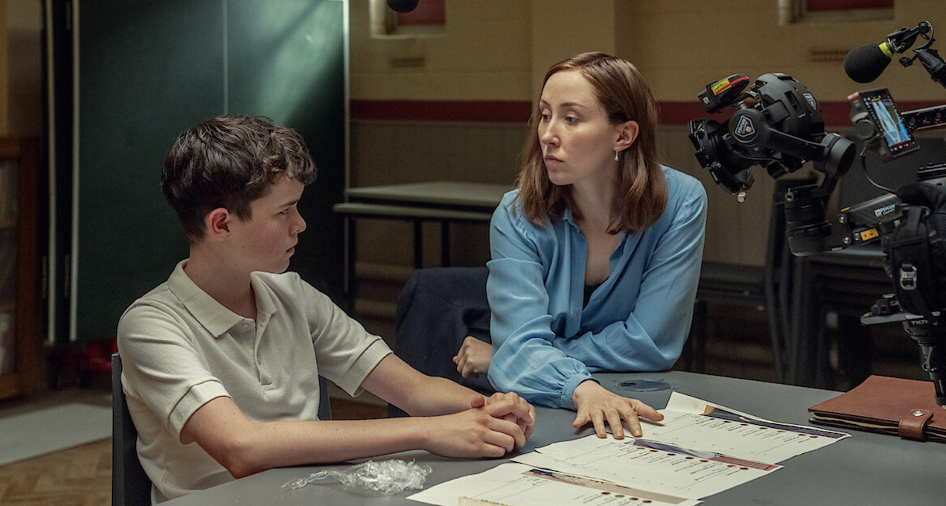
Adolescence functions as a reflective lens on the digital ecosystems where contemporary teenage life unfolds. Through its unflinching portrayals of cyberbullying and radicalisation, the series captures how social media and online subcultures can shape adolescent behaviour, self-perception, and identity. The show’s stylistic choices, most notably the continuous single-shot filmed episodes, heighten this effect, creating a sense of inescapability that mirrors the pervasive nature of digital life. The audience experiences the online and offline pressures in a way that feels immediate, immersive, and disturbingly familiar. Episode 3 further explores these dynamics through Dr. Elena Fisher, a child psychologist, as she conducts in-depth interviews with Jamie. Through her questioning, Dr. Fisher uncovers the psychological consequences of sustained online exposure, cyberbullying, and immersion in extremist subcultures. The way she engages Jamie by gently probing his thoughts, reactions, and emotions, reveals how these digital pressures have shaped his developing sense of self. Her questioning offers the audience a clinical lens to understand the interplay between online influence and adolescent vulnerability, framing Jamie’s experiences not as individual failings, but as the outcome of broader systemic pressures.
Yet the story of Adolescence extends beyond the screen. Digital audiences engaged with the series in ways that amplified, simplified, and occasionally sensationalised its content. The series underscores how contemporary media and online culture exist in a continuous, mutually influential dialogue, shaping and reshaping perceptions of youth, technology, and society itself.
 Guan QiuYu
  REN Ren
  Tan Kane