
TikTok is much more than a platform to perform dance challenges and comedic skits, now it is at the centre of travel discovery and planning, particularly among younger generations. The Algorithm driven ‘For You Page’ has pushed out the slick travel brochures to a group of thirty-second videos of blue oceans, rooftop bars, and full-night markets, to millions of users. These viral videos induce immediate wanderlust and have the power to turn destinations previously unknown to some, into tourist hotspots all in a matter of days. With a single swipe, viewers can be transported to exotic landscapes, street food stalls, or luxury resorts. Under the dreamy travel reels is another reality that is more complex. Travelers are becoming increasingly influenced by the need to recreate the same picture-perfect experiences that they have been watching online, as opposed to having a cultural experience of meaning. TikTok tourism encourages a form of traveling where visual appeal and virality are valued over immersion. Destinations are turned into commodities that can be consumed as content instead of lived in. This change has far-reaching implications: the environmental sustainability of viral tourist patterns, as well as the burden on the local community exposed to an influx of tourists in large numbers and at once. Tik Tok is changing the global tourist experience because it is more about the aesthetics and viral content at the cost of cultural immersion. By doing this it commodifies destinations, weakens authenticity and facilitates unsustainable tourism in the digital age.
The future of tourism through TikTok is becoming more dependent on the visual facet of tourism as opposed to heritage or historical context. Tourism spots such as the Bali Swing, Blue Santorini domes or the Iceland Sky Lagoon have become popular mostly because of their capture-friendly features. These destinations provide the ideal scenery to viral content: scenic shots, drama, aesthetic views, which fit the format well on TikTok; a short form of video with a strong visual basis. This has led to the attraction of travellers into locations not because of what they are like culturally or historically, but because of their appearance in a frame. Recent studies provide evidence on how the influence of travel destination intention is greatly affected by what one finds to be visually appealing. In a research article by (Joseph, Vasundhara & Thomas, 2024) about how social media Influences travel decisions; it is discussed that visually persuasive posts, i.e. photos and videos highlighting beauty, colour, scenery, and design, are effective in creating a strong urge to visit a destination. Another article that supports this is (Thama, Mair, and Croy, 2019) the authors state that tourists tend to visit destinations that are presented in a favourable manner way more often, or when the social media exposure is high, for example with likes and shares. This aesthetic trend transforms the decision making: rather than considering the cultural richness of a place, its historical significance or local traditions, many tourists consider the shareability of the photos they capture. This focus has become more than ever before via Tik Tok. Previous promotional material like brochures and TV advertisements tended to accompany a story of cultural richness, heritage, and the sense of place. TikTok, on the other hand, favours the purely aesthetic by providing an algorithmic, fast, and untamed space, condensing destinations into seconds of aesthetically appealing content that leaves little room to provide context or cultural meaning. The destination essentially turns into a photo stage selected because of its aesthetics and its possible ability to produce social media likes. This trend highlights the fact that visual aesthetics now occupies the centre of the modern travel choice in the Tik Tok age, and the decision on where to travel is determined more by the aesthetics and social media worthiness than the experience.
TikTok tourism also leads to the appropriation and simplification of the local cultures, making them consumable pieces of aesthetic content. Multifaceted cultural customs and values are being progressively commercialized into concise and aesthetically-satisfying videos, which focus more on the style than the content. As an example, food trends like; matcha cafes in Japan, poke bowls in Hawaii, or bubble tea in Taiwan are common Tik Tok experiences that many people want to experience. However, they are frequently devoured without much regard to the cultural significance or historicity behind them. What were very ingrained cultural practices are now re-packaged as cool image-conscious products. This has been spoken about by scholars like Zeng and Gerritsen (2014) where they describe the process in which social media promotes and enhances the global diffusion of cultural practices but may invariably flatten them into shallow experiences. Through their analysis, they find that platforms make travelers imagine culture as a collection of marketable images, which are no longer tied to the contexts that make them meaningful. It takes the form of cultures being reduced on Tik Tok to a list of must-have moments like trying this or that street food, going to this or that iconic cafe, or re-creating viral dance challenges in the real world. Tik Tok tourism has the potential to commodify diversity by lessening immersion into the culture to a pack of viral clips. Rather than developing a more profound insight, it turns cultures into aesthetic backgrounds to the world consumption – solidifying trends at the expense of authenticity and multiplicity.
The search page of Tik Tok called the For You Page (FYP) has transformed the process of destination discovery used by travelers, and its algorithm is one of the key factors of travel inspiration. Unlike the regular travel guides that present pre-crafted plans, the FYP on TikTok provides user-specific content depending on interactions, consumption patterns, and usage rates. This algorithmic strategy implies that destinations do not necessarily become popular because they are inherently popular but because they match the preferences of the algorithm which tends to focus on visual appeal and on viral trends. This change marks the transition between the self-directed model of travel planning to one based on algorithmic suggestions, with the popularity of a destined place being dictated by its viral popularity on Tik Tok. Ulrike Gretzel (2018) highlights the trend of algorithms in digital tourism behavior and states Tik Tok has already reshaped the decision-making process of travelers. For example, from personal experience; I have been researching on great solo trip ideas abroad, however only after a couple of scrolls on Tik Tok, my FYP has leaned entirely towards Japan and Asian culture, although I have not filtered a specific destination. This begs the question of whether travel choices have been authentic or are heavily biased by the digital platform and not by the interest or exploration of culture.
The popularity of TikTok destinations has an immense effect on the local communities, and it generates both economic opportunities and social challenges. On the good side, the growth of tourism can be of a great help to the local economies. Small businesses usually see increased income because more people are attracted to the region also resulting in exchange of cultures. However, there are some significant challenges that are associated with these advantages. It can lead to overpopulation, traffic and expensive goods and services due to sudden rush of tourists into the country, and this impacts the lives of the locals. Another effect is the cultural encroachment, whereby the local traditions and places are reshaped to meet the demands of viral trends and not the requirements of the community. Hallstatt, Austria, is a case of a village which was widely covered on social media in Asia and was overwhelmed with visitors, which burdened the infrastructure and disrupted the local lifestyles. These cases shed light on media induced tourism. According to Beeton (2016), in Film-Induced Tourism; Media exposure can radically transform the communities, and some effects are positive, whereas others are negative. The pressing issue is that through TikTok tourism, viral popularity enhances these impacts and puts even greater strain on a local population.
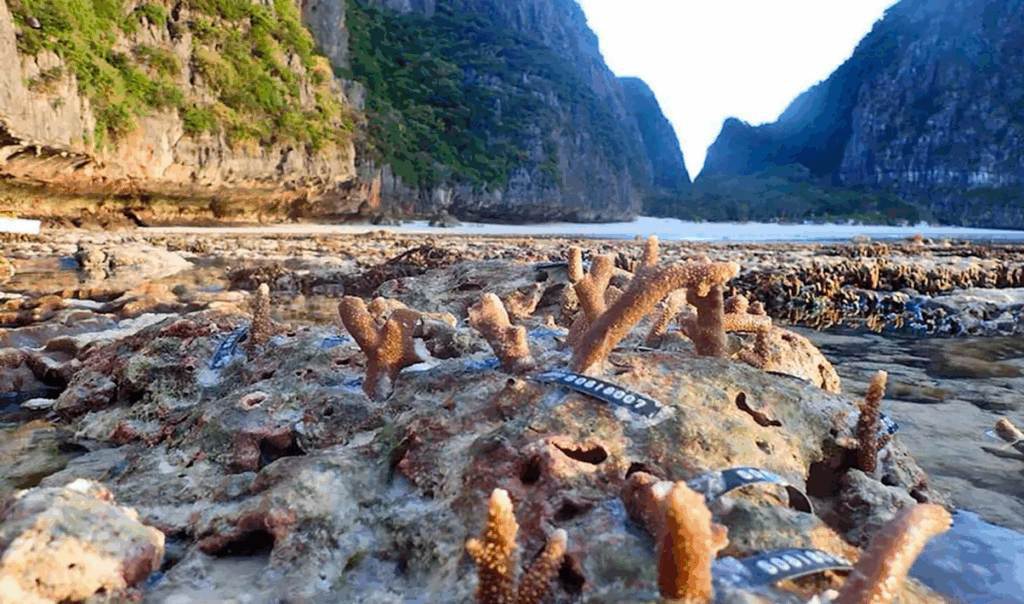
The emergence of TikTok-led tourism is posing serious sustainability issues to global destinations. The influx of great numbers of tourists in a short period of time puts pressures on delicate environments and local infrastructure. Weak ecosystems, inadequate waste management infrastructures, and small-scale facilities like accommodations, community run amenities and transport do not always manage to control the higher demand leading to a negative environmental impact and social burden in the long run. One popular example is the Maya Bay in Thailand which was an internationally recognized place, as a result of appearing in movies and most recently through social media. The influx of tourists caused extreme destruction of coral reefs, beach erosion and pollution, and the authorities had to shut the bay permanently to enable the ecosystem to heal. Environmental pressure induced by tourism is not something new, but TikTok makes this process fast in a way that is unfamiliar to the traditional travel media. Viral videos could launch a tourist spot that is comparatively unknown into global popularity in just a matter of days, causing an extreme burst in the number of tourists coming in. This is a concern supported by research. According to Milano et.al (2019), viral tourism creates unsustainable increases in the amount of visitors, which exceeds the capacity of most destinations and destabilizes the relationship between the growth of tourism and the preservation of the environment.
Tik Tok as an emerging power in the tourism industry creates both opportunities and challenges on how the industry will perform in the future. Destinations are now confronted with the task of developing experiences that are attractive enough to capture the attention of audiences on social media without compromising authenticity to their cultural setting or damaging to their local ecological setting. Too curated or staged experiences might be attractive on the Internet, but they can erase or commercialize the culture, whereas neglecting the visual appeal might cut off the access to the benefits of the viral exposure. A major role in traversing this landscape belongs to the governments and the Destination Marketing Organizations (DMOs). They can use Tik Tok strategically to market their destinations to a world-wide audience and also engage in responsible tourism activities. This involves control of the number of visitors, preservation of delicate ecosystems and making sure that the local communities can enjoy the economic and social benefits of growing tourism. Careful campaigns can also capture the beauty of destinations, as well as the cultural importance, promoting significant interaction with them, and not just a superficial view. According to Xiang and Gretzel (2010), social media represent a challenge and an opportunity to tourism marketing: it may democratize access to travel information and inspiration; it may also increase trends that disregard sustainability and cultural richness. Through awareness creation and responsible conduct, the tourism industry in the Tik Tok era can create the future of tourism by striking a balance between viral attraction and authenticity and environmental care.
Tik Tok has changed the scope of modern tourism and the focus from cultural immersion and heritage to visual impressiveness and viral trends. The platform has enabled travel to be more affordable; enticing an international audience to visit places they would have never thought of visiting and bringing an economic boost to local businesses and communities. Meanwhile, aesthetics has produced cultural homogenization, commoditization of experience, and stimulus of vulnerable environments, a perfect example of the dangers of overtourism leveraged by viral content. The emergence of TikTok-based tourism is part of a larger cultural shift in the experience, authenticity, and representation in the globalized world. Travel is less an intimate experience or a cultural experience; it is a performance to be edited by digital media, in which the image that is conveyed and posted might be as significant as the real experience itself. This transformation brings up very important concerns regarding the trade-offs between fun, cultural and environmental sustainability. The future of tourism will invariably be in the hands of platforms such as TikTok, governments, DMOs, and individual travelers to be responsible in guiding these trends. Destinations need to figure out how to use the power of social media, without losing authenticity or sustainability. The question of how Tik Tok can not only inform where people travel, but how they explore these destinations will determine the next phase of global travel, whether viral travel can ever be reconciled with substantive cultural experiences and responsible management of natural and cultural resources of the world.
 Guan QiuYu
  REN Ren
  Tan Kane