
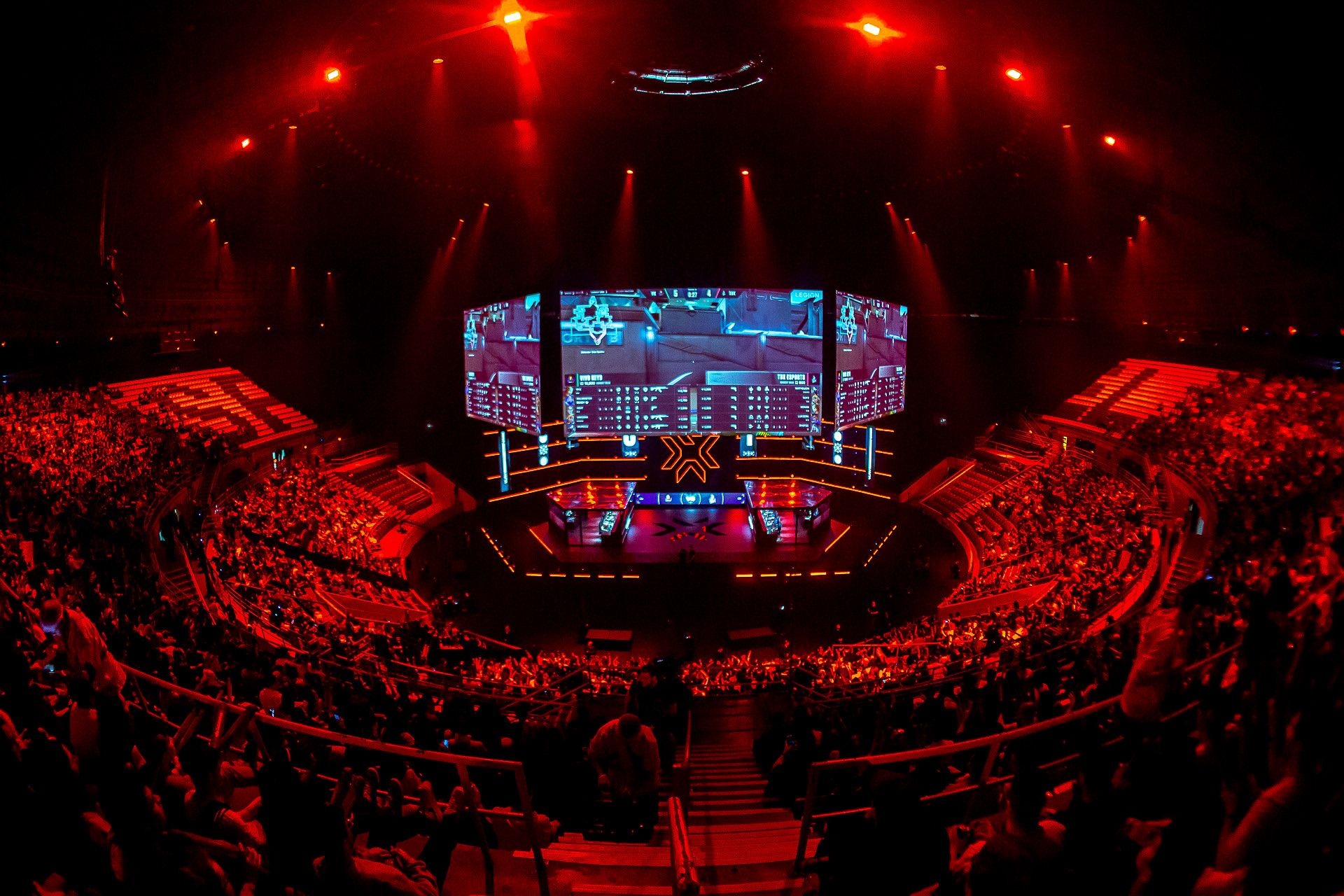
In the past twenty years, e-sports in China has grown fast. At first, it was just a small activity in internet cafes. For many Chinese parents, e-sports was seen as a waste of time. Now it has become a big industry with millions of fans and a lot of money. Video games, once dismissed as useless play, now stand alongside traditional sports. E-sports has professional players, big sponsors, and major tournaments. In China, arenas are full of cheering fans, and live-streaming platforms bring games to millions of viewers.I argue that the rise of e-sports in China is not only about games. It grows because of money, because of young fans, and because of global culture. E-sports gives players and fans a way to join a new kind of sports scene, and it also shows how China connects with the world in digital culture. E-sports are rising fast in China, driven by big companies, passionate fans, and a mix of global and local culture that shapes how people play and watch.
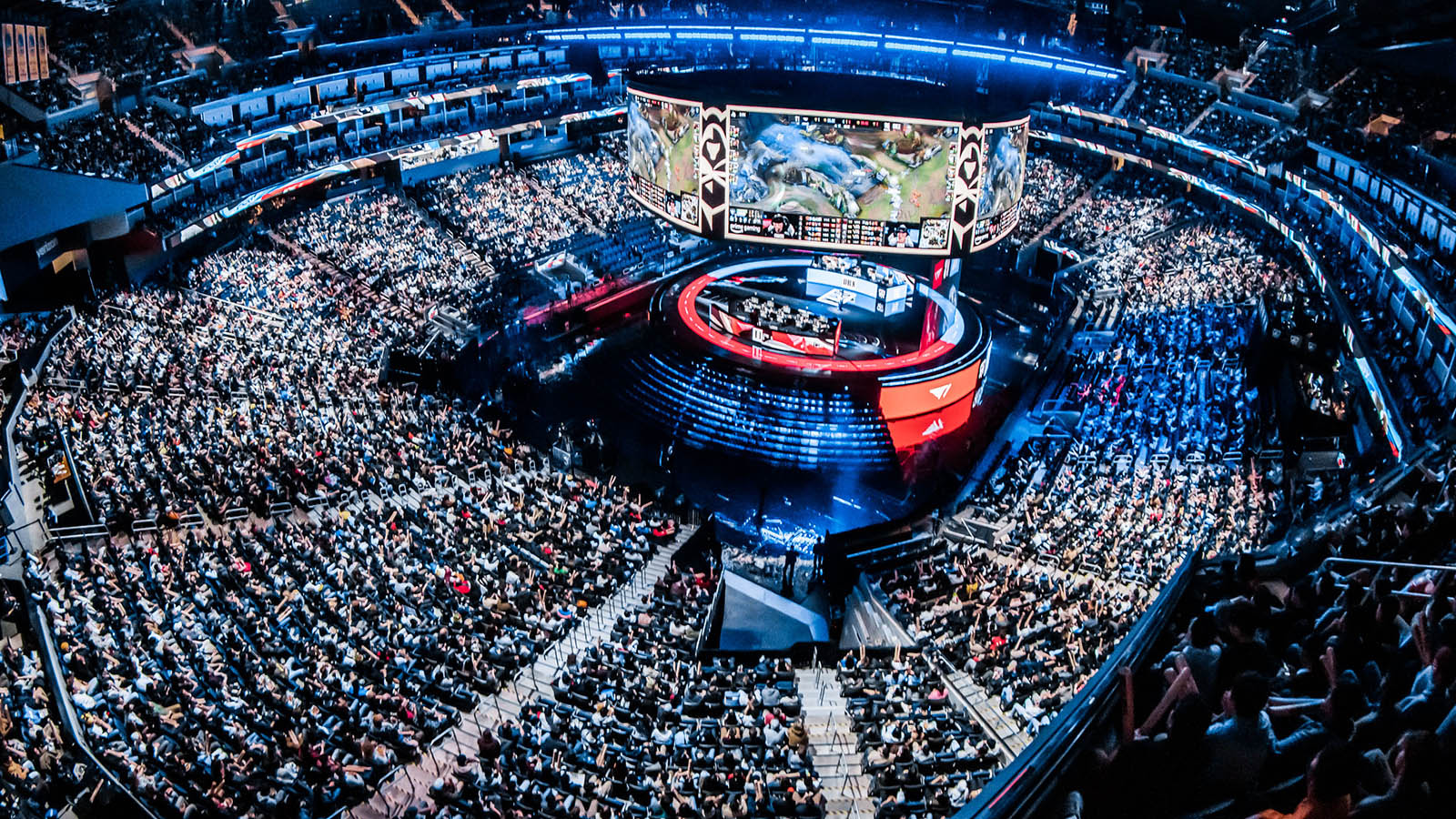
E-sports in China has grown fast because of money and investment. Big companies invest in teams, tournaments, and streaming platforms. That money makes events bigger and more professional.For example, one of the most popular esports games in the world, League of Legends, is made by Riot Games, which is partly owned by Tencent, a Chinese company. Tencent has also invested heavily in domestic e-sports leagues and tournaments. This helps Chinese teams play in global competitions and supports local tournaments. According to the South China Morning Post, China’s e-sports revenue rose by about 4.6% in 2024 to ¥27.6 billion, reversing a drop in 2023.Also, academic research finds that over time, the growth of Chinese e-sports depends not only on money but also on where companies locate and on local infrastructure.In a study of Chinese e-sports enterprises from 1998 to 2018, Zhu show that the industry spreads faster in places with more infrastructure and more investment .So, areas with more investment and better internet networks see faster e-sports growth. Regions with weaker support grow more slowly. This pattern shows that the industry’s expansion in China is shaped by both economic input and local conditions.The success of e-sports in China also needs stable internet, skilled workers, and government support. For example, cities like Shanghai and Hangzhou became strong e-sports centers because they already had good tech industries and strong digital networks. Smaller cities without these advantages grew more slowly, even when they had young gamers who wanted to take part.Another study by Yang, Wang, and Chiang highlights the role of government policy and new technologies like 5G in pushing the industry forward. Their review shows that policies and infrastructure together keep the industry growing. This helps explain why cities like Shanghai and Hangzhou became strong centers for e-sports. These cities already had tech firms, skilled workers, and good digital systems. Smaller cities, with fewer resources, developed more slowly even if many young gamers were active there. The growth of Chinese e-sports is shaped by both money and local conditions. Local governments also help by funding projects such as e-sports towns and arenas.In Hangzhou, the government built the first Chinese e-sports town in 2018, with arenas, hotels, and training centers to grow the industry. This example show that e-sports is not only shaped by company money but also by city planning and policy support.This shows that the rise of Chinese e-sports is strongly tied to economic power. It grows when companies invest, when cities build digital projects, and when money supports new teams and events. Many local governments view e-sports as a new growth engine, expecting job creation, tourism, and tax revenue. For example, Hangzhou’s e-sports town has hosted national tournaments and attracted related industries like hotels and media production. However, some reports suggest that profits are uneven.Industry reports also show that profits are uneven across different parts of the e-sports sector. According to China Daily, live streaming makes up more than 80% of China’s e-sports revenue, while tournaments and clubs only contribute less than 10%.This means that most of the money comes from online content rather than live events. It also shows that not all investors get equal returns. Cities or companies that rely only on tournaments may not earn enough, while platforms with strong streaming audiences continue to grow. These differences highlight that the Chinese e-sports economy is driven more by digital media and advertising than by ticket sales or prize money.Despite these limits, the consistent flow of money shows that both the state and corporations believe in e-sports as part of China’s digital economy and cultural future.

The fast growth of e-sports in China is connected to fans and communities. Fans do not just watch; they interact, support, and shape the culture.For example, Huya, a top live streaming platform in China, made ¥6,079.1 million (about $841.1 million) in 2024. This was 13.1% less than the year before, but the company is changing its services to keep players and viewers engaged.This shows that fans and communities are key drivers of Chinese e-sports, making the industry bigger and more popular.Academic research also supports this point. Lu, Xia, Heo, and Wigdor studied live streaming in China and found that fans who send virtual gifts, join chats, and take part in fan groups help platforms grow.Their research shows that these practices increase user engagement and revenue, proving that audiences are active participants, not just passive viewers.The study makes clear that fan actions directly shape both platform income and the visibility of games.In China, this fan culture is visible on platforms like Huya, Douyin, and Bilibili. Audiences do not only consume content; they also compete to send digital gifts, boost rankings, and promote their favorite teams. These behaviors strengthen the bond between fans and streamers, and they add social meaning to e-sports. When platforms respond by creating more interactive tools, fans become even more involved.Research also shows that Chinese fans use data practices, chats, and bullet comments to create a shared identity. Yin finds that online fandom in China is shaped by algorithmic culture.Fans compete to increase the visibility of their favorite teams by organizing viewing groups, posting large numbers of comments, and even tracking ranking data. This type of engagement shows that fans are not passive. They act as active producers of culture. Their actions build community and make e-sports part of everyday social life.Platforms respond to this passion with new tools. Bilibili introduced fan badges and premium memberships to strengthen loyalty. Tiktok added exclusive emojis and subscription tiers to increase interaction. These features let fans show support and stand out in crowded chats. They also create more income for both platforms and streamers. The cycle is simple: fans give time and money, platforms design more features, and the community becomes stronger.The importance of fan communities goes beyond entertainment. For many young people, being part of an e-sports fandom gives them identity and belonging. Fans often meet offline at tournaments or fan events, turning digital connections into social networks. This sense of belonging explains why e-sports in China is not just about games. It is about culture, friendship, and shared meaning. The active role of audiences and communities ensures that e-sports in China is driven by participation and interaction as much as by business.In many cases, these fan spaces even replace traditional social circles. Young people who might not meet in person form friendships through shared interests, team loyalty, or online discussions. E-sports cafes, conventions, and local tournaments turn virtual connections into real ones, showing how digital culture shapes everyday life and social relationships in modern China.
The growth of e-sports in China is also tied to how it plays on global and local stages. Big international events help raise China’s profile. At the Hangzhou Asian Games, China won four gold medals in e-sports. That result shows how global competition mixes with local culture and brings national pride.Xiang & Yuan argue that Chinese game developers embed cultural symbols and narratives—mythology, history, national stories—into games.For example, the popular game Honor of Kings uses Chinese historical figures and legends as characters. Players can choose heroes based on stories from the Three Kingdoms or classical poetry. This helps Chinese audiences feel cultural pride, while also introducing foreign players to Chinese traditions.Another example is Genshin Impact, developed by the Chinese company MiHoYo. While it mixes global anime style with open-world gameplay, it also includes Chinese-inspired settings, architecture, and music. International players experience elements of Chinese culture through the game’s landscapes and festivals. This shows how global design blends with local culture.According to Wong & Meng-Lewis, esports functions as a form of diplomacy, helping China convey a favorable image abroad while reinforcing domestic cultural narratives.They argue that when Chinese teams stay competitive globally, and national players become world icons, these symbols translate into soft power capital.Moreover, globalization pushes Chinese games to adapt. To enter Western markets, some games add multilingual interfaces, region-specific events, and cross-server play. Yet they preserve local cultural flavor—costumes based on Chinese mythology, storylines referencing Chinese folklore, or festivals like the lunar new year inside the game. This balance of global access and local signature keeps the games appealing both internationally and domestically.International tournaments hosted in China also serve this purpose. Chinese hosts often design opening ceremonies, stage visuals, and broadcasts to include traditional elements—music, dance, art—that highlight Chinese heritage.These cultural performances not only entertain but also act as public diplomacy. For example, during the 2023 League of Legends World Championship in Seoul, Chinese commentators and teams gained wide visibility online. The event itself reached record-breaking viewership, with the finals attracting nearly one million more peak viewers than the previous record. Such visibility highlights how global audiences now see China as a key player in the e-sports world. It also helps shape international perceptions of China’s digital creativity and soft power. In this way, e-sports becomes both a competitive stage and a cultural showcase.The audience response, from online chats to packed arenas, makes the cultural meaning even stronger.

What once looked like simple play has grown into something much larger. Today, matches are held in stadiums, sponsors invest heavily, and leagues run much like traditional sports.One clear example is League of Legends. Its world championships often fill arenas in Shanghai or Beijing, with fans waving banners and cheering for Chinese teams against international rivals. These fans are not quiet spectators they send gifts, form groups, and keep the platforms alive every day. The big tournaments catch the world’s eye, but the music, flags, and cultural symbols remind everyone that the games are still deeply Chinese.For many, this mix of business, fan energy, and cultural pride explains why e-sports has become part of daily life.
 Guan QiuYu
  REN Ren
  Tan Kane