
I’ve never known a world without YouTube.
The first YouTube video was uploaded in April 2005, titled “Me at the Zoo”, showing the captivating 19-second video of YouTube’s cofounder outside an elephant enclosure.
Seven months later, I was born.
Seven years later, I announced to the whole class that I wanted to be a YouTuber when I grew up.
As someone who has never been interested in Sci-Fi or exaggerated fiction, I was completely captivated by the concept of the everyday person producing videos to be viewed by anyone, anywhere around the world. The media seemed more authentic, and it drew me in. Particularly, I found myself drawn to commentary YouTubers like Cody Ko and Danny Gonzalez. Likeable individuals who analysed and critiqued relevant pop culture topics. Hours would be spent at one time absorbing their opinions, laughing when they’d laugh and judging when they’d judge
It was during one of my mindless watching sessions that I was snapped out of my trance.
I remember I was watching Jarvis Johnson and thinking, ‘This seems very opinion-based.’ A quick search for entertainment drew me to the realisation that my own opinions and how I viewed other people were being heavily impacted by the way these people presented topics, even with a lack of proof.
Commentary videos remain huge on the platform, and as these numbers keep rising, I find myself asking, What role do commentary YouTubers have in shaping audience perceptions of authority and digital culture?
The Rise of Commentary on YouTube
Commentary content has been around since the existence of YouTube, channels such as YT Watchdog (which originated in 2006) would anonymously call out other YouTubers for adjusting their rankings.
This idea expanded with creators such as Ray William Johnson, who would present themselves as the central figure of videos, discussing trends. Viewers would come for the information but stay because of the comedic effect these individuals added.
As a young viewer, I thought they were entertaining and shared information I related to. It felt like a good way to stay up to date with pop culture, especially since I wasn’t watching the news. Commentary YouTube worked so well because of this “everyday person” energy, and as Mike Thelwall (2017) noted, features such as comment sections on YouTube created a conversational dynamic that connected creators and audiences, creating a sense of community. Commentary was light-hearted, authority was gained from relatability, and there was no harm in doing so.
Commentary YouTubers continued to gain solid fan bases. Agadjanian et al. (2023) discuss how information credibility becomes altered once audiences grow to trust confident and familiar voices. As viewers began to trust the voices of these YouTubers, it ultimately influenced how the information was being absorbed. The line between opinion and fact became blurred, and many creators do not put in an active effort to prevent this issue. Commentary YouTube turned into a form of digital journalism, without the ethics or training required.
The way in which people react to commentary YouTubers makes them start to overestimate their power, and it becomes a cycle. This creates a fake sense of authority, as creators and audiences reinforce each other’s sense of legitimacy.
The Positives
This sense of authority is not automatically a bad thing. Some YouTubers use this authority in a way I would argue is more ethical. Focusing on both sides of an argument, allowing their audience to make an informed opinion based on the sufficient information they provide.
My mind goes to creator Nicole Rafiee, who initially got my attention with the huge posters she has of influencers’ faces or how she never fails to dress the part in her discussions.
I noticed her videos had the common phrases “Now, I know I am guilty of this” or “Regardless of my beliefs”, which felt almost unnatural to hear coming from a creator like this.
She’s fantastic at presenting her opinion, then going towards other sides of the argument. Her aim is not to ridicule the person on the topic but to make informative points, which I find refreshing and beneficial. It’s exactly what YouTube needs in terms of commentary. As discussed by Xiao (2023), viewers better understand information that is presented in a relatable way, and I think that when creators acknowledge their own faults, it allows the audience to fully comprehend what is being said. Rafiee gains authority through her transparency, which develops a deeper level of trust between the viewer and creator.
That being said, I don’t think there’s a single commentary YouTuber who is making content purely for the sake of holding people accountable. If she wasn’t successful, she wouldn’t be doing it. This demonstrates that commentary can be a good thing, yet it is all part of the same system that rewards performance.
Let’s get into when this becomes harmful
This begins to leave a bad taste in my mouth when these YouTubers treat the topics they discuss like it is a performance. They have realised that outrage and emotion are more clickable than facts (Agadjanian et al. 2023). But a moral line is crossed when we are using jump cuts and exaggerated sound effects to discuss someone’s reality, and it’s easier to get caught up in this than we think.
One night, I was mid-washing dishes when a video from some guy called DankyJaBo appeared on my autoplay. His video discussed a TikToker who used old photos on her dating profiles, making her look less overweight.
I knew what she did was wrong, and maybe DankyJaBo was presenting some valid arguments. But when I finished washing my dishes and put full attention into the video, I noticed how emotional he was about it, acting like it’s the end of the world that a girl doesn’t look like her profile picture. “She’s deceiving men.” “She is a problem.” It started to feel misogynistic.
It wasn’t just a bad video. His whole page only covered the controversial actions of women and queer individuals. It clearly was intentional. I could name ten examples of straight men doing bad stuff before I would think about women.
I was even more horrified when I read the comments, and everyone was agreeing with his strange points. This was highly concerning to me, a blatant example of performance being mistaken for authority. This is what made me realise why creators being so impressionable becomes dangerous; authority gets into the hands of the wrong person, and suddenly 786,000 people are exposed to harmful opinions.
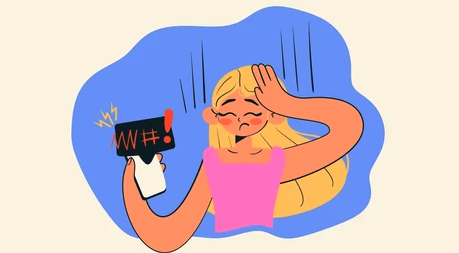
I felt disgusted in myself that my mindless background noise had me agreeing with someone who went so far from my beliefs. I knew commentary on YouTube was not an informative source, and I would consider myself loyal to what I believe in, yet I can’t trust myself to watch a piece for entertainment and not have it infiltrate my beliefs.
When doing research into why audiences are so easily influenced, I stumbled across an interesting article by Audery French that discusses how influence from media is extremely psychological, to the point where consuming negative media can increase depressive feelings and heighten anxiety. Even viewing solely for educational purposes has a psychological impact on the way that we feel. This concept, in combination with our previously discussed article from Xiao, who states that viewers find conversational creators more reliable, really highlights why this is such an issue. With the introduction of these digital platforms that foster interaction between creator and audience, it becomes easier to build trust and reliability. Regardless of our intentions, it becomes almost impossible to remain neutral towards opinions being shared. Therefore, if the information being shared shows bias or lacks equal exposure, there is a higher risk of users developing biased points of view. This is risky, yet this is heightened when creators begin covering topics that can be deemed.
I grew up quite sheltered from real-life issues. I was never confronted with misogyny or homophobia until I graduated high school and went out into the real world. Talking to people made me understand just how normalised these issues are. I was 18 when I first heard my gay friend get called a slur, pure despise, and it left me feeling ignorant. Even now, each time I’m presented with such a proud display of hatred like this, it shocks me.
I think that’s why the discovery of DankyJBo’s “unique” choice of discussion points left such a big mark on me. I was obviously disgusted that such hatred was being spread to so many people, but it also opened my eyes to just how common it is for people with a large platform to have these opinions. DankyJBo is an example of this, but it did not start with him.
When doing my research, Sally Weale’s analysis of a University College London study grabbed my attention. Young men of Gen Z are more likely than baby boomers to believe feminism has done more harm than good. The main cause of this? Weale argues that social media is, and I completely agree. I’ve heard about Andrew Tate, I’ve watched Adolescence, yet I thought this misogynistic media was something you searched for. If I avoided Reddit forums specifically about it, I would be safe. But I now realise just how common this is and how well it can go under the radar.
I believe these individuals take advantage of the likeness of commentary YouTubers, reputations that creators like Danny Gonzalez have worked so hard towards creating. They realise a community will agree with you as long as you appear likeable enough. If you raise your voice a little and widen your gaze, they will take you seriously. This has led us to uneducated individuals gaining authority and getting away with what most deem unacceptable.
I know my way around the internet, and yet my active avoidance of misogynistic media has led me to absorb it unknowingly. What does this mean for young men online?
As a woman and as someone who’s part of the queer community, it makes me uneasy knowing how much power these creators have.
It’s easy to act authoritative when you’re not the one being interrogated.
What I find the most interesting about these types of creators is that there is only so long before this façade cracks. At the end of the day, they are just another person who let themselves get carried away with their power. I hate to say it… But there is something satisfying about watching commentary YouTubers face the criticism they give to others.
Cody Ko was a huge creator who would call out individuals on his YouTube channel, yet when he got accused of sexual assault, he Irish goodbye-d.
Even DankyJBo faced criticism from another commentary YouTuber and made a video response insulting him.
This demonstrates how these videos are not made with professionalism, but with emotion. When jabbed at the right angles, the illusion of authority will crack. Aside from the satisfaction it gives me, I think these moments are crucial. It humanises creators, showing flaws, breaking the strong hold these creators have on their viewers.
Earlier on, I raised the question, What role do commentary YouTubers have in shaping audience perceptions of authority and digital culture?
And ultimately, I learnt that commentary YouTubers provide a unique display of authority that relies on personality and relatability rather than expertise. While this is not terrible, it does mean that users should be aware of the message attempting to share by the creators. It is easy to find commentary youtubers who are knowledgeable or who post for entertainment purposes solely, yet it is just as easy to find youtubers who have strong, controversial opinions, and it’s not always easy to differentiate.
My main takeaway, opinions are starting to sound like facts, our careless watching can lead us to become influenced without our knowledge. The best thing we can do is remain sceptical, even when seeking enjoyment.
References
Agadjanian, A., Cruger, J., House, S., Huang, A., Kanter, N., Kearney, C., Kim, J., Leonaitis, I., Petroni, S., Placeres, L., Quental, M., Sanford, H., Skaff, C., Wu, J., Zhao, L., & Nyhan, B. (2023). A platform penalty for news? How social media context can alter information credibility online. Journal of Information Technology & Politics, 20(3), 338–348. https://doi.org/10.1080/19331681.2022.2105465
French, A. (2022, January 10). The powerful impact of what you watch. The Rebelution. https://therebelution.com/blog/2022/01/the-powerful-impact-of-what-you-watch/
The Guardian. (2024, February 6). Social media algorithms are amplifying misogynistic content, experts warn. The Guardian. https://www.theguardian.com/media/2024/feb/06/social-media-algorithms-amplifying-misogynistic-content
Thelwall, M. (2017). Social media analytics for YouTube comments: Potential and limitations. International Journal of Social Research Methodology, 21(1), 1–14. https://doi.org/10.1080/13645579.2017.1381821
Xiao, M. (2023). Engaging in dialogues: The impact of comment valence and influencer–viewer interaction on the effectiveness of YouTube influencer marketing. Journal of Interactive Advertising, 23(2), 166–186. https://doi.org/10.1080/15252019.2023.2167501
 Jessie Goates
  LeighCor
  Elizabeth Harris