
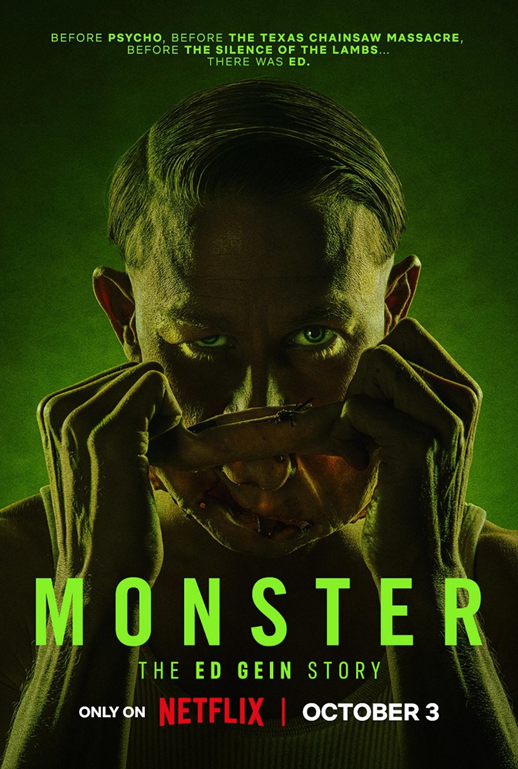
The advertisement poster for Monster: The Ed Gein Story
The recent release of Ryan Murphy and Ian Brennan’s third instalment of the Monsters anthology: the Ed Gein Story has been widely critiqued, yet we can’t stop watching. It is yet another example of the growing trend of romanticising and leveraging the pain and complicated emotions surrounding true crime for profit. This isn’t new, as Ryan himself notes, Ed Gein was a major inspiration for Alfred Hitchcock and Tobe Hooper, contributing to the invention of the true crime and serial killer, or as its referred to in the series – sex horror – genre of tv and movies. But leveraging real stories for views is a complicated process that requires sensitivity, compassion and recognition of all voices involved. Unlike previous instalments of the Monsters anthology, we could view this instalment as a safer choice due to the age of this case as there’s no family to hurt or victims to exploit. Ryan has a track record of deciding on his version of the story – that best sell – and hiding or quietening other perspectives. This was most criticised and evident in his portrayal of the Menendez Brothers and yet he received a third (and suspected fourth) instalment of this series. Ryan has spoken out and mentioned ‘he has no interested in speaking to them (the Menendez Brothers)’ and believes he ‘already knows what their perspective is’ . He knows this without ever talking to those involved in the crime which leads to the one word I would use to describe Ryan Murphy – hypocritical.
The cinematography choices throughout the series are clearly attempting to make the viewer look inwards, a unique and undervalued notion in this genre. In the advertisement for the series the actor looks directly at the camera and asks the viewer why they are watching, and during the series when addressing another character, the main character again addresses the camera with a similar sentiment stating “you’re the one who cant look away”. This is a unique perspective for Ryan that we wouldn’t expect him to encourage. If we truly look at why we are all so obsessed with watching such gruesome content, particularly not in the most ethical context will we really feel comfortable continuing to watch? Ryan is betting that we will. Another interesting move made in the series is the plot line following the influence Ed Gein’s story had on Alfred Hitchcock and Tobe Hoopers writing and the horror genre as a whole. Again, this is a unique, relatively refreshing move by Ryan to show how the story has become fantasised and over embellished overtime while flashing back to the ‘real’ version of Ed Geins story. These choices at a surface level are unique and refreshing however at a closer glance feel very hypocritical. How can he possibly encourage guilt and reflection in his audience or critique previous users of this story when he is doing the exact same. He is profiting off the same story and viewers albeit with more knowledge of the harm and ethical impacts of what he could be doing. On this note, it could be argued that Hitchcock and Hoopers didn’t know how the public would react to this genre of cinema and hence didn’t know they were feeding into the glamorisation and unethical consumption true crime, but over 60 years later, Ryan is well aware and encourages it. The namesake Monster is often used throughout the series to describe many a different situation that create monsters through personalities, urges and mindsets. This is an overarching theme of the show, as described by Ryan as the meta of the entire series – to delve into nature v nurture and what really makes a monster. This is a human curiosity at its core, we all want to hope that at its core there’s a reason these ‘monsters’ are the way they are and hope to find some comfort in exploring the worst of the worst to uncover some secret to ensure our safety and the safety of the ones we love. This theme is a relatively recurring and common theme that is inherit to most true crime content, by learning about the criminal we learn why they committed the crime.
The choices made in the cinematography throughout the series are clearly attempting to make the viewing look inwards, a unique and undervalued notion in this genre. In the advertisement for the series the actor looks directly at the camera and asks the viewer why they are watching, and during the series when addressing other characters, the main character again addresses the camera with a similar sentiment. This is a unique perspective for Ryan that we wouldn’t expect him to encourage. If we truly look at why we are all so obsessed with watching such gruesome content, particularly not in the most ethical context will we really feel comfortable continuing to watch? Ryan is betting that we will. Another interesting move made in the series is the plot line following the influence Ed Gein’s story had on Alfred Hitchcock and Tobe Hoopers writing and the horror genre as a whole. Again, this is a unique, relatively refreshing move by Ryan to show how the story has become fantasised and over embellished overtime while flashing back to the ‘real’ version of Ed Geins story. These choices at a surface level are unique and refreshing however at a closer glance feel very hypocritical. How can he possibly encourage guilt and reflection in his audience or critique previous users of this story when he is doing the exact same. He is profiting off the same moves and viewers albeit with more knowledge of the harm and ethical impacts of what he could be doing. We can also argue that Hitchcock and Hoopers didn’t know how the public would react to this genre of cinema and hence didn’t know they were into the way we consume and glamorise true crime, but Ryan is well aware and encourages it.
The namesake Monster is often used throughout the series to describe many a different situation that create monsters through personalities, urges and mindsets. This is an overarching theme of the show, as described by Ryan as the meta of the entire series to delve into nature v nurture and what really makes a monster. This is a human curiosity at its core – we all want to hope that at its core there’s a reason these ‘monsters’ are the way they are and find some comfort in exploring the worst of the worst to hopefully uncover some secret to ensure our safety and the safety of the ones we loved. this theme is a relatively recurring and common theme that is inherit to most true crime content, by learning about the criminal we learn why the committed the crime.
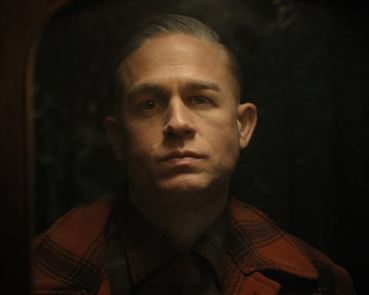
Actor Charlie Hunnam in Monsters: The Ed Gein Story
A choice that has been widely criticised is Ryan’s use of ‘attractive’ actors to star as the ‘monster’ in each series. These actors have clearly been chosen to bring wider appeal to the show but at what cost? Romanticising serial killers by using widely known and conventionally attractive celebrities encourages viewers to see these human beings as characters in a show and celebrities to admire.
Overall, it’s highly unlikely that viewers are going to stop watching true crime as a whole but there is definitely a push for more ethical content. Many of the choices made in this series are spitting in the face of those who do the genre justice and take into account all point of views to ensure the real facts and sometimes more boring side of the case is depicted, even if it doesn’t make as much money.
 He lian
  VickyWu
  REN Ren