

Twilight is an original book series turned movie saga. The story follows Bella, a teenage girl who moves to a new town and is swept up in the world of Vampires, Werewolves, and teenage angst. The series focuses on romance and forbidden love and has a predominantly female fanbase. Although it came out in the early 2000s, Twilight is still an extremely prevalent cultural phenomenon to this day – this is all due to the series’ fanbase. The negative perception of original Twilight fans was due to the erratic, shallow, screaming ‘fangirl’ stereotype perpetuated during this time. Twilight’s recent comeback or ‘Twilight Renaissance’ demonstrates the reclamation of the term ‘fangirl’. The book and movie series Twilight has remained a staple of culture over the past two decades as its contents and community have drawn in women and girls who choose to ignore the misogynistic stereotypes of the ‘fangirl’ and instead embrace the title and therefore experience its community, support and freedom for creative expression.
Twilight was intensely popular among young women for many reasons. Firstly, the fantasy genre was very popular in the 2000s, with series like Harry Potter and The Lord of the Rings leading the market (Fischer, 2023). While The LOTR series had an audience of predominantly men, Twilight drew in (and still draws in) mainly young women (Fischer, 2023). The book and movie series is centred around Bella and Edward and their forbidden love with romance at the forefront. The ‘star-crossed lovers’ trope has proven to remain a staple of our media and Twilight’s melodramatic love story is no exception. That, in combination with the iconic Twilight love triangle (Team Jacob or Edward) made it a recipe for success – with similar series at the time also thriving (The Vampire Diaries, Pretty Little Liars, and True Blood). The franchise represents female teenage angst which of course, appealed to a lot of teen girls and young adults who were still finding themselves (Fischer, 2023). The series provides a representation of the real-life experience of being a teenage girl in combination with the fantastical existence of the supernatural. The two elements work together to offer an escape from the ordinary – where teenage girls can imagine themselves being rescued from the mundanity of everyday life while still relating to the setting and characters. On a deeper level, Twilight takes teen girls emotions seriously – it represents them as being deep thinkers with emotional depth and having the capability of experiencing big emotions, turmoil, and making decisions for themselves – so while young girls may have been drawn in by sparkling vampires and the riveting tumultuous relationship of Bella and Edward – they stayed within the fandom because they felt seen by the story and other fans in the community (Doermann, 2024).
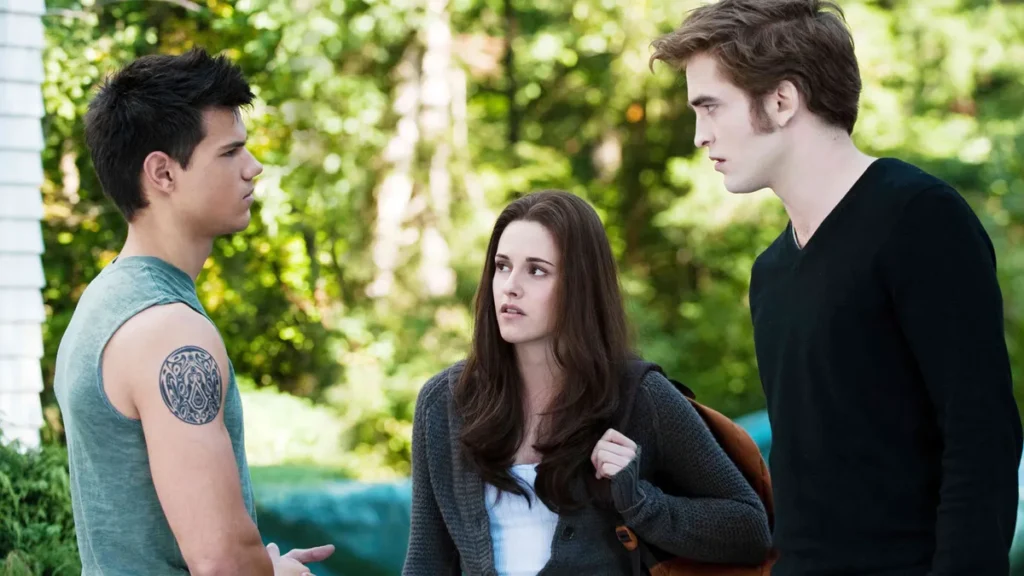
Twilight fans have proven themselves to be deep thinking, emotionally intelligent individuals capable of enjoying the series for what it is while also dissecting it and recognising the fact that it is not infallible (Doermann, 2024). Like anything, Twilight is not without its faults. People have long criticised the more than concerning age gap between Edward and Bella (around 87 years) and how this ties in with the ability to give consent. A lot of the Twilight discourse that can be found on forums like Tumblr since the 2000s demonstrates this dichotomy. Fans are able to identify where the series falls short – its engagement with issues like colonialism, indigeneity, and sexuality – and make valuable criticisms on these issues while unapologetically loving the series at the same time (Doermann, 2024). Twilight Fans are able to engage in meaningful discussion and analysis, contributing to important cultural conversations – contrary to beliefs held against the fandom that we will explore further on. Twilight’s rise to popularity with young women in the late 2000s can be partially attributed to the love story, romance, and angst that is wrapped up in the fantastical world of vampires and werewolves. Its success can also be attributed to the appeal of the main character being a relatable teenage girl whose deep thoughts and complex emotions are represented.
Being a Twilight fan in the late 2000s to early 2010s was almost shameful to a lot of young women. While online Twilight communities were active, thriving, sharing lots of content, and forming connections and community, the perception outside of that sphere was extremely negative (Doermann, 2023). The books and movies received a lot of criticism for being poorly written and lacking substance, but the main focus of online and offline ridicule was the fans of the series. A majority of this ridicule came from men who saw fans of Twilight to be silly, shallow, vapid, cringey, and loud – some even protesting against having a Twilight panel at Comic-Con because they thought there would be too many ‘screeching’ girls in a male dominated space (Doermann, 2023). These high-energy, dedicated groups of majority female fans are simply dismissed under the disapproving ‘fangirl’ umbrella – this term is attached to femininity, youth, and poor taste (Bucy, 2025). A ‘fangirl’ is a young girl whose fanhood is seen as too emotional, having no cultural value, and of bad taste (Seggie, 2024). The idea of a screaming, hysterical, unserious girl obsessed with, typically, an attractive male celebrity or character has remained a widely accepted stereotype in fan spaces (Bucy, 2025).
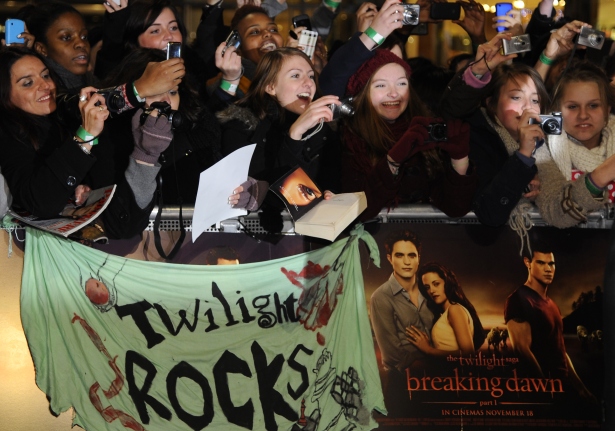
Ironically, Twilight’s ‘anti-fans’ are often times just as passionate with their hate as fans of the series are with their love. Although many series have their fans and their anti-fans, most original fans of the Twilight series cannot recall their old experiences within the fandom without remembering the intense anti-Twilight rhetoric that occurred online and offline (Godwin, 2013). It seems as though Twilight anti-fans had a certain ‘rhetoric of superiority’ around them – making sure to establish a clear boundary between themselves and the lesser Twilight fan (Godwin, 2013). They must emphasise how much better their vampire knowledge is, their film repertoire, and overall cultural superiority – in this way, othering the ‘adolescent girls’ that enjoy Twilight. Anti-fans frequently mention the value of masculinised genres in their dissection of the ‘lesser’, feminine Twilight franchise. Overall, these anti-fans have created a falsified version of Twilight fans as a hysterical, unreasonable female or feminised other whose opinions and emotions are to be dismissed as pathetic drivel that is not worthy of consideration from ‘serious’ people (Godwin, 2013). This stereotype, steeped in misogyny, devalues and trivialises women that make up fan spaces and the media they are engaging with (Doermann, 2023). A lot of Twilight fans at the time of its release chose to keep their thoughts and love for the series to themselves, to avoid judgement and mockery (Doermann, 2023), they limited their self-expression to online spaces and other fans of the series. This stifling of self-expression would’ve had a big impact on a lot of young women as they grew up and discovered themselves – in fact, one Twilight fan claims the ridicule she experienced for being a fan of the series causes her to still feel shame when it comes to the media she engages with and enjoys. The social construct of ‘the fangirl’ created a culture in which women were unable to express their love and admiration for a person, character, or any type of media without others whittling that love and admiration down to a vapid, one dimensional, embarrassing obsession that they would one day grow out of. This initial perception and reaction to fans of Twilight is very different to the current culture and discourse that exists online and offline.
The term ‘Twilight Renaissance’ refers to the renewed interest and fan engagement with the Twilight series in recent years (Delve, 2023). The beginning of the renaissance can be placed back to around 2021 and involves a revival of fan activity and viewership of the series with some coming back to Twilight for the purpose of nostalgia, and a stream of new fans just now joining the fandom (Delve, 2023). A large part of its appeal is not just the texts but also the vibrant fan community formed around them (Delve, 2021). The new fan content, memes, and aesthetic appreciation has a very satirical tone to it that differs from its original fandom. Fans have reclaimed the saga and fandom and accept that part of its charm is that it’s ‘bad’ (Jackson, 2021). Their love of the series comes from its weirdness, incoherent narratives, and hilarious one-liners in the movies that are now cultural staples of the Twilight fandom (Jackson, 2021). Those that judge fans of the series are simply not in on the joke. There has also been a reclamation of ‘the fangirl’ and what it means to be a fangirl. Fangirls and ‘female’ obsession are being represented as joyful communities in which healthy emotional expression and belonging can be experienced (Sharma, 2022). This narrative that teen girls are too emotional, passionate and expressive has been flipped on its head in recent years, offering value to girlhood that was once stripped away (Sharma, 2022). Of course, the ‘fangirl’ caricature is nowhere near completely gone, more women are wearing the title with pride – and it’s a lot harder to make fun of someone who doesn’t care. The original Twilight fans of the 2000s offer a unique perspective to the Twilight Renaissance – they remember how it felt to be ridiculed and not taken seriously and so embrace the new, younger fans (Doermann, 2023). This convergence fosters a strong sense of community within the fandom, which we know is a strong contributor to why the Twilight series is still a success to this day and may continue to be a success. The ‘Twilight Renaissance’ can be attributed to previous fan’s nostalgia, reclamations of the ‘fangirl’, internet culture and memes, and the enjoyable yet ridiculous nature of the films.
Through understanding the emotional appeal of the Twilight series to young women and how society reacted to fans of Twilight in the late 2000s to early 2010s, with an emphasis on how ‘fangirls’ were perceived, how it felt to be a fan of the series in this time can be understood. Furthermore, this context allows us to explore why recent years has brought about a ‘Twilight Renaissance’, what makes the series successful to this day, and how fans have reclaimed the series and what it means to be a ‘fangirl’.
References
Bucy, A. (2025). Finding the Fangirlscape: Understanding “Fangirl” as a Gendered Transfandom Category. In Participations (pp. 60–77). https://www.participations.org/21-01-05-bucy.pdf
Delve, R. (2023). INTO THE TWILIGHT RENAISSANCE: How the Twilight Fandom Changed in its Revival on Social Media. https://researchspace.auckland.ac.nz/server/api/core/bitstreams/d1a4d017-cd2b-43d2-a10c-37294e54ba10/content
Doermann, H. (2024). Embracing the “Silly Teen Girl”: Perpetual Girlhood, Intergenerational Feminism, and the Twilight Renaissance. Children’s Literature Association Quarterly, 49(3), 279–299. https://doi.org/10.1353/chq.2024.a959004
Fischer, J. (2023). Fifteen Years of “Twilight.” 34th Street; 34th Street. https://www.34st.com/article/2023/11/twilight-2000s-nostalgia-teenage-angst-bella-edward
Godwin, V. (2013). Twilight Anti-Fans. In The Twilight Saga: Exploring the Global Phenomenon (pp. 93–95). Bloomsbury. https://books.google.com.au/books?hl=en&lr=&id=dS-AEQAAQBAJ&oi=fnd&pg=PA93&dq=fangirl+culture+twilight&ots=UGVME6bPMm&sig=4y10LXb0I_UDDhQm8luWD1CgKPI#v=onepage&q&f=false
Jackson, G. (2021, July 29). “Twilight” Is Bad and That’s Why It’s Good. VICE; VICE. https://www.vice.com/en/article/twilight-is-bad-and-thats-why-its-good/
Seggie, I. (2024). Fantastic: Exploring the Intermedial Productivity of the Fangirl. The Kyoto Conference on Arts, Media & Culture 2024 Official Conference Proceedings.
Sharma, R. (2022, October 15). I used to be ashamed of being a fangirl. Now I see how joyous and creative it was. The Guardian. https://www.theguardian.com/lifeandstyle/2022/oct/15/i-used-to-be-ashamed-of-being-a-fangirl-now-i-see-how-joyous-and-creative-it-was
 Guan QiuYu
  REN Ren
  Tan Kane